10 Science Discovery Stations for Kids
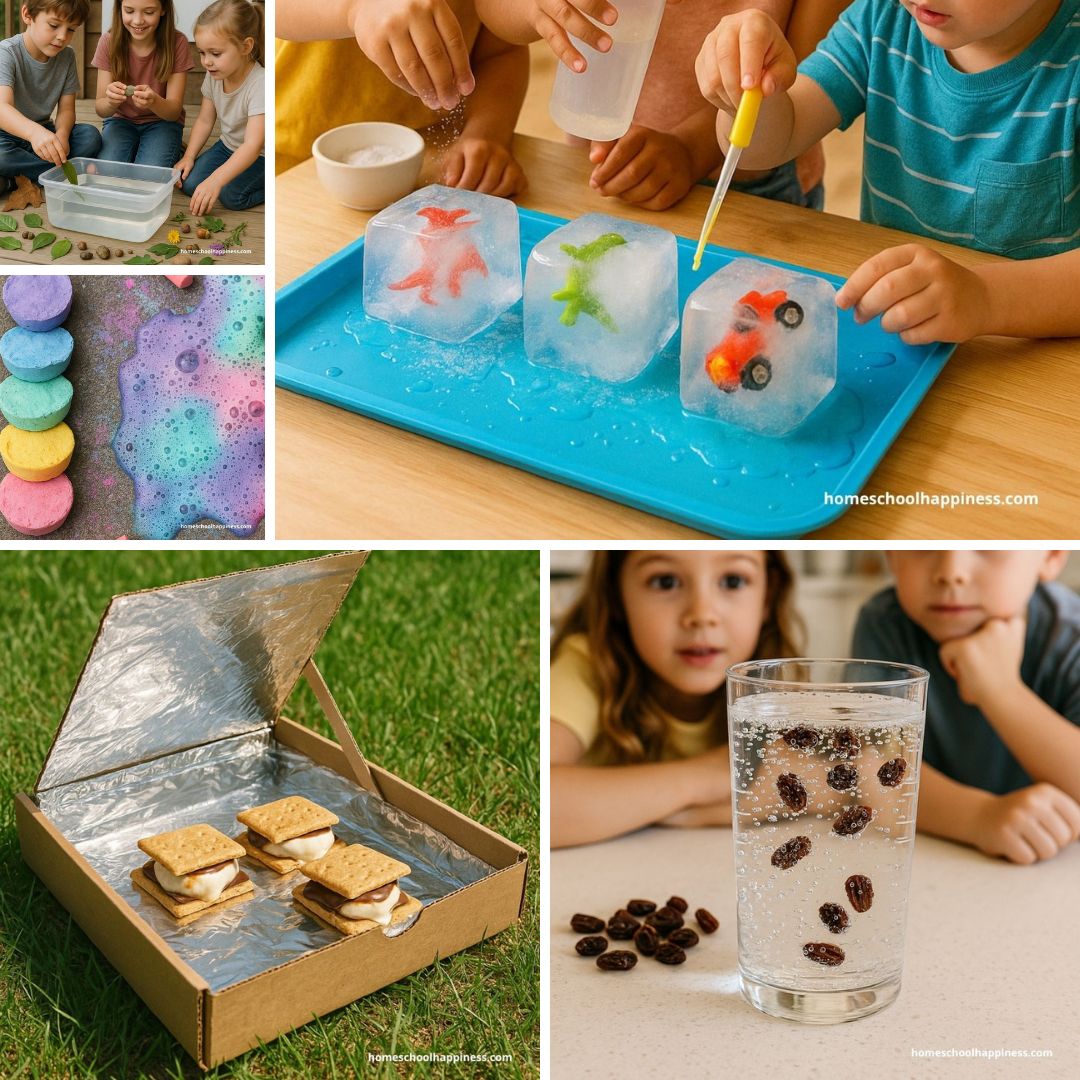
Kids are natural explorers, and science discovery stations for kids are the perfect way to capture that endless “why” energy.
In homeschool science, these little setups act like mini-labs where children can dig in with their hands, test ideas, and make connections to the bigger world around them. Instead of just looking like play, each activity is designed to spark curiosity and open the door to larger science themes.
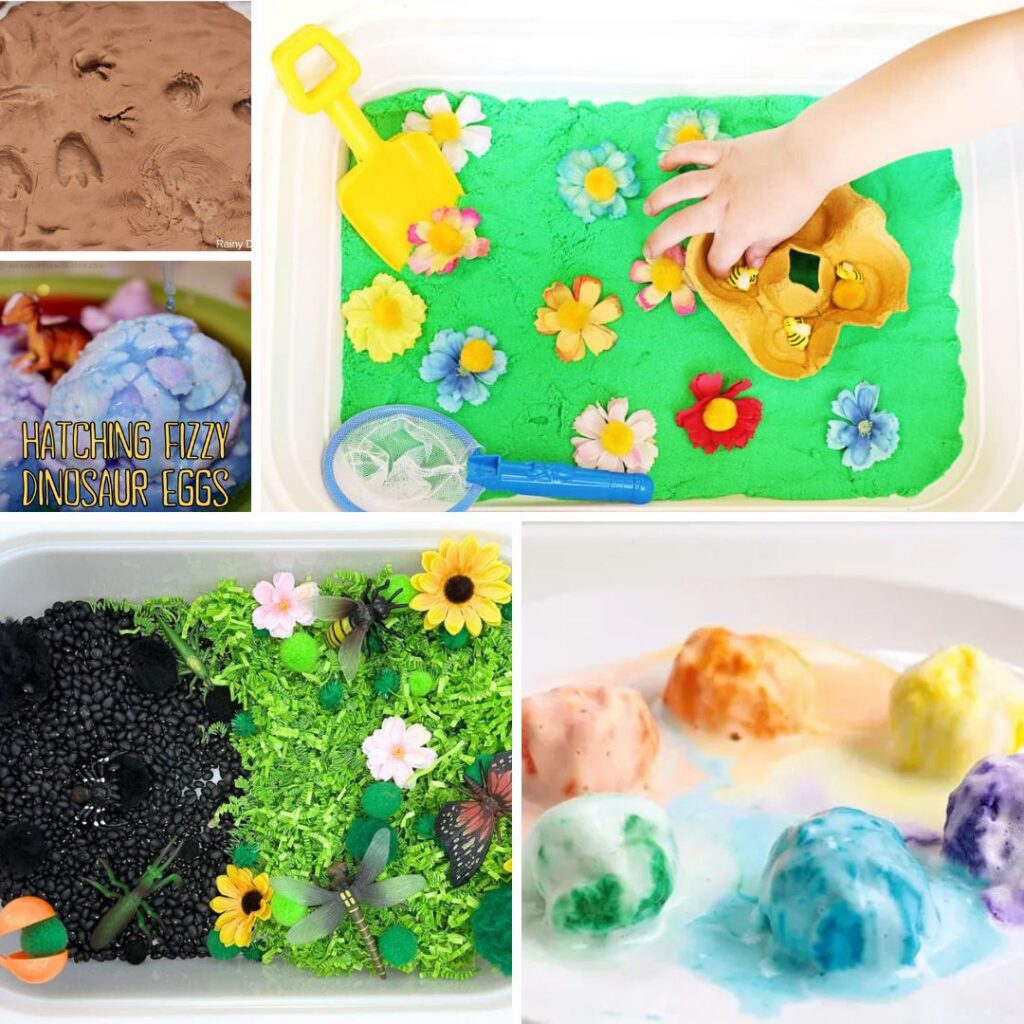
A bin of frozen flowers can become the first step in learning about plant life cycles. A fizzy dinosaur egg can lead to questions about fossils and paleontology. An ocean table might be the spark for talking about ecosystems and habitats.
These exploration stations are simple, hands-on, and flexible—making them an easy way to launch a new unit or keep kids engaged while reinforcing what they’re already learning.
How to Use Discovery Stations in Your Homeschool
Think of discovery stations as mini science labs made for curious kids. Unlike the term “sensory bins,” which often suggests open-ended play, discovery stations are intentionally designed to spark questions and connect to real science topics. They give kids the same hands-on fun, but with an added sense of purpose—like a launchpad into a bigger science unit.
The good news is you don’t need a closet full of supplies to make them work. Most stations can be set up with things you already have around the house—like baking soda, playdough, ice cubes, or a few toy animals.
Each one also slips neatly into your homeschool science goals. Whether you’re covering plant life cycles, body systems, or ecosystems, a station introduces vocabulary and concepts in a way kids can see, touch, and experience for themselves.
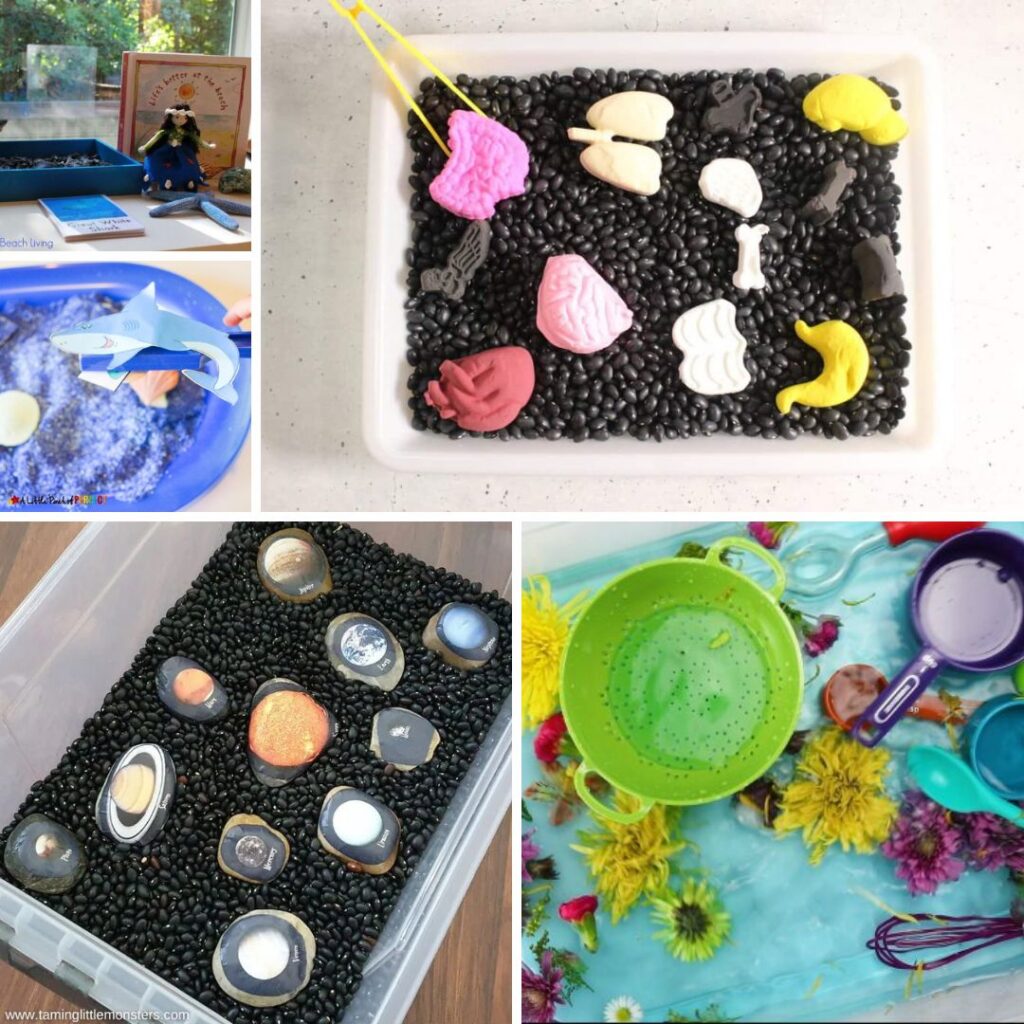
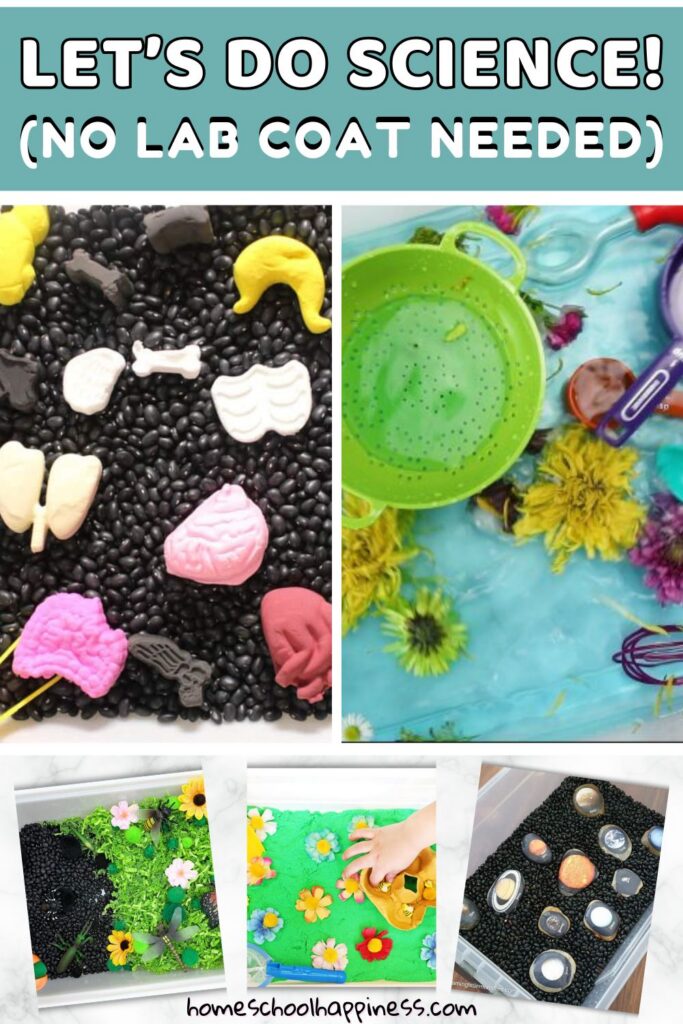
Science Discovery Stations for Kids
Kids don’t need a lab coat to dive into science—just a little space to explore and a few simple supplies. These science discovery stations turn everyday materials into hands-on learning opportunities that spark curiosity.
Each one is a playful gateway into bigger homeschool science topics like life cycles, space, fossils, and the human body.
Tips for Success
You don’t need to overcomplicate things—keep each discovery station simple and let your child take the lead. The magic happens when they start asking questions, making connections, and coming up with their own ideas.
Try rotating stations to match your current homeschool science unit, whether it’s plants, space, the human body, or ocean life. This keeps learning fresh and naturally reinforces key concepts.
Encourage your child to capture what they notice through drawing, journaling, or even storytelling. These small moments of reflection help solidify understanding and give you a window into what they’re really absorbing.
FAQs About Science Discovery Stations
Discovery stations are ideal for kids in kindergarten through second grade, though younger or older siblings can often join in with a few tweaks. They’re especially helpful during the early elementary years when curiosity and hands-on learning go hand in hand.
Each discovery station introduces foundational science concepts—like life cycles, ecosystems, body systems, or simple chemistry—in a way that’s engaging and easy to grasp. These activities align with common homeschool science goals and help kids build vocabulary, observation skills, and critical thinking through play.
Most stations use simple materials you likely already have: baking soda, vinegar, ice cubes, beans, small toys, or craft supplies. You can also reuse items from nature walks or repurpose household objects—no need for fancy kits or lab gear.
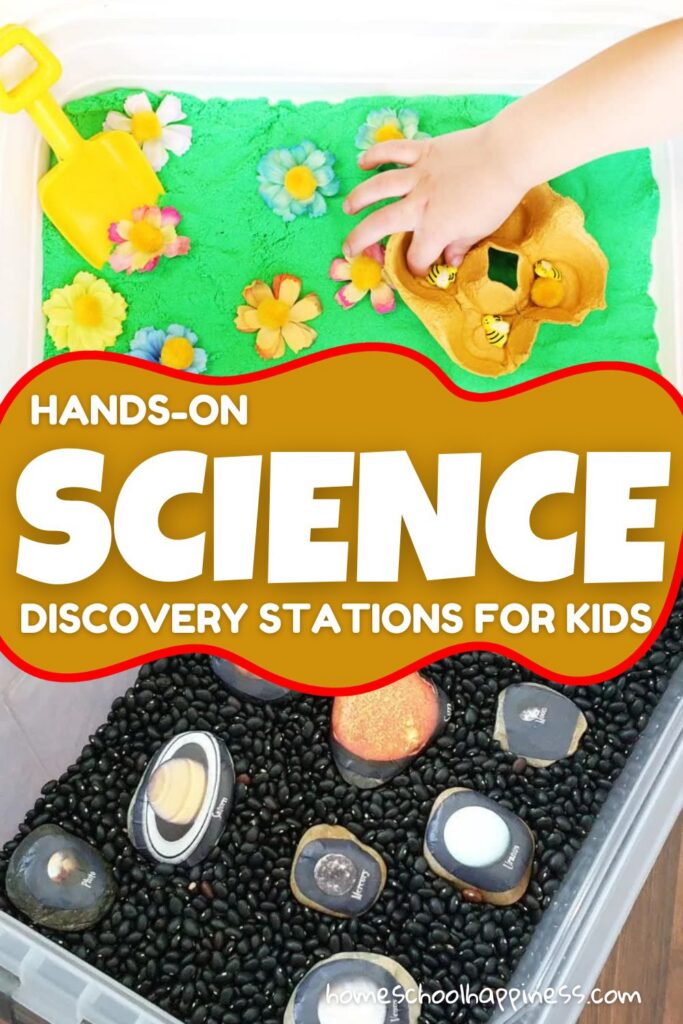
Think of these discovery stations as invitations to explore—not formal lessons. When kids are free to wonder, experiment, and get their hands messy, real learning sticks.
Choose one station that fits your next science unit and give it a try. Whether you’re diving into the ocean, blasting off into space, or digging into fossils, there’s a hands-on way to begin.
Looking for more ideas? Explore our growing library of science resources to keep the curiosity going.

Hi, I’m Tara—mom of three, former teacher, and now full-time homeschooler. After years in both preschool and public school classrooms, I brought the learning home and never looked back. At Homeschool Happiness, I share real-life tips, simple activities, and encouragement to help you create a homeschool life that feels good for your family—one filled with connection, laughter, and meaningful moments. We’re in this together!