25 Fun and Easy Homeschool Science Projects for Kindergarten
If you’re looking for homeschool science projects for kindergarten that are fun, simple, and educational—you’re in the right place! Science is one of the most exciting subjects to explore when you’re homeschooling kindergarten, because it naturally taps into your child’s sense of wonder. From bubbling reactions to weather experiments and life cycle lessons, these hands-on activities make learning come alive.
Kindergarteners love to ask questions and discover how things work, and science gives them the perfect outlet to do just that. Even better? These projects use easy-to-find materials and can be done right at home—no fancy lab required!
In this round-up, you’ll find a mix of seasonal activities, nature explorations, and simple experiments that build early STEM skills in playful, age-appropriate ways.
Let’s dive in and spark some scientific curiosity in your homeschool!

At a Glance
• 25 hands-on homeschool science projects for kindergarten
• Covers everyday science, nature, weather, chemistry, and seasonal themes
• Perfect for homeschooling kindergarten or supplementing with fun at-home STEM
• Uses simple supplies—most found around the house or in your homeschool cabinet
• Encourages curiosity, critical thinking, and playful learning through exploration
• Great for ages 5–6 and adaptable for preschoolers or early elementary students
Homeschool Science Projects for Kindergarten
Science time doesn’t have to be complicated—especially for young learners just starting out. These hands-on activities are designed to spark curiosity and encourage kids to ask questions, make predictions, and explore the world around them.
Whether you’re focusing on early STEM learning or simply adding fun experiments to your weekly routine, these kindergarten-level science ideas are both engaging and age-appropriate. You’ll find a mix of nature investigations, simple chemistry, weather fun, and more—all easy to set up at home.
If you’re guiding your child through kindergarten at home, these projects are a great way to build foundational science skills through play. Let’s take a look at some fun ideas to get you started!

🔬 Everyday Science Fun
You don’t need a lab to explore big ideas—just a few household items and a curious kindergartener! These simple experiments are perfect for everyday learning and introduce key science concepts like reactions, motion, and color mixing in a fun, hands-on way.
Dancing Raisins Science Experiment for Kids
Drop raisins into a glass of clear soda and watch them “dance” as bubbles lift them up and down. This simple experiment introduces kids to buoyancy and gas formation in a fun, visual way
Magic Milk Science Experiment
Transform a bowl of milk into a swirling canvas of color with this mesmerizing experiment. By adding dish soap to milk dotted with food coloring, kids can explore the fascinating concept of surface tension in a fun and visually captivating way.
Balloon Blow-Up with Vinegar and Baking Soda
Watch your child’s eyes light up as they witness a balloon inflate all by itself! This classic experiment combines baking soda and vinegar to create a fizzy reaction that fills the balloon with carbon dioxide, making science both magical and memorable.
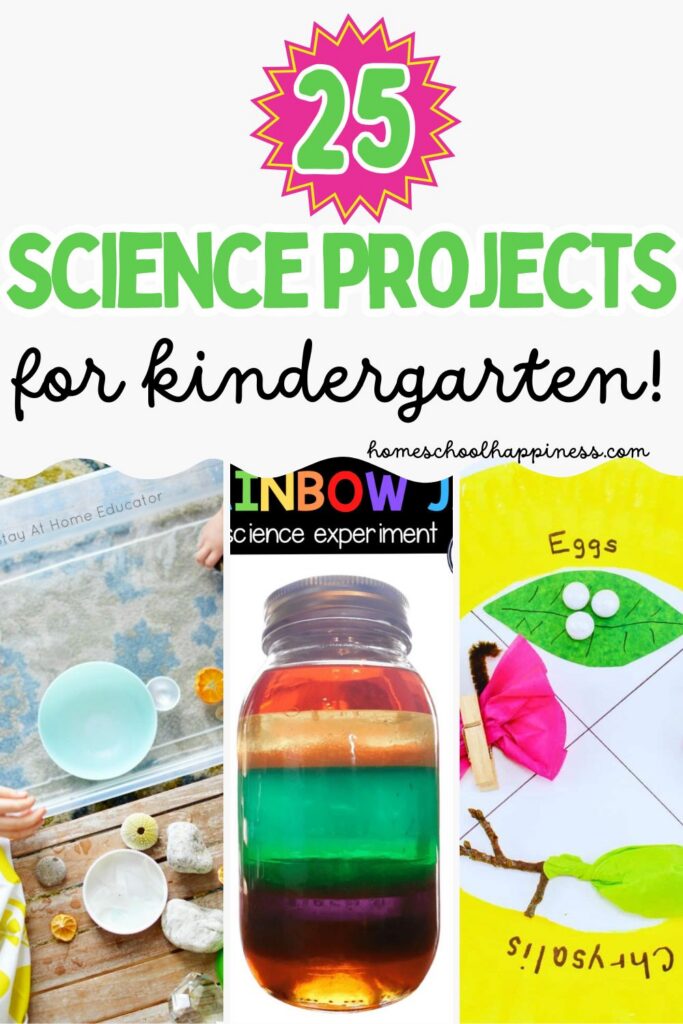
Rainbow in a Jar Experiment
Create a stunning rainbow in a jar using everyday liquids like honey, dish soap, and rubbing alcohol. This colorful activity introduces kids to the concept of density in a fun and visually captivating way.
🌱 Nature & Life Science Projects
Get your little learners outside or bring nature indoors with these fun life science activities. From growing seeds to exploring insects and life cycles, kids can observe, question, and explore the world around them. These projects are perfect for curious minds who love hands-on discovery!
Simple Bug Hotel for Kids
Craft a cozy retreat for backyard bugs with this easy DIY bug hotel! Using a recycled plastic bottle and natural materials like twigs, pinecones, and bark, kids can create a welcoming habitat for insects while learning about biodiversity and the importance of caring for nature.
Paper Plate Life Cycle of a Butterfly Craft
This engaging craft guides children through the four stages of a butterfly’s life cycle using simple materials, such as a paper plate, tissue paper, and mini pom-poms. As they create each stage—from egg to butterfly—kids enhance their fine motor skills and deepen their understanding of metamorphosis in a hands-on, creative way.
Watch a Bean Grow in a Cup
Place a broad bean against the side of a glass jar filled with moist cotton wool, and watch as roots and shoots emerge over the next few days. This simple activity offers children a clear view of plant growth, teaching them about germination and the importance of water and light in a plant’s development.
Leaf Rubbing Activity
This classic activity combines art and science, allowing kids to explore the intricate textures of leaves by creating rubbings with crayons or foil. It’s a simple yet engaging way to learn about leaf anatomy and seasonal changes.
☁️ Weather & Water Activities
Bring the wonders of weather and water to life with these fun, hands-on science activities. From rain clouds to sink-or-float tests, kids can observe, predict, and explore everyday natural phenomena. These simple experiments are perfect for sparking curiosity—rain or shine!
Rainbow Walking Water Science Experiment for Kids
Watch colors travel and mix as water “walks” from one cup to another in this mesmerizing experiment. Using paper towels, food coloring, and cups, kids explore capillary action while creating a beautiful rainbow.
Try a Sink or Float Water Sensory Bin This Summer
This classic experiment invites kids to explore buoyancy by predicting whether various objects will sink or float in water. Using a bin filled with water and a selection of household items, children can engage in hands-on learning that promotes observation, classification, and critical thinking skills.
What Makes Ice Melt Faster?
In this engaging experiment, children explore how different substances—such as salt, sugar, and sand— affect the rate at which ice melts. By observing and recording the melting process, children gain hands-on experience with concepts such as freezing point depression and the scientific method.
Tornado in a Bottle Experiment
Create your own swirling vortex with this classic experiment! By connecting two plastic bottles and swirling the water inside, kids can observe how a tornado forms, making weather science both fun and educational.
Rain Cloud in a Jar: Easy Science Fun for Kids
Bring the weather indoors with this captivating experiment that demonstrates how rain forms in clouds. Using a clear jar, water, shaving cream, and food coloring, kids can observe how “rain” falls when the cloud becomes too heavy, illustrating the concept of precipitation in a fun and visual way.
🧲 Physics & Chemistry for Littles
Big science ideas can be super fun for little learners! These easy experiments introduce kids to motion, reactions, magnetism, and states of matter using playful, hands-on activities. With simple materials and exciting results, your child will love exploring how things move, mix, and change right before their eyes.
How to Make Oobleck – Busy Toddler
Mix up a batch of oobleck—a fascinating substance that behaves like both a solid and a liquid—using just cornstarch and water. Kids will be amazed as they squeeze it into a ball and then watch it melt back into a gooey puddle, making for an engaging and educational sensory experience.
Expanding Ivory Soap Experiment!
Place a bar of Ivory soap in the microwave and watch it puff up into a fluffy white cloud! This quick and easy experiment demonstrates how heat causes the air and water inside the soap to expand, making it a fun way to explore physical changes and gas expansion.
How To Make A Cardboard Marble Run
Transform recycled cardboard tubes into an exciting marble run that teaches kids about gravity, energy, and motion. This hands-on activity encourages problem-solving and creativity as children design, build, and test their own marble courses using simple materials like painter’s tape and marbles.
Penny Boat Challenge For STEM (Buoyancy)
Design a simple tin foil boat and see how many pennies it can hold before it sinks. This hands-on activity introduces kids to the concept of buoyancy and encourages them to think like engineers as they test and refine their boat designs.
🎃 Seasonal Science Ideas
Celebrate the changing seasons with science activities that tie into holidays, weather, and nature’s rhythms. These themed experiments make learning extra fun by connecting science to what kids are already excited about—like pumpkins in the fall or snowflakes in winter! They’re perfect for adding a little festive flair to your homeschool routine while still exploring key science concepts.
Snowstorm in a Jar Winter Science Experiment
Create a swirling snowstorm inside a jar with this mesmerizing winter science experiment. By combining baby oil, white-painted water, glitter, and Alka-Seltzer tablets, kids can observe how a chemical reaction causes “snow” to fall, illustrating concepts like density and immiscibility in a fun and engaging way.
Browning Apples Experiment
Explore how different liquids affect apple browning with this engaging experiment. By soaking apple slices in solutions like lemon juice, saltwater, honey water, and lemon-lime soda, children can observe which methods best prevent oxidation. This hands-on activity not only teaches about chemical reactions but also encourages kids to make predictions and analyze results.
Exciting Dinosaur Excavation Ice Activity for Preschoolers
Freeze small dinosaur toys in ice cubes to create an exciting excavation challenge for kids. As they chip away at the ice using tools like toy hammers or spoons, children engage in sensory play while learning about changes in states of matter.
Dissolving Candy Canes Experiment
Discover how candy canes dissolve in different liquids like warm water, vinegar, and oil in this festive science experiment. Kids will enjoy making predictions and observing the results, all while learning about solubility and chemical reactions.

With just a few simple materials and a curious mindset, science can become an exciting part of your homeschool day. These hands-on projects spark questions, encourage exploration, and help young learners understand their world while having lots of fun.
Whether you’re growing seeds, making a rainbow jar, or testing what sinks and floats, each activity encourages learning. These simple science moments nurture curiosity and spark your child’s natural love of discovery. Remember, the goal isn’t perfection—it’s creating connection, wonder, and joyful exploration.
Want even more easy science ideas? Be sure to check out our printable science packs and explore our full collection of homeschool activities for kindergarteners!

Hi, I’m Tara—mom of three, former teacher, and now full-time homeschooler. After years in both preschool and public school classrooms, I brought the learning home and never looked back. At Homeschool Happiness, I share real-life tips, simple activities, and encouragement to help you create a homeschool life that feels good for your family—one filled with connection, laughter, and meaningful moments. We’re in this together!


0