Homeschool Planning Hacks for Busy Parents
If your days feel like a blur of lessons, snacks, and lost pencils, these homeschool planning hacks are for you. Homeschooling little ones while keeping the household afloat can feel like running a marathon you didn’t sign up for.
I’ve been there—staring at a plan that looked beautiful on paper but never survived real life. The good news? You don’t need to overhaul your system or become ultra-organized.
You just need a few flexible habits that make planning feel peaceful instead of pressured. Let’s walk through some practical ways to bring more calm, focus, and flow into your homeschool week.
Start with the Rhythm of Your Family
When I first started homeschooling, I tried to follow a strict schedule—and it always fell apart by lunchtime. The breakthrough came when I stopped planning by the clock and started planning by our rhythm instead.
Every family has a natural flow: times when kids are focused, playful, or ready to wind down. Pay attention to those energy patterns and let them shape your day.
Maybe math fits best right after breakfast, while art or outside play works better in the afternoon. Jot down your daily anchors, like read-alouds, snack time, outdoor play, and family chores, before you plug in subjects.
When your plan matches your family’s rhythm, the day feels smoother, and everyone (including you) stays calmer and more consistent.

Use Weekly Themes or Focus Topics
One of the simplest ways to make planning easier is to choose a weekly theme or focus topic. It gives your lessons direction and helps you connect different subjects without starting from scratch each day.
During a Rainforest Week, for example, your child might read animal fact cards for reading comprehension, draw a rainforest mural for art, and sort animals by type for science. Everything ties together naturally, and prep time shrinks because you can reuse materials across subjects.
I’ve found that themes also keep kids more engaged. They love knowing there’s a story or idea running through the week.
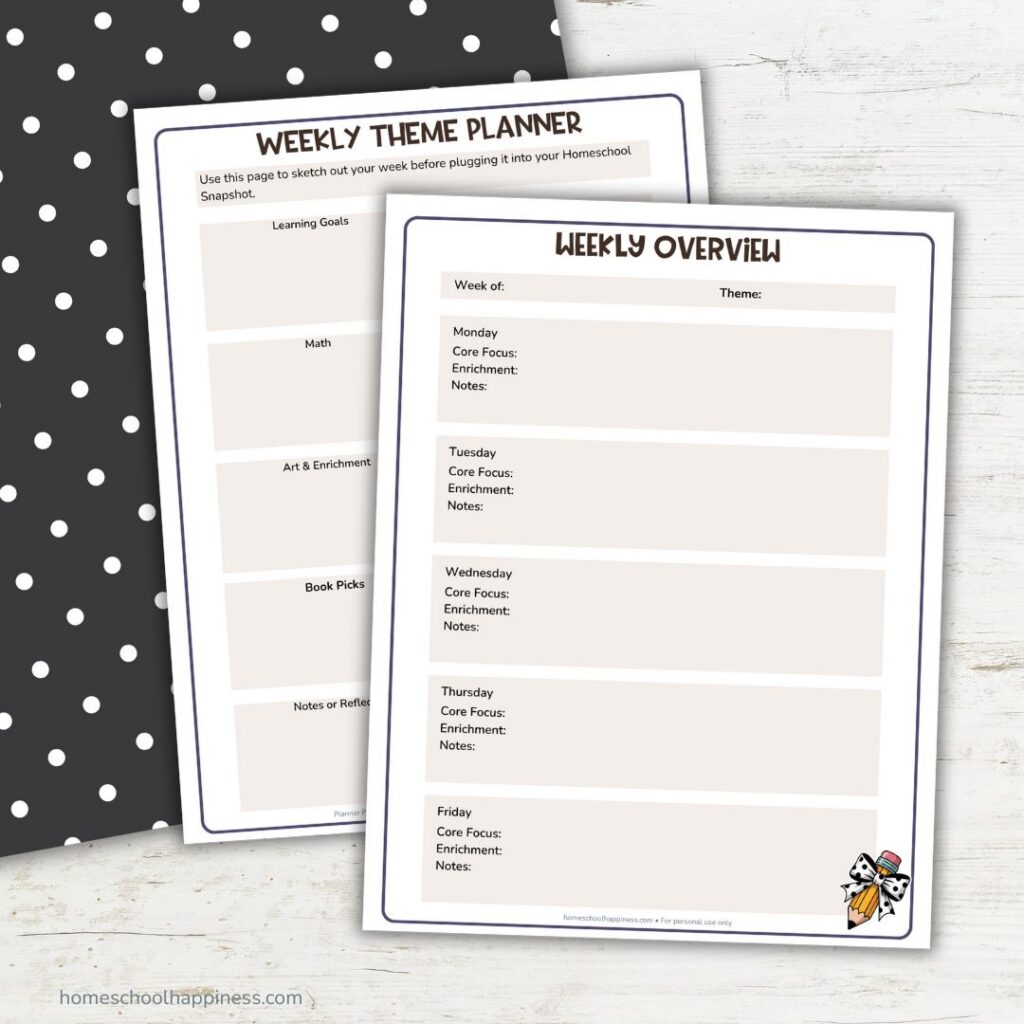
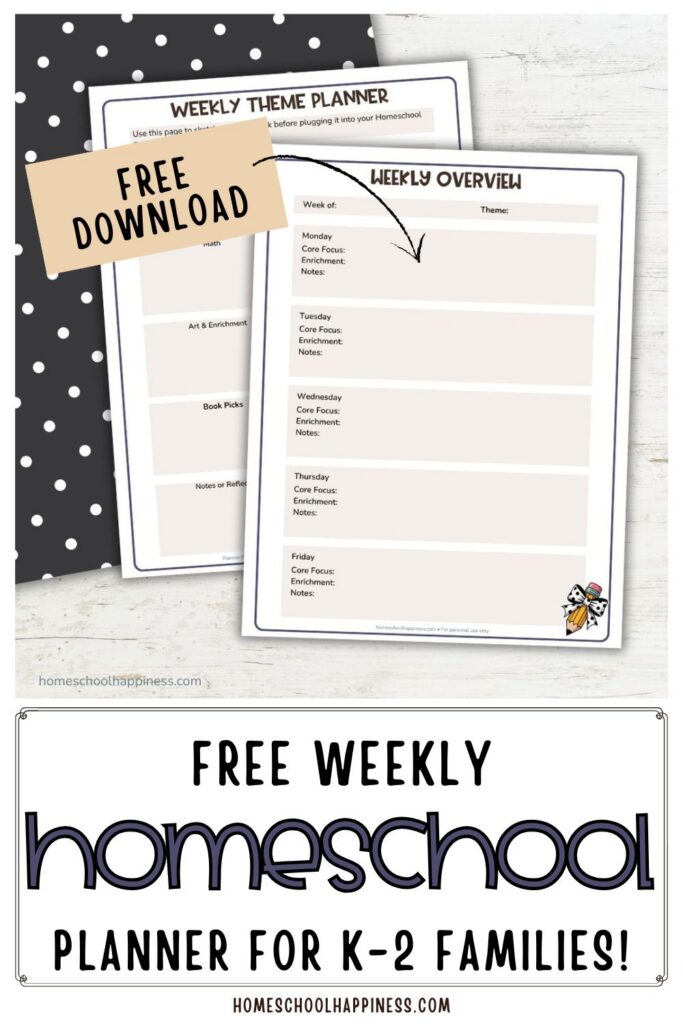
If you want help getting started, download the free Theme Planning Template to map out your next theme in just a few minutes.

Plan in Layers, Not by the Hour
When I tried to plan every subject by the hour, our days felt rushed and rigid. What finally worked was thinking in layers instead of time slots. Start with your core subjects like reading and math. Those are the non-negotiables that anchor your week.
Once those are set, add a layer of enrichment—science experiments, art projects, or nature walks. Then sprinkle in life skills like cooking, cleaning, or helping with pets. These layers can shift as needed without throwing off the whole plan.
Keep a running “plug-in list” of flexible extras for short or busy days. Simple things like a read-aloud, a math game, or an educational video can fill gaps without pressure. Planning this way keeps structure in place while leaving room for real life.
Batch Your Planning and Prep Time
One of the biggest time savers I’ve found is batching planning and prep into one block each week. Pick a time that naturally fits your rhythm—maybe Sunday night after the kids are in bed or Friday afternoon before you switch into weekend mode. Use that window to plan lessons, print materials, and gather supplies all at once.
Instead of starting each morning wondering what’s next, you’ll have everything ready to go. A simple storage bin or file box system can make this even easier. Label folders by subject or day, then slip each activity inside.
When Monday rolls around, you can grab what you need and get started without having to dig through piles of papers. Batching doesn’t just save time—it saves your sanity.
Keep a Flexible Planner or Tracker
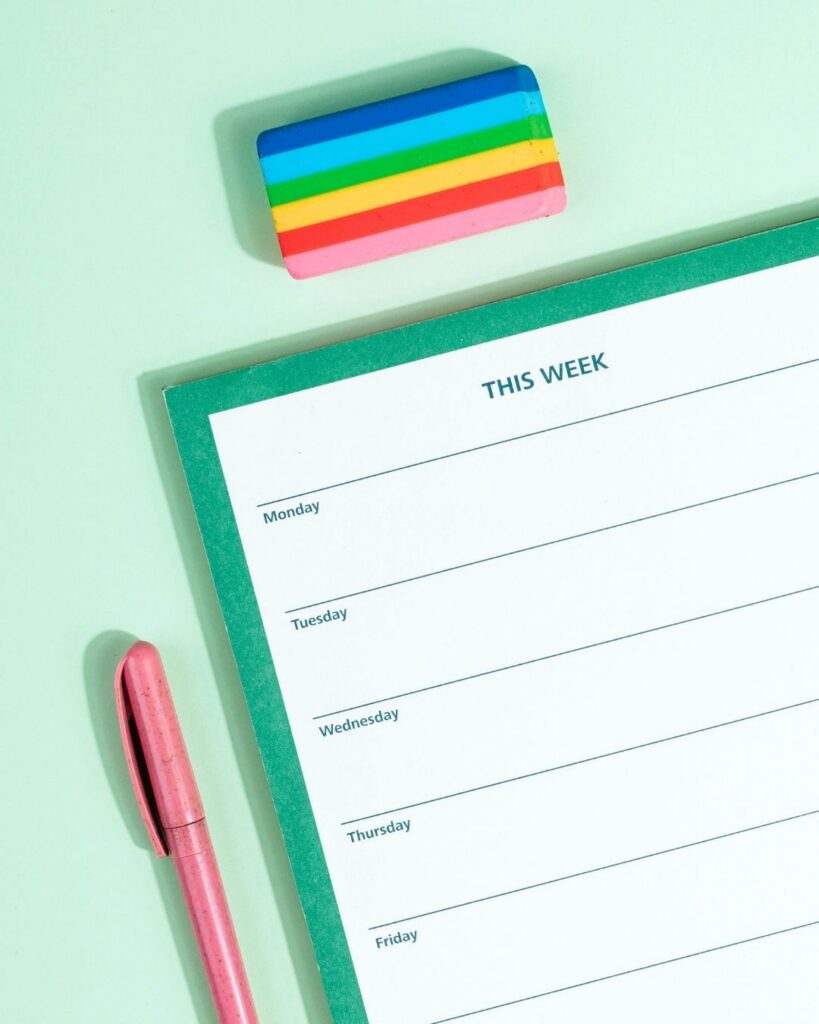
I used to spend way too much time trying to make my homeschool planner look perfect. Then I realized the best planner is the one that actually works. Keep it simple and flexible—a notebook, whiteboard, or plain weekly spread is enough. Leave space to adjust when lessons run long or when real life happens.
Focus on progress over perfection. Instead of crossing out what didn’t get done, check off what you did. That small shift makes planning feel encouraging instead of defeating.
If you want something even simpler, create a one-page “Homeschool Snapshot” sheet where you track the week at a glance. It’s a quick way to see growth and keep your plans grounded in reality, not pressure.
Simplify Subject Planning with Rotations
When I tried to fit every subject into every day, burnout hit fast. The fix was simple—rotations. Instead of teaching everything daily, assign focus days. Science on Mondays, art on Tuesdays, nature study on Wednesdays. This rhythm brings variety without constant decision-making.
Rotations also help kids know what to expect. When they wake up and realize it’s art day or science day, there’s excitement instead of confusion. It gives structure while keeping things light.
And here’s the reminder that took me the longest to accept: not every subject needs to happen every day. Learning runs deeper when it’s focused, not frantic. A few well-planned lessons each week go farther than scattered bits squeezed in daily.
Build Catch-Up and Connection Days
It’s easy to fill every square of the planner, but the truth is kids—and parents—need space to breathe. I started scheduling one light day each week, and it changed everything. These catch-up and connection days are for finishing half-done projects, going on nature walks, or diving into something hands-on.
They’re not lazy days. They’re intentional resets that keep learning joyful and flexible. Sometimes we bake together and talk about fractions. Other times we curl up for a long storytime that turns into an unexpected language arts lesson.
When you plan for rest and connection, the week feels balanced again. It’s a reminder that learning doesn’t only happen at the table—it happens in the rhythm of real life.
Reflect and Reset Each Week
At the end of each week, I take five quiet minutes—coffee in hand—and look back. What worked? What dragged? What can shift next time? It doesn’t need to be fancy or long, just honest.
A quick reflection like this helps you see patterns before burnout sneaks in. Maybe math went smoother in the mornings, or your child lit up during nature study. Small notes like that make next week’s plan clearer and kinder.
When reflection becomes a habit, planning stops feeling like a chore. It turns into a steady rhythm of noticing, adjusting, and growing together.
Homeschool planning should make life feel lighter, not heavier. The goal isn’t to create a perfect routine—it’s to build one that serves your family and leaves room for real life. When your planning feels calm and flexible, everything else starts to flow more easily too.
Simple systems last because they work with your days, not against them. You don’t need more pages in your planner; you need a rhythm that fits who you are and how your family learns best.
If you’re ready to make planning feel peaceful again, download the free Homeschool Snapshot or Weekly Theme Planner. They’ll help you start each week with clarity, confidence, and a little more breathing room.


Hi, I’m Tara—mom of three, former teacher, and now full-time homeschooler. After years in both preschool and public school classrooms, I brought the learning home and never looked back. At Homeschool Happiness, I share real-life tips, simple activities, and encouragement to help you create a homeschool life that feels good for your family—one filled with connection, laughter, and meaningful moments. We’re in this together!