How to Build a Homeschool Morning Basket
A homeschool morning basket doesn’t have to be elaborate or intimidating. In fact, the best ones are simple, doable, and flexible. If most homeschool mornings at your house feel more like a scramble for spoons and pencils than the calm start you hoped for, you’re not alone—and that’s where a simple homeschool morning routine can change everything.
At its core, a morning time basket is just a small collection of books and activities you gather on purpose to begin the day with intention. It doesn’t need to be expensive, complicated, or time-consuming. Just a rhythm that helps you and your kids start together.
After years of homeschooling and sharing ideas with other families, I’ve seen again and again that the simplest baskets are the ones that actually get opened—and the ones kids look forward to most.
Why bother? Because those first few minutes can set the tone for everything that follows. A morning basket gives you structure without rigidity, makes it easy to include multiple ages at once, and creates space for connection before diving into math or reading. Done well, it becomes a tool you’ll actually look forward to using—one that grows with your family instead of gathering dust.
What is a morning basket?
The idea of a “morning basket” has been around in homeschool circles for quite a while. Families wanted a gentle way to gather everyone together before diving into lessons, and the practice stuck. You can think of it as a modern take on the old tradition of starting the day with shared stories or quiet reflection—only flexible enough to fit your unique homeschool style.
A learning basket is simply a handful of books, cards, or activities kept in one place so you can start the day with intention. It’s less about the basket itself and more about making space for connection, a bit of learning, and a calmer transition into the rest of your school day.
And here’s the part that usually brings relief: a homeschool morning basket doesn’t need to cost much, look curated, or take up an hour of your time. You don’t need picture-perfect shelves or a detailed script. The best baskets are the ones that stay short, simple, and doable—so they actually get used.

Why Morning Baskets Work for Elementary Kids
A homeschool family basket does more than keep the day organized—it creates a rhythm your kids can count on. When mornings begin with a familiar routine, the rest of the school day tends to flow more smoothly.
Morning basket time also builds in family connection. Reading together, sharing a poem, or working through a quick game gives everyone a chance to start on the same page before splitting off into individual lessons. Those shared moments become the threads that hold the day together.
Another reason parents love morning basket ideas is that they work across ages. Whether you have an eager new reader or an older child who enjoys listening in, everyone can join the same circle. Instead of running in different directions, you start united.
Over time, this daily rhythm forms lasting habits—things like regular read-alouds, gentle memory work, or simply practicing the art of discussion. These are the building blocks of learning that don’t always fit neatly into a subject box but make a big difference in the long run.
How to Choose a Basket You’ll Actually Use
The best homeschool morning basket is the one that doesn’t collect dust in the corner. A few simple choices up front can make the difference between something that feels doable every day and something that ends up forgotten.
- Keep it visible. If your basket lives on a high shelf or gets buried under papers, you’ll be less likely to use it. Tuck it by the couch, in a favorite chair corner, or right on the table where you normally gather.
- Think small and simple. It’s tempting to load it with every great idea, but overflowing baskets can feel overwhelming. Start with just a few favorites.
- Rotate often. Swapping out books or activities weekly (or monthly, if that’s easier) keeps things fresh without adding more work.
- Pick a container you like. It doesn’t have to be a wicker basket. A bin, tote, or even a sturdy box works—whatever fits your space and style.
When you design your morning basket routine around ease and visibility, you’ll find yourself reaching for it naturally instead of forcing it into the day.

What to Put in Your Morning Basket
One of the best parts of creating a homeschool morning basket is how flexible it can be. You don’t need a set formula—just a few thoughtful pieces that make sense for your family. Here are some simple morning basket ideas to get you started:
- Read-aloud book. A chapter book for older kids or a picture book for younger ones—both invite everyone into the same story.
- Poetry or short story collection. A quick daily reading builds language and rhythm without feeling heavy. We love adding Shel Silverstein books to our basket!
- Bible verse, affirmation, or character card. Something short to spark reflection and conversation.
- Math or logic game. Flashcards, puzzles, or brain teasers keep it playful while strengthening skills.
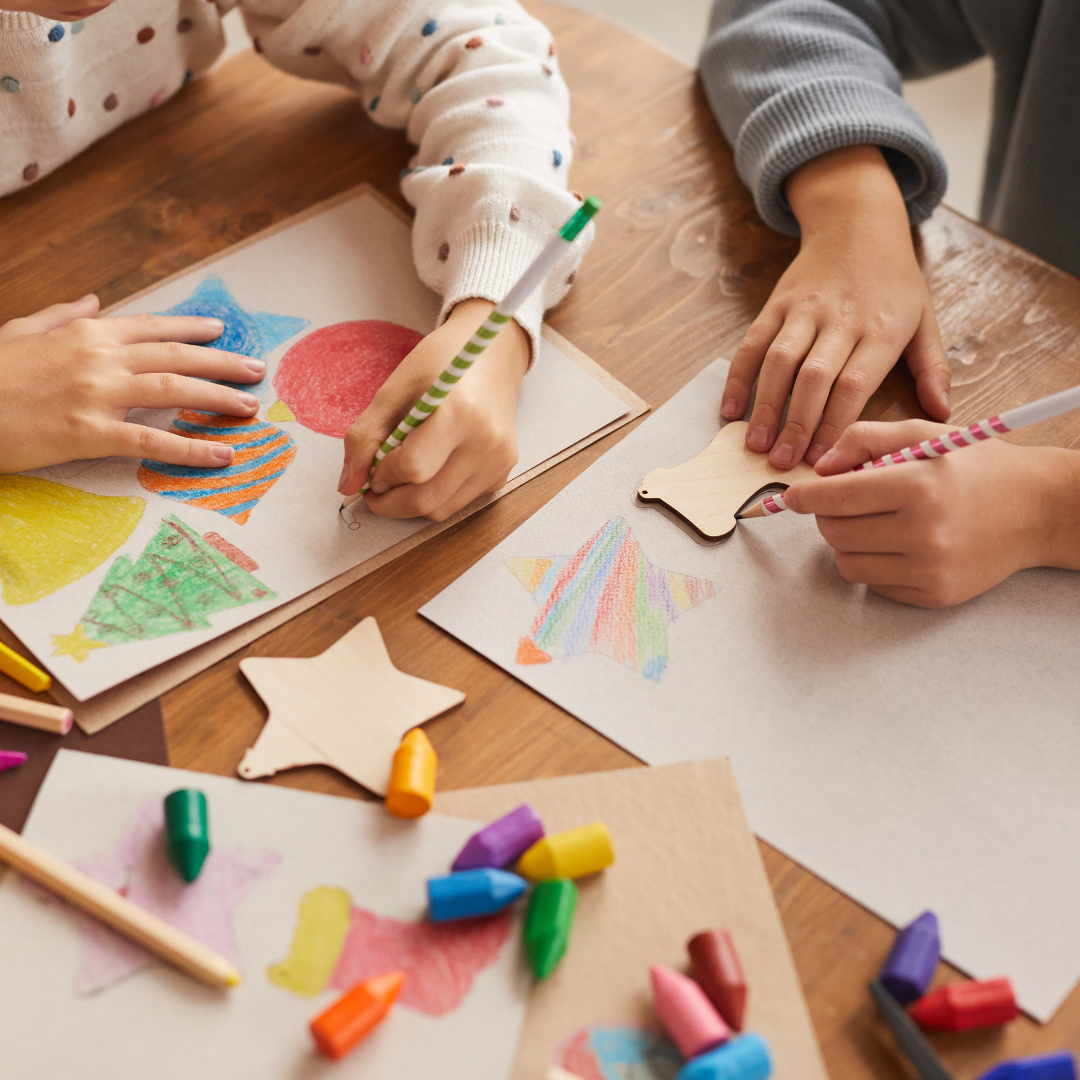
- Art or creative element. Sketchbooks, coloring pages, or art cards give kids a hands-on outlet while listening.
- Seasonal or unit-study tie-ins. Slip in something connected to what you’re already learning—a map, a science card, or a holiday book.
- Optional extras. Memory work, trivia cards, music, or even a globe if you want to explore together.
The key is variety without overload. A well-stocked morning basket routine doesn’t mean stuffed full—it just means having a handful of inviting options ready when you sit down together.
Tips to Keep Your Morning Basket From Gathering Dust
Even the best morning time kit won’t help if it sits untouched. A few small habits can help keep it part of your rhythm, rather than a forgotten project.
- Set a timer. Ten to twenty minutes is plenty. Keeping it short makes it easier to stick with.
- Pair it with an anchor. Slide your morning meeting right after breakfast or just before math—tying it to something you already do helps it stick.
- Let kids help. If they get to choose a book, a game, or even a coloring page, they’re more likely to look forward to it.
- Drop the guilt. Some days won’t include a basket, and that’s okay. The point is consistency over time, not perfection every morning.
- Keep a restock list. Jot down fresh read-alouds, puzzles, or art supplies so rotation feels easy instead of another chore.
A sustainable routine should feel light, not like one more obligation. When it’s simple, flexible, and kid-approved, you’ll actually want to pull it out day after day.
Sample Morning Basket for K–2
Sometimes, it helps to see what a real homeschool morning kit looks like in action. Here’s an example that blends variety without tipping into overload:
- Read-Aloud: One chapter from Charlotte’s Web (literature + listening skills).
- Poetry Card: A short seasonal poem to read together (language + rhythm).
- Math Game: A set of number flashcards for a quick round of “What’s Missing?” (math + memory).
- Creative Outlet: Crayons and a sketchbook so little hands stay busy while listening (art + focus).
- Character Card: A simple affirmation or Bible verse to spark reflection (values + conversation).
- Optional Extra: A fall-themed picture book tied to your unit study (science or social studies connection).
Notice how this small set touches reading, math, creativity, and character-building—without dragging on for hours. This kind of morning time routine is short, doable, and still feels rich.
Adapting as Kids Grow
One of the best aspects of a setup like this is that it can grow with your family. The same rhythm you start with younger children can easily shift as their interests and abilities change.
- For early readers: Keep the focus on picture books, simple memory work, and hands-on activities like coloring or puzzles.
- For confident readers: Swap in short chapter books, joke collections, or even kid-friendly fact books they can read aloud to you.
- For older kids: Add in copywork, journaling, or a logic puzzle they can tackle independently while younger siblings listen to a story.
- For everyone: Rotate in seasonal or unit-study pieces so the basket always feels fresh and connected to what you’re learning.
A morning caddy routine isn’t locked into one age range. It’s a flexible tool that you can adapt year after year, adjusting the contents while maintaining the same spirit of starting your day together.
A homeschool morning basket doesn’t need to be complicated to work. With just a few well-chosen pieces, you can create a gentle rhythm that brings everyone together, builds lasting habits, and sets a calmer tone for the rest of the day.
Remember—short and simple beats perfect and polished. Some mornings you’ll skip it, and that’s fine. The goal isn’t perfection, but connection.
If you’re ready to try it for yourself, start small: pick one book and one activity for tomorrow’s basket. From there, you can build a routine that feels natural for your family.
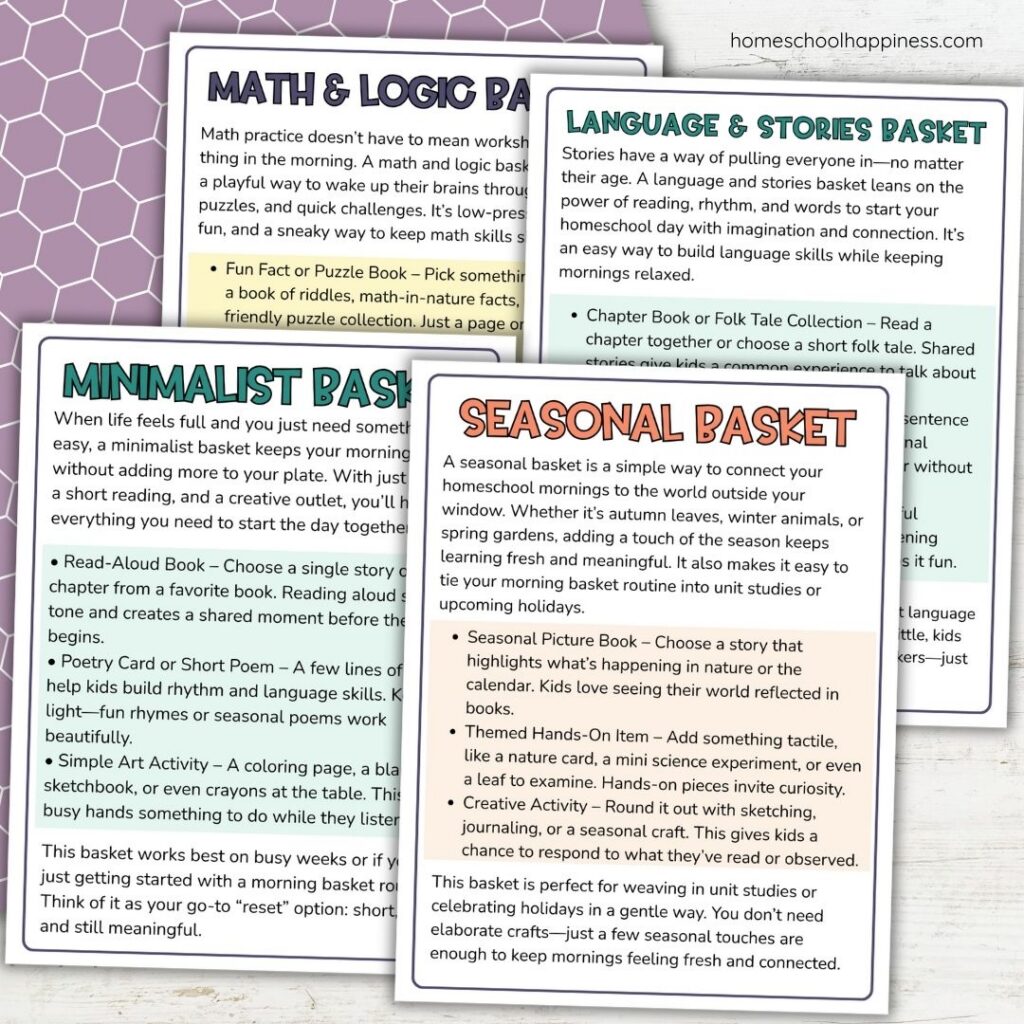
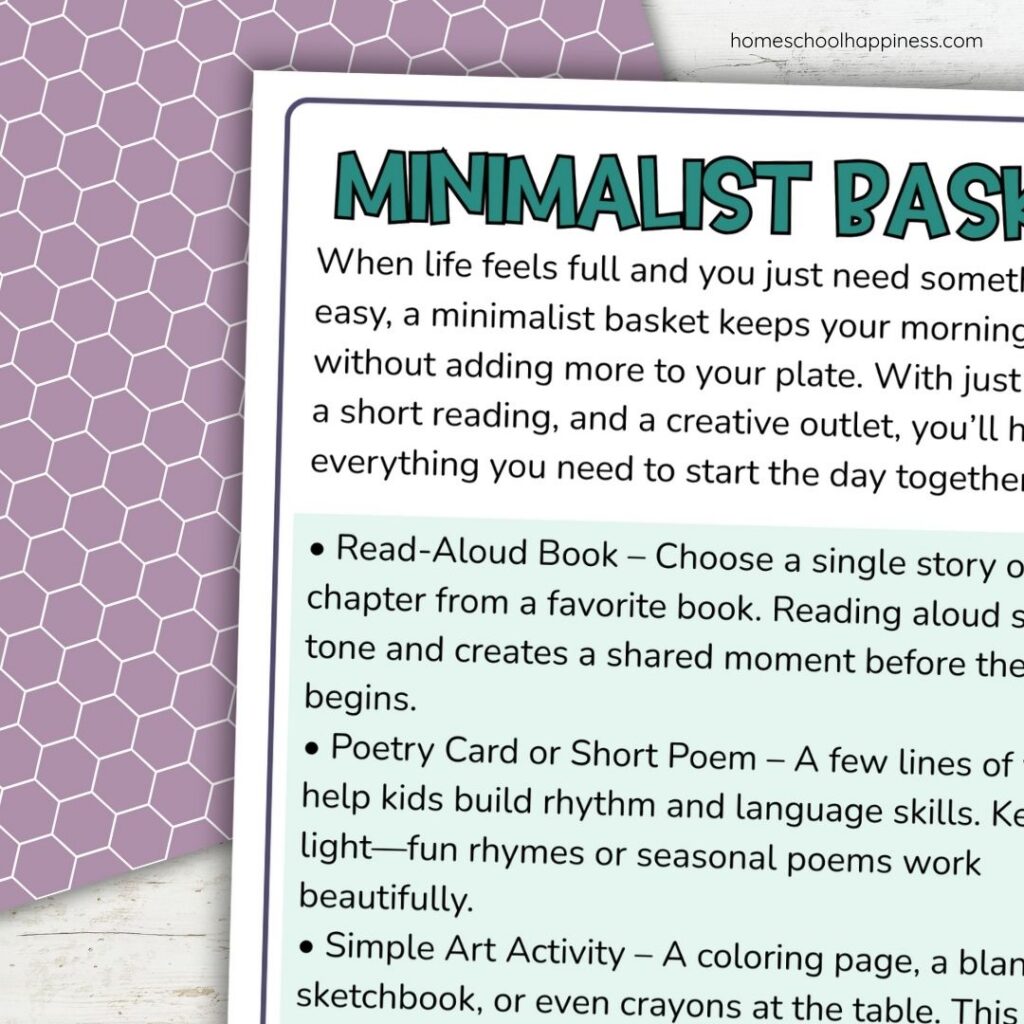
And if you’d like even more inspiration, I’ve put together a free set of printable morning basket ideas you can grab to make planning easy. Think of it as a ready-made jumpstart for your own morning basket routine.


Hi, I’m Tara—mom of three, former teacher, and now full-time homeschooler. After years in both preschool and public school classrooms, I brought the learning home and never looked back. At Homeschool Happiness, I share real-life tips, simple activities, and encouragement to help you create a homeschool life that feels good for your family—one filled with connection, laughter, and meaningful moments. We’re in this together!