A Simple Summer Homeschool Routine for K–3 Families

By the time summer arrives, many homeschool parents feel stuck between two extremes: abandoning all structure completely or trying to keep school going like normal.
Neither usually works for very long.
A simple summer homeschool routine gives your days enough structure to feel steady without making summer feel like another school year. And for most K–3 families, that often means keeping just a few gentle rhythms in place.
No elaborate planning. No rigid schedules. Just simple routines that help summer feel a little smoother while still leaving plenty of room for rest, play, and ordinary summer life.
What is a simple summer homeschool routine?
A simple summer homeschool routine is a light daily rhythm that helps K–3 families keep a few learning habits in place during summer without continuing full homeschool days. Most routines focus on reading, outside time, quiet activities, and predictable flow while still leaving plenty of room for rest, play, and flexibility.
What a Summer Homeschool Routine Is Really For
A good summer routine is not about keeping school going all year long. It is simply a way to keep your days from feeling completely disconnected.
For most K–3 families, a simple summer routine helps:
- maintain basic learning habits
- reduce daily chaos
- support more independence
- create a predictable flow to the day
- leave room for rest and spontaneity
Most importantly, summer routines should feel lighter than your normal homeschool rhythm.
The goal is not maximum productivity. The goal is a summer that feels manageable and enjoyable.

What to Include in Your Summer Routine
Your summer routine does not need to look like a full homeschool schedule. In fact, most families do better with just a few simple rhythms that help the days feel steady without feeling overly planned.
The best summer routines are usually the easiest to maintain. Simple, flexible routines tend to work far longer than complicated plans that require constant effort to keep up.
1. A Few Predictable Daily Anchors
Children tend to do well with recognizable patterns, even during summer. A few simple anchors can help the days feel steadier without creating a rigid schedule.
These anchors do not need to happen at exact times every day. They simply give your family a familiar flow to return to.
That might look like:
- reading after breakfast
- outside time every morning
- a quiet hour after lunch
- library day each week
- an evening family read-aloud
Even small routines help reduce some of the constant decision-making that can make summer feel chaotic by midseason.
Easy Summer Anchors
- Morning reading
- Outside time
- Quiet rest time
- One household responsibility
- Flexible afternoons
A good summer routine does not require every hour planned. In most cases, a few predictable rhythms are enough.
2. Daily Reading Time
If you only keep one learning habit during summer, reading is usually the most valuable place to focus.
This does not need to look like formal reading assignments or long book lists. The goal is simply to make reading feel like a normal part of daily life.
That might include:
- audiobooks during quiet time
- regular library visits
- independent reading baskets
- family read-alouds
- comic books, magazines, and beginner readers
Reading naturally keeps many academic skills active during the summer, especially in the early elementary years. And for many families, that is enough.
Not every child needs a full summer curriculum to keep learning. Often, a strong reading culture carries far more learning than parents realize.
3. Independent Time
A sustainable homeschool lifestyle cannot depend on constant parent-led activities, especially during summer.
Children benefit from having time to play, create, explore, and occupy themselves without needing entertainment every moment of the day. Independent time also gives the entire family a little more breathing room.
Simple independent activities might include:
- LEGO
- drawing
- simple crafts
- puzzles
- audiobooks
- nature journals
- quiet bins
For younger children, this may only last a short time at first, and that is completely normal. Independent time is a skill that develops gradually through consistent practice and realistic expectations.
4. Flexible Learning Opportunities
Summer learning often works best when it feels woven into everyday life rather than separated into formal lessons.
Many ordinary summer activities naturally build skills without requiring extra planning. Children are still learning when they help bake, play games, explore outside, or participate in daily life alongside you.
That might include:
- baking
- gardening
- nature walks
- errands
- road trips
- board games
- helping around the house
For K–3 children especially, learning does not always need to look academic to still be meaningful. Conversation, problem-solving, reading directions, measuring ingredients, observing nature, and helping with real responsibilities all contribute to growth over time.
What Your Summer Routine Does NOT Need
One of the biggest reasons summer routines fall apart is because parents try to do too much.
A simple routine should make your summer feel easier, not heavier. That means letting go of the pressure to recreate school at home, constantly entertain your children, or maintain unrealistic expectations all summer long.
In many cases, the routines that work best are the ones that leave the most room for real life.
1. A Full School Schedule
Summer does not need to look exactly like your regular homeschool year in order to still be valuable.
For most K–3 families, shorter and more relaxed learning rhythms are often enough to keep good habits in place without creating burnout. Reading regularly, spending time outside, listening to audiobooks, and staying connected to everyday learning can carry a surprising amount of growth through the summer months.
Children are not “falling behind” simply because summer feels lighter.
In many cases, trying to maintain a full school schedule year-round is what makes families feel exhausted by the time fall arrives.
2. Constant Parent-Led Activities
Many parents feel pressure to make summer memorable by constantly planning activities, outings, and entertainment. But children do not need every part of the day filled in order to have a good summer.
Some boredom is not a problem. In fact, slower days often create space for creativity, imagination, and more independence.
Children usually learn how to play independently, solve problems, and create their own fun when they are given the opportunity to do so regularly.
A simple summer routine should leave room for quiet afternoons, unstructured play, and ordinary days at home. Those slower rhythms are often what make summer feel sustainable for the entire family.
3. Overcomplicated Planning
Many summer plans look appealing at the beginning of June but become exhausting to maintain by July.
Hourly schedules, elaborate themed units, unrealistic Pinterest plans, and systems that require constant prep often create more pressure than support. The more complicated the routine becomes, the harder it usually is to sustain consistently.
Simple routines tend to last longer because they fit more naturally into real family life.
A few dependable rhythms will usually serve your family far better than an ambitious plan that quickly becomes overwhelming.
How to Build Your Own Simple Summer Homeschool Routine
The easiest summer routines usually start small. You do not need to map out the entire season to create a rhythm that works well for your family.
Step 1: Choose 2–3 Daily Anchors
Start with a few routines you want to return to most days.
That might include:
- reading time
- outside time
- quiet time after lunch
These anchors help create a predictable flow without requiring a full schedule.
Step 2: Decide What Matters Most This Summer
Not every season needs the same priorities.
This summer, you may care most about:
- rest
- connection
- reading growth
- independence
- smoother days at home
Choosing a few clear priorities makes it easier to keep your routine realistic.
Step 3: Keep the Routine Flexible
Leave room for summer to still feel like summer.
Open afternoons, spontaneous outings, pool days, slower mornings, and changing plans are all part of real family life. A good routine should be flexible enough to adjust as needed instead of falling apart the moment the day changes.
A summer routine should support your family, not control it.
Example of a Simple Summer Homeschool Routine
Every family’s rhythm will look a little different, but most simple summer routines follow a predictable flow instead of a strict schedule.
Morning
- breakfast
- reading time
- outside play
Midday
- lunch
- quiet time
- independent activities or audiobooks
Afternoon
- errands
- swimming
- free play
- simple projects
- park days
Evening
- family dinner
- read-aloud
- simple reset for tomorrow
This is simply a rhythm example, not a schedule to follow exactly. The goal is to create enough structure to help the day flow smoothly while still leaving room for flexibility and ordinary summer life.
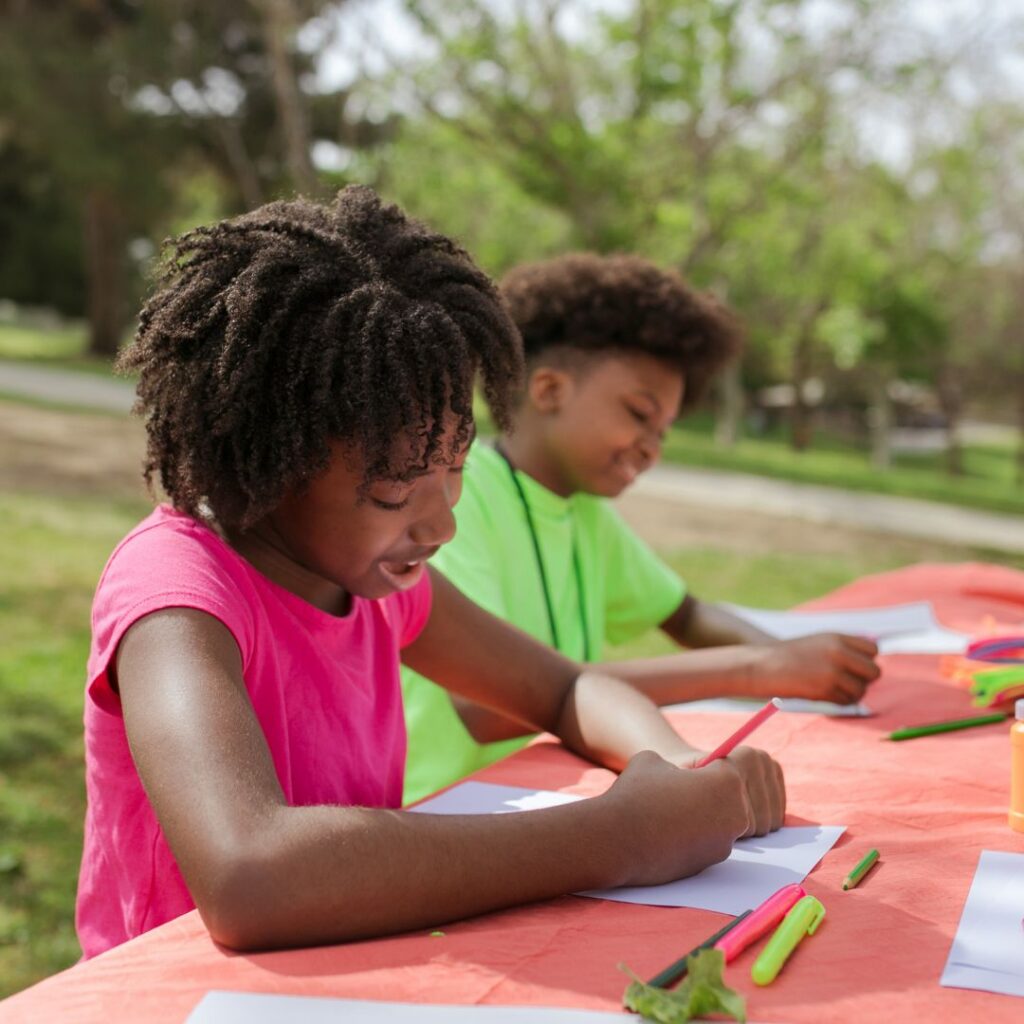
Simple Summer Routine Ideas for Different Ages
Younger K–1 Kids
Younger children usually do best with very simple routines and shorter learning moments spread throughout the day.
Helpful rhythms for this age might include:
- short reading blocks
- lots of outside time
- hands-on activities
- simple predictable routines
- quiet time after lunch
At this age, consistency matters far more than doing a large amount each day.
Older 2nd–3rd Graders
Older elementary children can often handle a little more independence during summer.
That might include:
- longer independent reading time
- simple household responsibilities
- audiobooks or quiet projects
- nature journals
- creative projects they can manage on their own
For many older K–3 students, summer is also a good time to strengthen independent habits without adding a heavy academic workload.
A successful summer routine is usually much simpler than parents expect.
You do not need elaborate plans, full school days, or constant activities to create a meaningful summer for your children. In most cases, a few steady rhythms are enough to help the days feel smoother while still keeping learning naturally woven into everyday life.
Your summer does not need to look highly organized to be meaningful. Reading together, spending time outside, building independence, and leaving room for slower days all matter too.
A simple routine should support your family through the season, not make everyone feel exhausted before fall arrives.

Hi, I’m Tara—mom of three, former teacher, and now full-time homeschooler. After years in both preschool and public school classrooms, I brought the learning home and never looked back. At Homeschool Happiness, I share real-life tips, simple activities, and encouragement to help you create a homeschool life that feels good for your family—one filled with connection, laughter, and meaningful moments. We’re in this together!


