Life Cycle of a Flower Worksheets
Looking for a fun and easy way to teach science? These life cycle flower worksheets are excellent for hands-on home learning. If you’re planning a spring science unit or need simple homeschool science worksheets, this printable set can help your child explore how flowers grow—from seed to bloom.
It’s perfect for young learners who love coloring, cutting, pasting, and talking about nature. This activity also allows kids to work with fundamental science concepts while building fine motor skills. Plus, it’s a great way to relax and enjoy quiet time together while learning something meaningful.
These worksheets are super flexible so you can use them during your main lesson, in a science center, or as a review later in the week. These flower life cycle activities are hands-on and straightforward and help kids connect with nature and science. You’ll love how easy they are to use!
Life Cycle of a Flower Worksheets
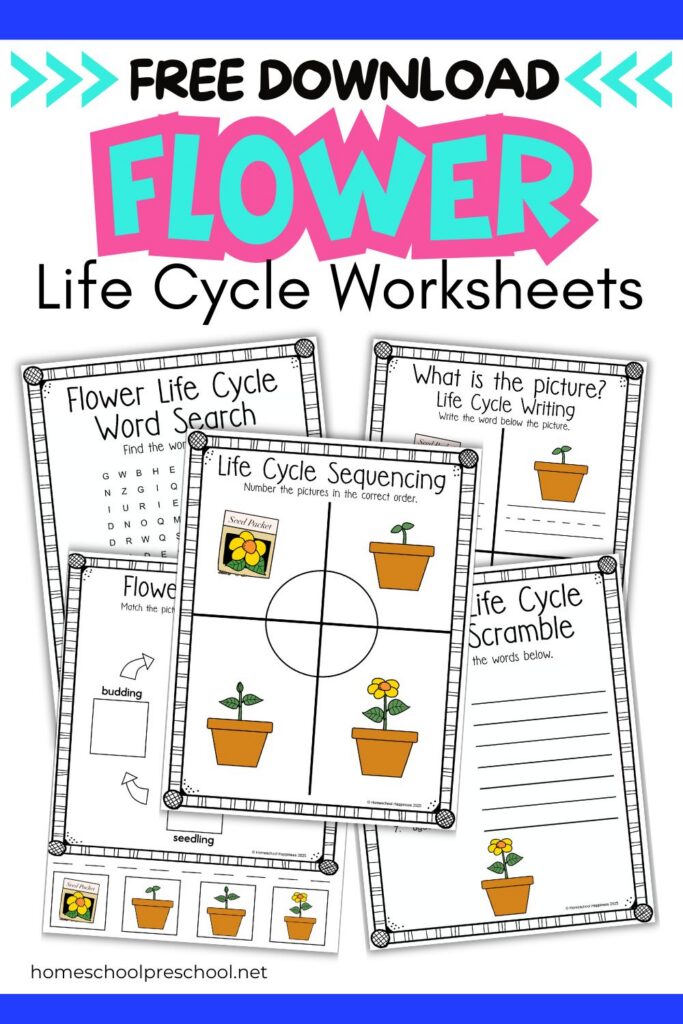
This set of flower life cycle worksheets is a simple and engaging way for kids to explore how flowers grow. These activities help young learners build skills like sequencing, vocabulary, fine motor development, and handwriting while having fun. If you’re looking for easy-to-use homeschool science worksheets, this set is an excellent fit for springtime lessons or anytime you’re learning about plants.
Here’s what’s included in the set:
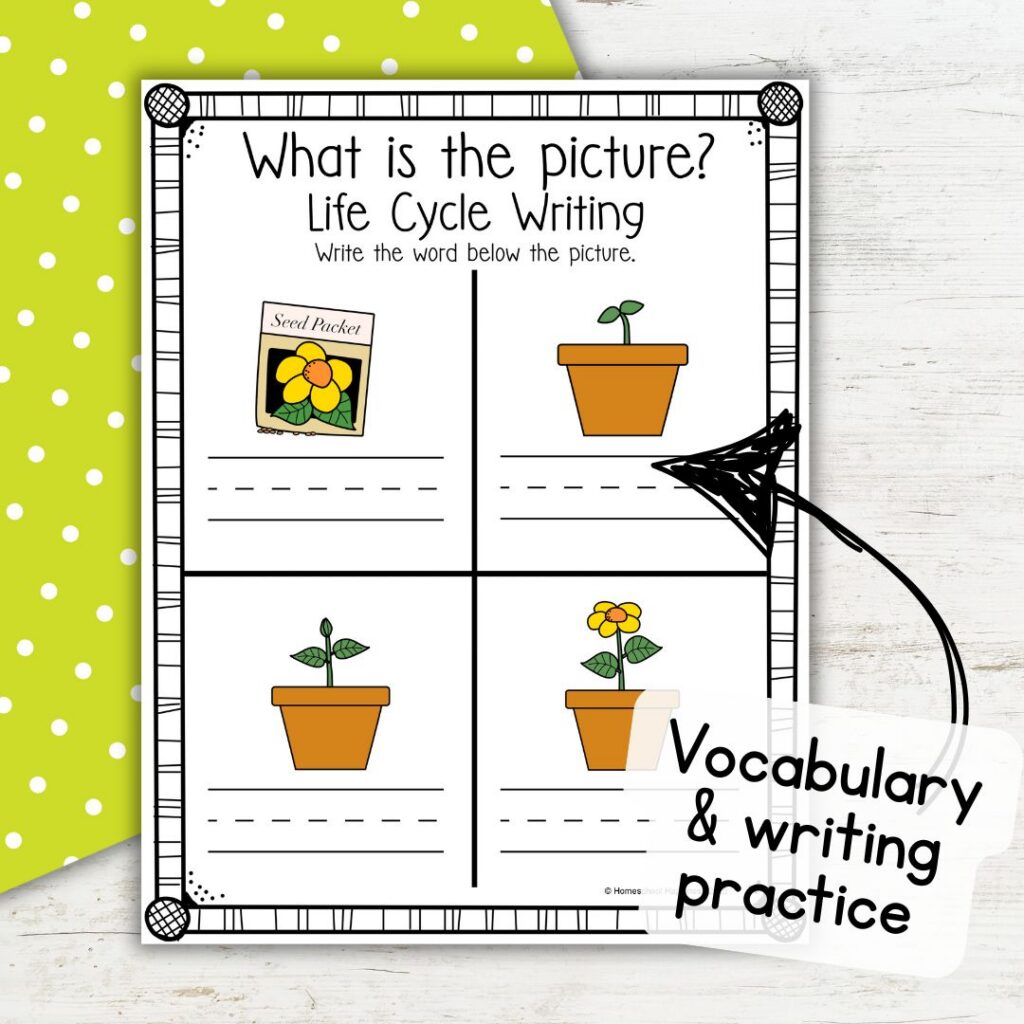
- A cut-and-paste sequencing worksheet showing the four stages: seed, sprout, bud, and flower
- A label-the-stages page to support early science vocabulary
- A number sequencing activity with flower-themed images
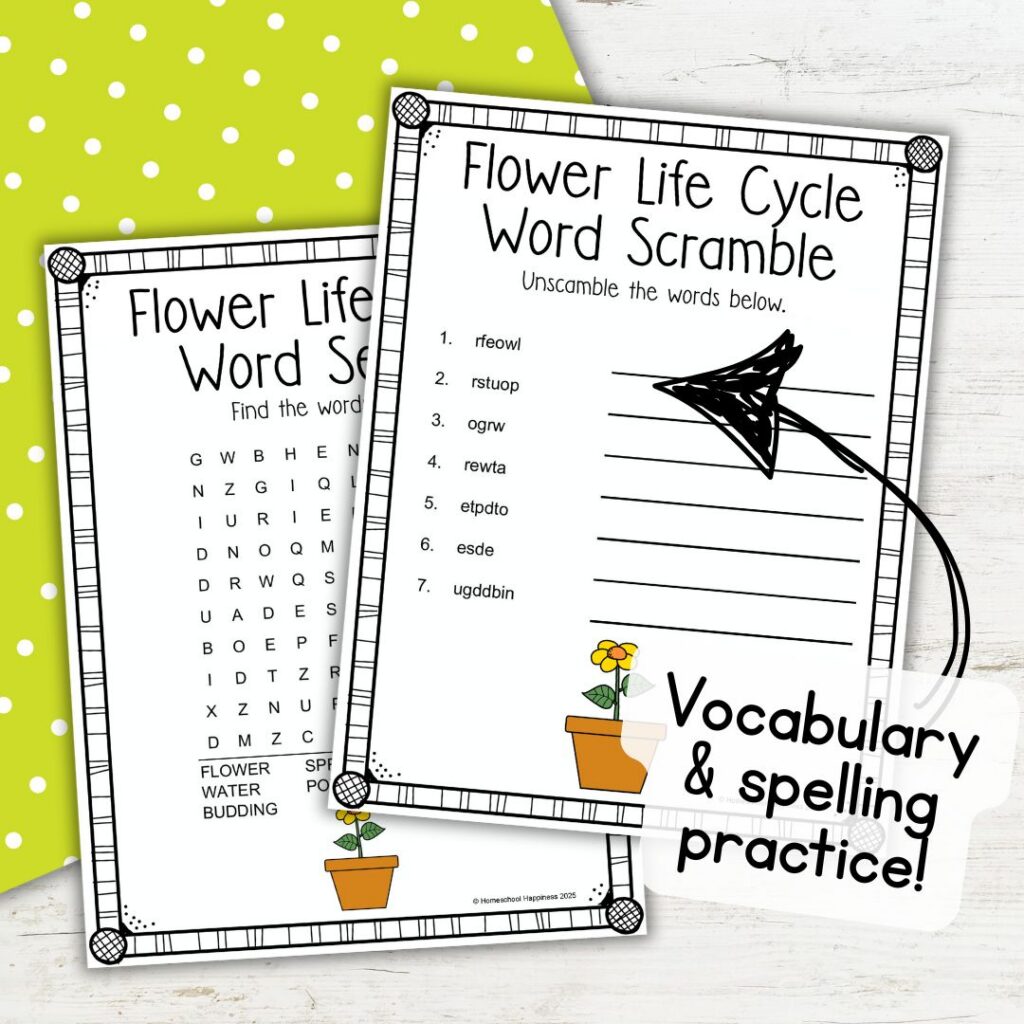
- A word search puzzle using key life cycle terms
- An unscramble the word activity for reinforcing flower vocabulary
These worksheets make science fun and easy to understand. They give children plenty of chances to interact with the topic differently, making learning meaningful and enjoyable!.

What can kids learn from this activity?
Kids can learn how flowers grow by exploring each life cycle stage—starting with a seed and ending with a blooming flower. They’ll also build vocabulary by using words like seed, sprout, bud, and bloom differently.
Along the way, children practice sequencing, handwriting, and problem-solving skills through cut-and-paste, tracing, and word games. It’s a fun, hands-on way to make science feel real and understandable for young learners.
What is the life cycle of a flower?
The life cycle of a flower shows how a flower grows and changes over time. It starts with a seed planted in the soil. Then the seed sprouts grows into a small plant and forms a bud. The bud opens into a flower, which can then make new seeds to start the cycle again. Each stage is essential and helps kids see how plants live and grow.
Why is sequencing the life cycle of a flower an important skill?
Sequencing the life cycle of a flower helps kids understand that things in nature happen in a particular order. It builds critical thinking skills as they recognize patterns and cause-and-effect relationships. Sequencing supports early reading and science learning by encouraging kids to organize and explain information clearly. Plus, it’s a great way to practice retelling and using new vocabulary in the proper context.
Flower Ideas for Kids
If you’re using these flower life cycle worksheets, there are plenty of fun ways to build on the learning! Below are some simple and creative ideas homeschool parents and teachers can try to make the topic more engaging. These activities add hands-on experiences, creativity, and extra practice while keeping things age-appropriate and easy to manage.
Flower Books for Kids
Flowers are an excellent way to introduce little ones to nature, seasons, and science. Whether watching petals bloom in spring or learning how bees help plants grow, flowers offer endless opportunities for wonder and discovery.
These picture books are perfect for sparking curiosity and encouraging a love of the outdoors in preschool-aged kids. Each one celebrates the beauty and magic of flowers in a way that’s easy for young children to understand and enjoy.



Flower Garden by Eve Bunting is a sweet story about a little girl and her father preparing a surprise birthday flower garden for her mother. The rhythmic text and warm illustrations capture the excitement of picking out flowers, riding the bus home, and planting them in a window box. It’s a gentle celebration of family, love, and urban gardening.
Zinnia’s Flower Garden by Monica Wellington combines a story about growing flowers with fun facts about gardening and plants. As Zinnia plants her seeds and patiently cares for her garden, young readers learn about the life cycle of flowers in a way that feels like play. The vibrant, detailed illustrations also offer plenty to explore on every page.
The Reason for a Flower by Ruth Heller uses rhythmic text and gorgeous illustrations to explain why flowers exist—hint: it’s all about making seeds! This classic book introduces basic botany concepts in a way that’s accessible and engaging for young minds. It’s both educational and visually captivating, perfect for curious little gardeners.

Flower Crafts for Kids
Crafts are a fun way to help kids connect with what they learn about flowers. These simple flower crafts are great for building fine motor skills and letting kids be creative while reinforcing science concepts. They’re also perfect for adding a little art to your homeschool day without needing a lot of prep or supplies.
- Crumpled Paper Sunflower Craft
- Spring Pipe Cleaner Flower Craft for Kids
- Edelweiss Flower Craft
- Flower Crafts for Kids: Textured Tissue Paper Flowers
- Cotton Rounds Flower Craft for Kids


Flower Printables for Kids
Printable activities are an easy way to add more learning to your flower theme without extra planning. These flower printables are great for practicing early skills like matching, counting, writing, and more. They’re ready to print and go—perfect for quiet time, centers, or extra review.
- Van Gogh Sunflowers Printable Art Activity
- Sunflower Printables
- Flower Pattern Worksheet
- Flower Counting Worksheets
- Preschool Flower Life Cycle Activities
FAQs About Life Cycle of a Flower Worksheets
This activity is great for kids in kindergarten through second grade. The worksheets are simple enough for early learners but offer good practice with science concepts, fine motor skills, and sequencing. They’re ready if your child can cut, paste, trace, or match!
Nope! These worksheets can be an introduction, a review, or a stand-alone activity. You can read a simple flower book together or talk about what happens when a seed grows into a flower—it doesn’t have to be fancy.
Yes, definitely. You can print as many copies as you need for your household or classroom. If you want to reuse them repeatedly, try slipping the pages into a plastic sleeve and using dry-erase markers.
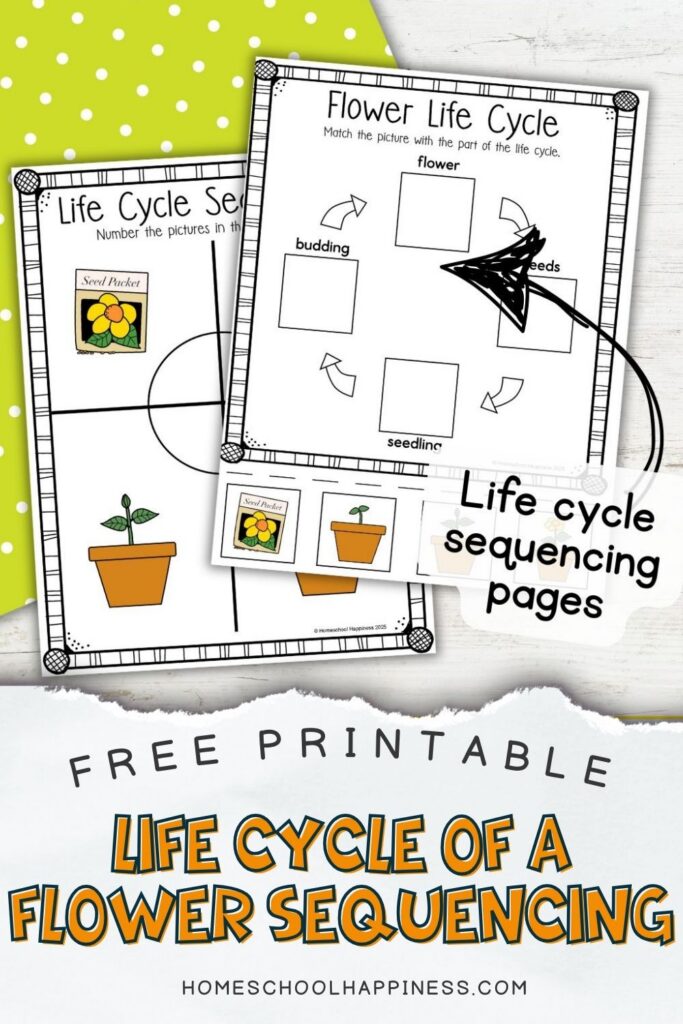
Teaching kids about how flowers grow is fun and straightforward, as shown by the life cycle of flower printables. The hands-on activities make science feel real and help children develop essential skills, including sequencing, vocabulary, fine motor skills, and observation. Whether you use them as part of your homeschool science lessons or add something seasonal to your day, these printables are an easy way to support learning.
With numerous ways to utilize this activity set—and even more ideas to build upon it—your child can explore nature playfully and purposefully. It’s a great way to make learning stick while keeping things low-stress and enjoyable.


Hi, I’m Tara—mom of three, former teacher, and now full-time homeschooler. After years in both preschool and public school classrooms, I brought the learning home and never looked back. At Homeschool Happiness, I share real-life tips, simple activities, and encouragement to help you create a homeschool life that feels good for your family—one filled with connection, laughter, and meaningful moments. We’re in this together!


