The #1 Mistake That Holds Back Independence in Homeschoolers—and How to Fix It
If you’ve ever wondered how to encourage independence in homeschool, you’re definitely not alone. Most of us start homeschooling with the hope that our kids will become self-motivated learners—capable, confident, and eager to take ownership of their day. But somewhere along the way, we end up doing a little too much… and they start relying on us more than we expected.
I didn’t fully realize it until I hit a wall myself. I was exhausted, juggling every detail, and feeling like nothing would get done unless I was directing every step. That’s when it clicked: I wasn’t giving my kids the chance to grow independent because I was holding on too tightly.
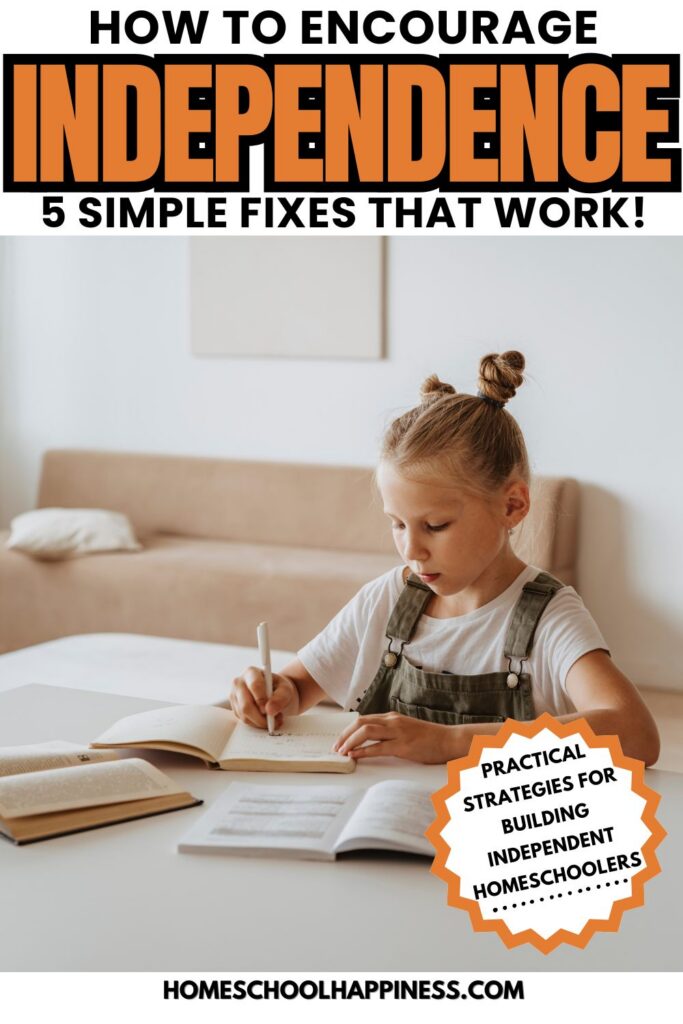
In this post, I’ll share the biggest mistake I made, what changed when I let go (just a little), and what helped my kids—and me—find a healthier rhythm.
At a Glance
✅ The #1 mistake that may be holding your homeschooler back from growing more independent
✅ What shifted when I stopped doing too much and gave my kids room to step up
✅ Simple, practical strategies to encourage independence without losing your routine
✅ How to encourage independence in homeschool—in ways that work for you and your child
The Mistake—Holding On Too Tight
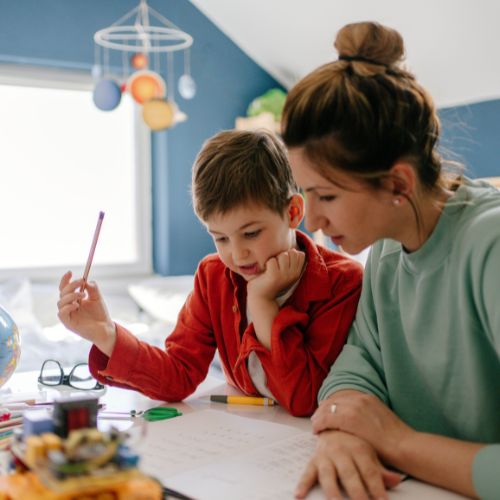
We start out with the best of intentions—being present, offering support, making sure nothing falls through the cracks. But without realizing it, we sometimes step over a subtle line: from guiding our kids to controlling every part of their homeschool day.
How It Shows Up
This mistake often hides in plain sight. It doesn’t look like “doing everything for them”—it looks like helping. But here’s what it might actually look like in your home:
- Always hovering nearby “just in case” they need help—even when they don’t ask for it.
- Double-checking every answer, every page, every assignment—before they even finish.
- Planning every detail so precisely that there’s no room for spontaneity or decision-making.
- Stepping in at the first sign of frustration instead of letting them wrestle with a challenge.
These actions come from a place of love, but they quietly send a message: “You can’t do this without me.”
My Wake-Up Call
For me, the realization came in the middle of burnout. I was tired all I didn’t realize how tightly I was holding onto everything—until I hit a wall. The constant planning, the hovering, the micromanaging… it was all piling up. I was exhausted.
Somewhere in the middle of yet another day where I felt more like a taskmaster than a mom, I finally recognized the root of my burnout: I was trying to control too much.
In trying to make sure everything ran smoothly, I’d unintentionally taken on everyone’s responsibility—leaving little room for my kids to step up or take ownership of their learning.
What I thought was helping… was actually holding them back.
The Ripple Effect of Doing Too Much
When we constantly step in, we think we’re keeping the day on track—but underneath the surface, something else is happening. Our well-meaning support can slowly chip away at our children’s growth and our own peace of mind.
What Happens to Our Kids
Without realizing it, our kids start relying on us for more than they need to.
- They become dependent on constant guidance instead of developing the ability to problem-solve on their own.
- They learn to wait passively—expecting us to tell them what to do next, how to do it, and when it’s “good enough.”
- They miss out on the confidence that comes from making choices, figuring things out, and even making mistakes. That’s where real learning—and real independence—happens.
When we always jump in to make things easier or faster, we unintentionally send the message that they’re not capable of doing it without us.
What Happens to Us
And while all of this is unfolding, we’re silently carrying the weight of everyone’s progress. That’s where the burnout creeps in.
- We become the glue holding everything together, with no space to step back or breathe.
- We feel frustrated and resentful, wondering why they won’t take initiative or follow through.
- We question our homeschool altogether, asking ourselves:
“Is this really working? Am I doing something wrong?”
The truth is: it’s not that they can’t be independent—it’s that we haven’t given them the space to try.

How to Encourage Independence in Homeschool
Once I realized I was holding on too tightly, I knew something had to change—but I didn’t want to swing the pendulum so far that my kids felt lost or unsupported.
The goal wasn’t to step away entirely. It was to step back just enough to let them grow, while still providing the structure they needed to thrive.
Here’s what actually worked for us:
✅ Color-Coding Supplies for Autonomy
This was such a simple shift, but it made a big impact. I assigned each child their own color—binders, folders, pencil boxes, even water bottles. It eliminated constant questions like “Whose is this?” and gave each child a sense of ownership over their materials. It also minimized arguments and distractions, because everyone knew exactly what belonged to them.
Small detail, big win.
✅ Checklists for Control
I started using checklists so my kids could see what needed to be done without relying on me to tell them what to do next. They could go at their own pace, check tasks off one by one, and feel a sense of accomplishment.
Even better? I was no longer the cruise director announcing every activity. The checklist spoke for itself—and it gave them the gift of choosing what to tackle next.
✅ Routines for Rhythm
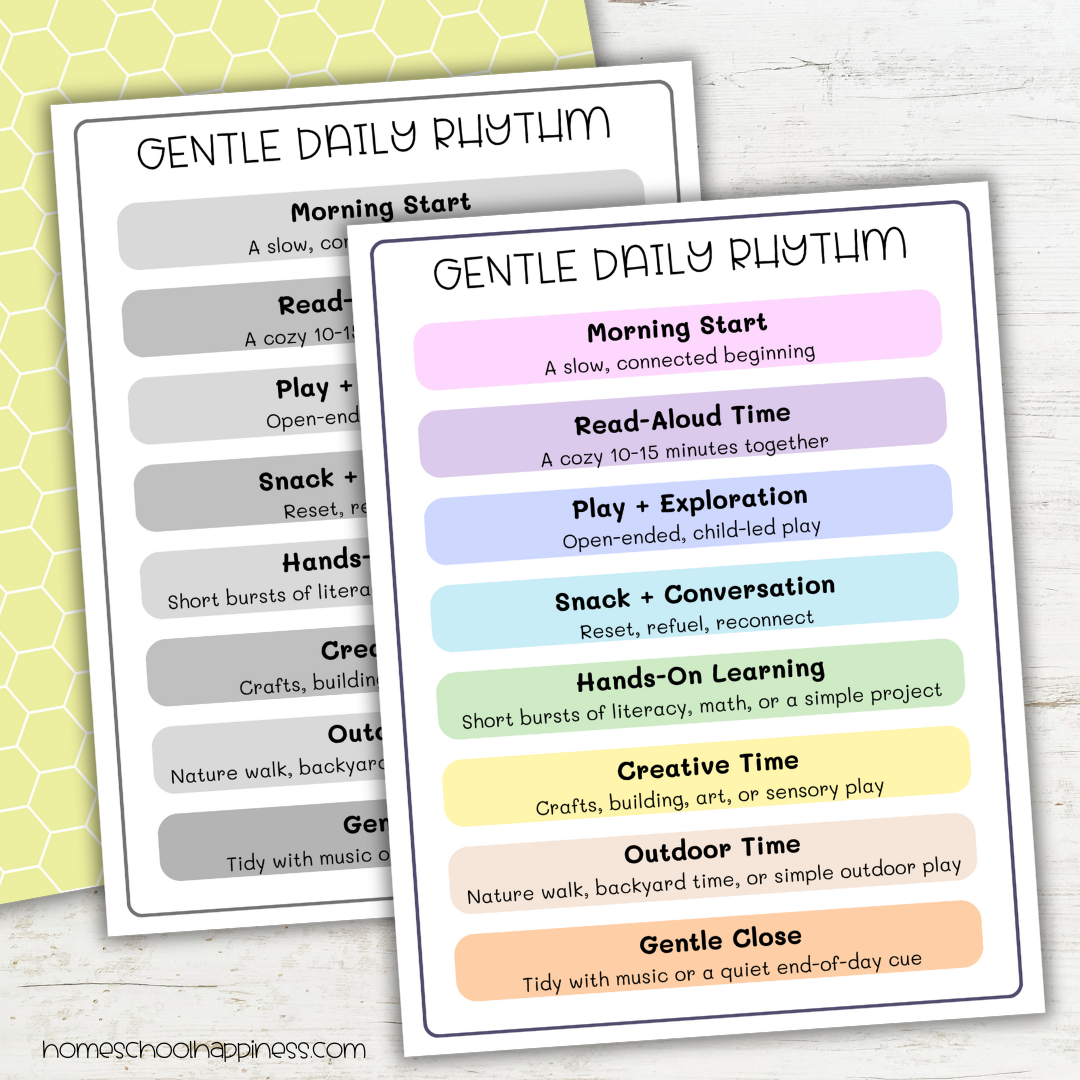
We’re not a super-scheduled family, but we do love a good rhythm. Our days became smoother when we followed a consistent routine: morning work, snack break, read-aloud, hands-on learning, etc.
Routines took the pressure off me to constantly give instructions, and they gave my kids the security of knowing what to expect next. It brought a comforting predictability to our days—even when the content changed.
✅ Teach How to Be Independent
Here’s something I had to remind myself: independence isn’t something kids just have—it’s something they learn. So instead of expecting them to “just do it,” I started walking them through the process.
Try something like: “Let’s look at your checklist together. What do you want to start with today?”
Over time, I shifted from doing it with them to letting them do it on their own—while still being available in the background when needed.
✅ Allow Productive Struggle
This one was the hardest for me. Watching them get stuck and not jumping in? Torture. But I learned to sit on my hands (literally!) and let them wrestle with the problem a little.
And here’s the thing: the moment they figure something out on their own—after a few deep breaths or a second try—that’s when the real magic happens. That’s when they say:
“I figured it out myself!”
And that’s when you realize your hard work is paying off.
For even more ideas on how to build confidence and independence, check out my post on Raising Independent Learners.
When It Clicks—Independence in Action
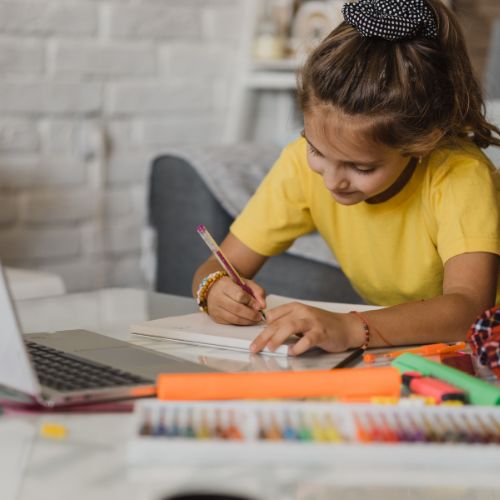
The shift didn’t happen overnight. It took time, patience, and a lot of letting go on my part. But little by little, I started to see it—the spark of ownership in their eyes. They weren’t just checking boxes or waiting for direction anymore. They were growing into learners who could think, choose, and follow through.
I remember the first time one of my kids quietly finished their checklist without asking a single question. No reminders. No redirection. Just quiet focus and that proud little grin when they told me they were done. It wasn’t perfect. It wasn’t flashy. But it was real. And it was the kind of win that reminded me we were on the right track.
That moment reminded me: this is why we homeschool. Not for perfectly polished days or flawless routines, but for the slow and steady growth that happens when our kids are given the space—and support—to take the lead.
Give Yourself Permission to Let Go
If you’re feeling the weight of trying to do it all, you’re not alone—and you’re not doing it wrong. Sometimes the very thing we think is “helping” ends up holding everyone back, including us.
So here’s your permission:
Don’t wait for burnout to let go of the reins.
Stepping back isn’t a sign of failure. It’s a sign of growth—for both you and your child. It shows you’re trusting the process, and more importantly, trusting them to try, stumble, and succeed in their own time.
Independence doesn’t mean doing everything alone. It means giving your child the confidence to do what they can on their own—and the reassurance that support is there when they truly need it.
You’re still the guide. You’re still the anchor. You’re just creating space for your child to rise.
And they will.
“Have you had an aha moment around independence in your homeschool? I’d love to hear it in the comments!”

Hi, I’m Tara—mom of three, former teacher, and now full-time homeschooler. After years in both preschool and public school classrooms, I brought the learning home and never looked back. At Homeschool Happiness, I share real-life tips, simple activities, and encouragement to help you create a homeschool life that feels good for your family—one filled with connection, laughter, and meaningful moments. We’re in this together!