5 Easy Summer Science Activities for Kids Using Items You Already Have at Home
If you’re searching for easy summer science activities that won’t add more stress to your already full plate, you’re in the right place. As busy moms, we know how tricky it can be to balance fun and learning during those sunny, unstructured days.
Between playdates, snack time, and keeping the house somewhat clean, adding “homeschool science” to the mix might feel overwhelming.
But here’s the good news: it doesn’t have to be complicated. These five easy, exciting, and educational science ideas are perfect for summer—and they use items you probably already have around the house. Let’s make science simple and memorable!
At a Glance
Here’s a quick peek at the hands-on homeschool science fun you’ll find in this post:
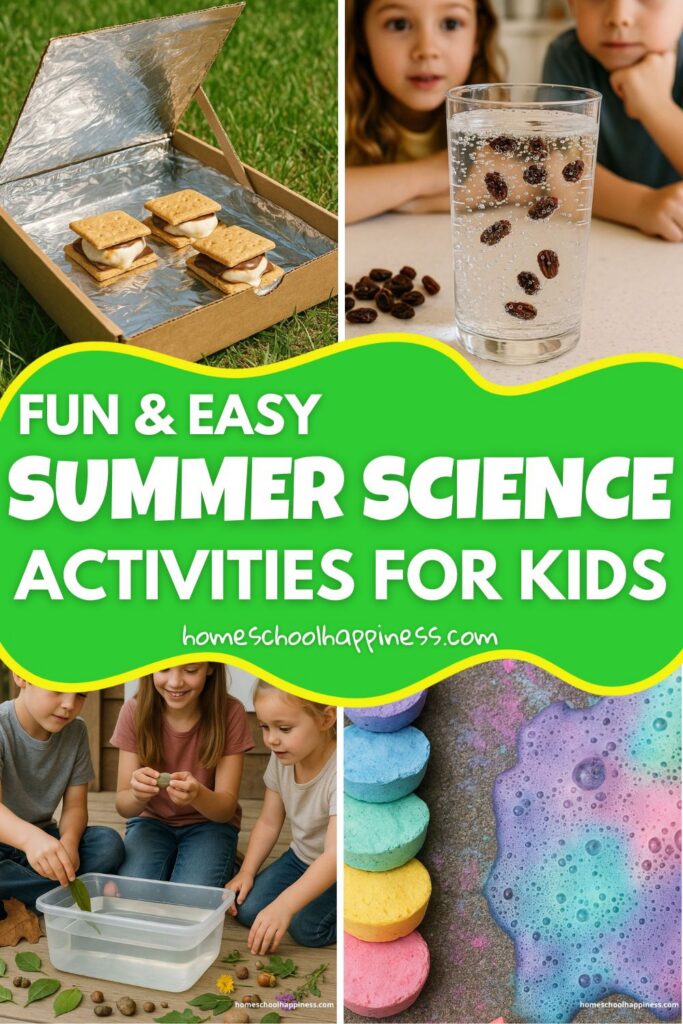
• Fizzy Sidewalk Chalk – Create colorful art that fizzes with vinegar!
• Ice Melting Race – Use salt and water to see who melts their ice fastest.
• DIY Solar Oven S’mores – Harness the power of the sun to make a treat.
• Dancing Raisins Experiment – Watch raisins rise & fall in a bubbly drink.
• Nature Walk Sink or Float – Collect outdoor treasures & test buoyancy.
Simple, sensory, and screen-free—perfect for summer learning at home!
Science Activities for Summer
Summer is the perfect time to explore science in fun, hands-on ways that don’t feel like schoolwork. These simple experiments are designed with busy moms in mind—easy to set up, engaging for kids, and packed with learning.
Whether you’re looking to add a little structure to your day or sneak in some homeschool science, these activities make it easy to keep curious minds active all season long. Let’s dive into five exciting ideas your kids will love!
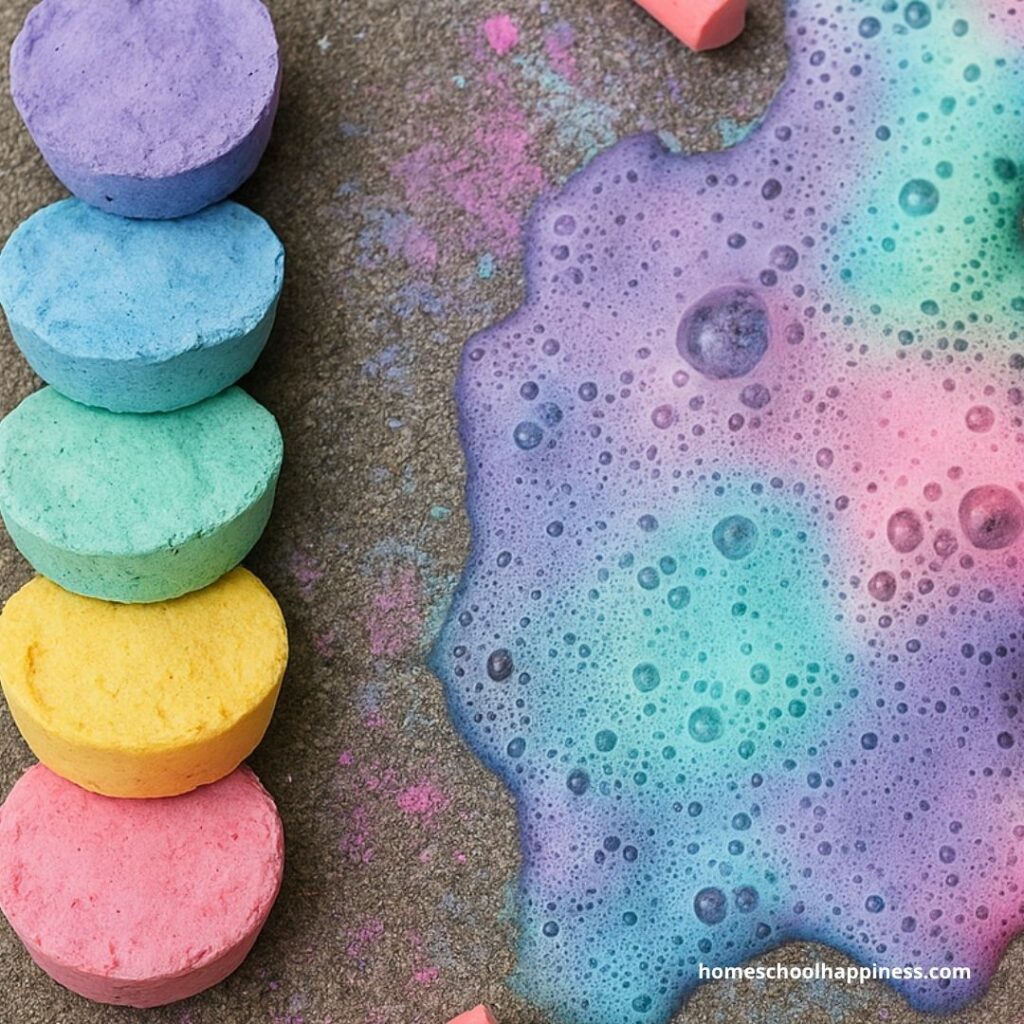
Activity 1: Fizzy Sidewalk Chalk Science
Overview:
Mix baking soda, cornstarch, and food coloring to create chalk paint. Once dry on the sidewalk, spray with vinegar and watch the fizz!
What You Need:
- Baking soda
- Cornstarch
- Food coloring
- Water
- Vinegar in a spray bottle
What Kids Learn:
- Chemical reactions (acid + base)
- Cause and effect
Mom Tip:
Mix small batches in muffin tins—less mess, more fun.
This was my nephew’s favorite activity when he came to spend a week with Aunt Tara!
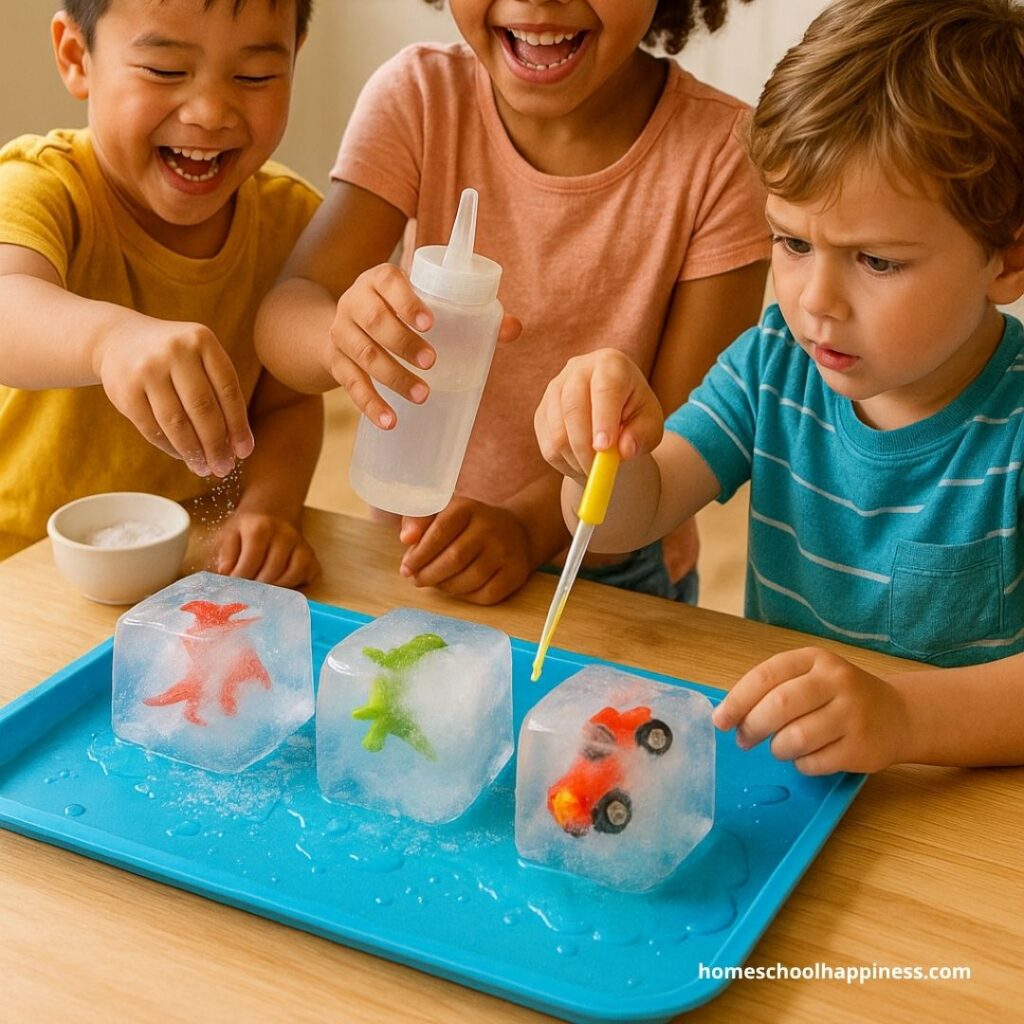
Activity 2: Melting Race: Ice + Salt Experiment
Overview:
Freeze small toys inside ice cubes and race to see who can melt theirs the fastest with salt, warm water, and more.
What You Need:
- Ice cube tray
- Small plastic toys or coins
- Salt
- Water
- Droppers or spray bottles
What Kids Learn:
- States of matter
- How salt affects the melting point of ice
Mom Tip:
Set this up outdoors and turn it into a race—science and play make for a win-win!
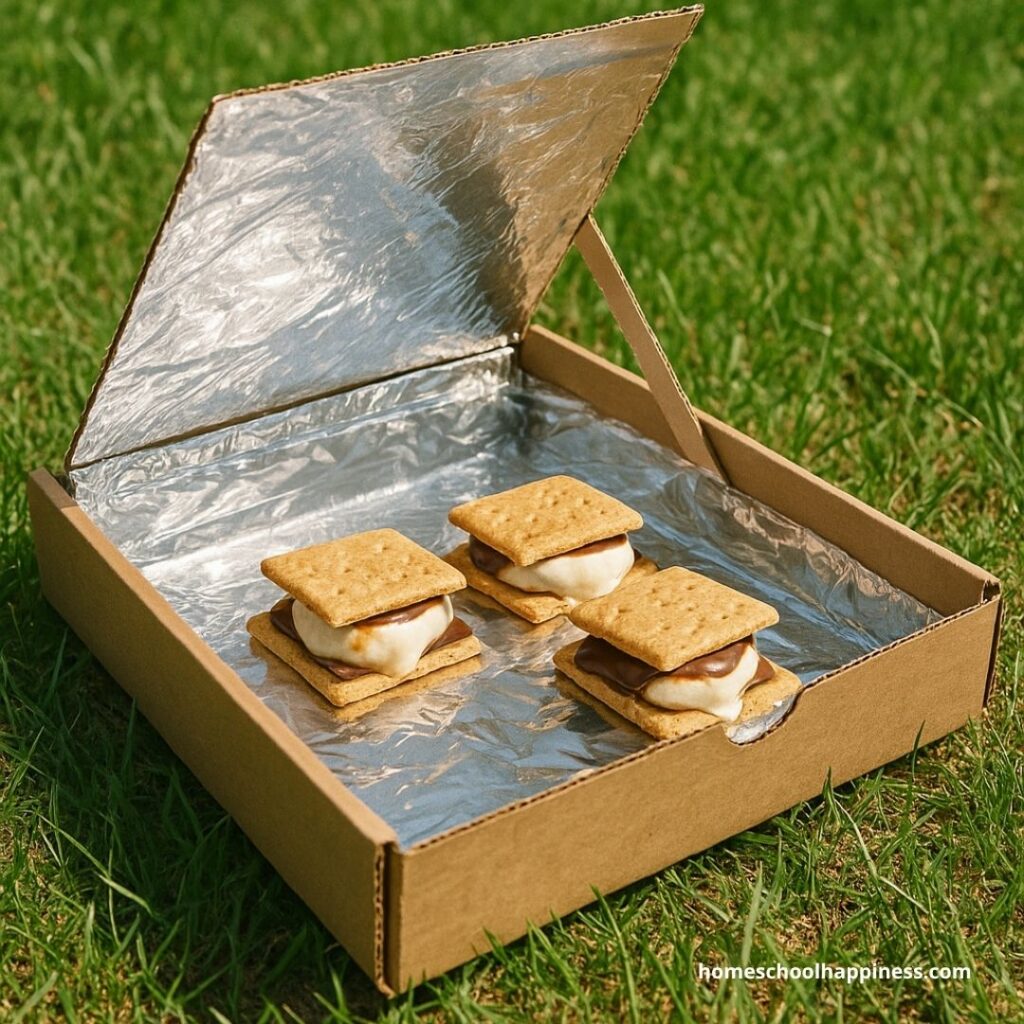
Activity 3: DIY Solar Oven S’mores
Overview:
Use a pizza box, foil, and plastic wrap to build a mini solar oven. Make s’mores while learning about solar energy!
What You Need:
- Pizza box
- Aluminum foil
- Clear plastic wrap
- Black construction paper
- Graham crackers, chocolate, and marshmallows
What Kids Learn:
- Renewable energy
- How the sun can cook food
Mom Tip:
Prep the oven with your kids in the morning—by lunchtime, it’s ready to cook!
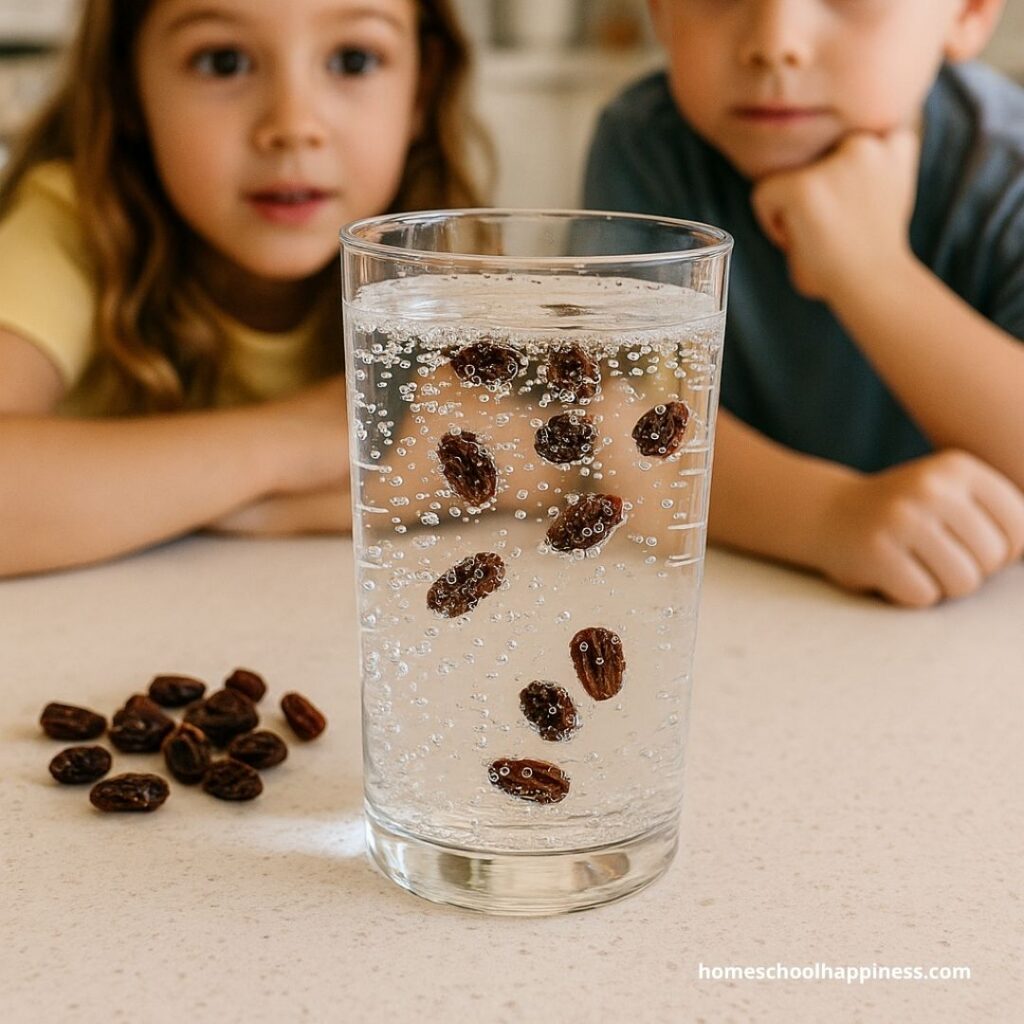
Activity 4: Dancing Raisins Experiment
Overview:
Drop raisins into a cup of fizzy soda and watch them “dance” as carbonation lifts and drops them.
What You Need:
- Clear cup
- Raisins
- Club soda or clear carbonated soda
What Kids Learn:
- Buoyancy
- Carbon dioxide bubbles
Mom Tip:
Try other light objects like corn kernels or popcorn to compare results!
Activity 5: Nature Walk Scavenger Hunt + Sink or Float Test
Overview:
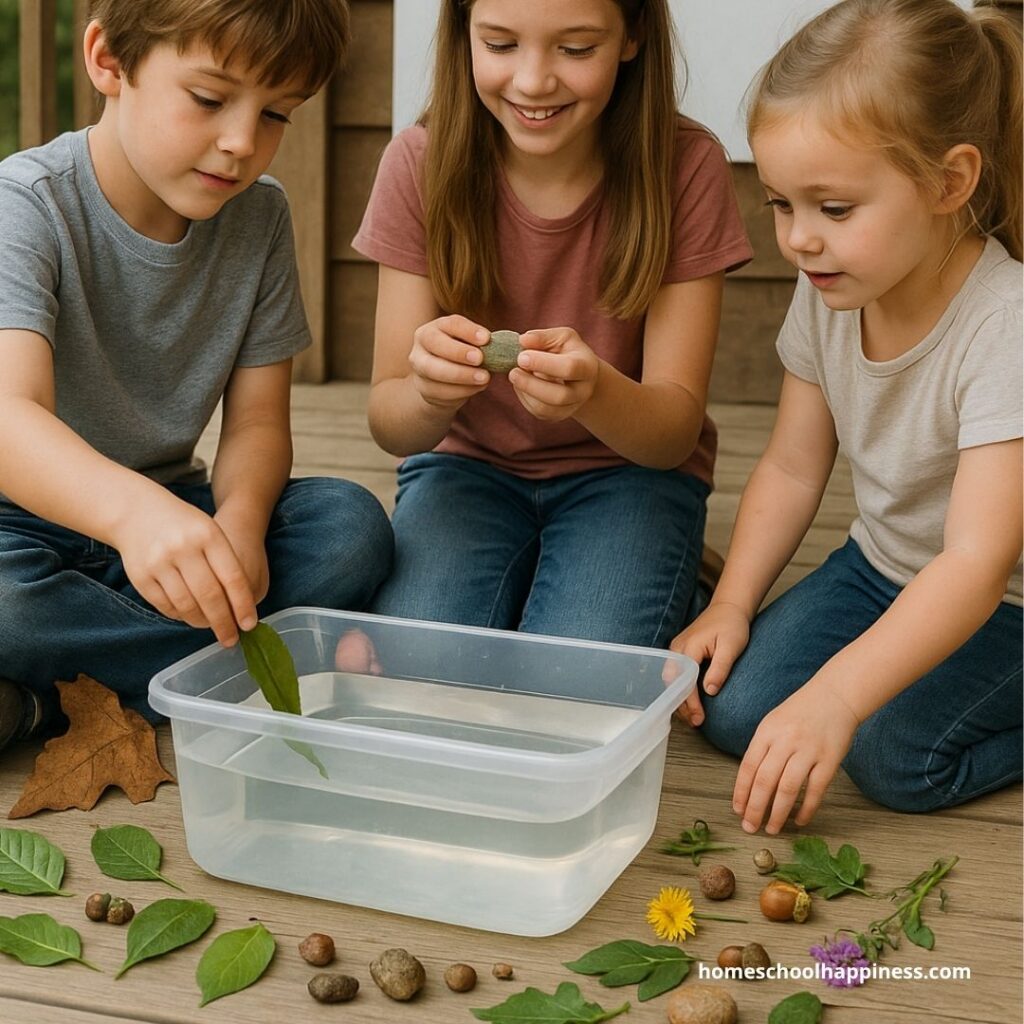
Go on a nature walk, collect small treasures, then test which items sink or float in a tub of water.
What You Need:
- Bag or basket for collecting items
- Large bowl or plastic tub
- Water
What Kids Learn:
- Scientific method (hypothesis, test, observe)
- Properties of objects (density, texture)
Mom Tip:
Let kids guess before each test—add clipboards or journals for extra writing practice.
You don’t need a picture-perfect setup or fancy supplies to make science activities for summer fun and meaningful. These real-life experiments are designed to fit into your busy days and spark curiosity without adding stress. Doing these activities together not only builds important STEM skills—it also creates moments your child will remember long after summer ends.
Which experiment will you try first? Let us know in the comments or tag us on social media to share your homeschool science adventures—we’d love to cheer you on!

Hi, I’m Tara—mom of three, former teacher, and now full-time homeschooler. After years in both preschool and public school classrooms, I brought the learning home and never looked back. At Homeschool Happiness, I share real-life tips, simple activities, and encouragement to help you create a homeschool life that feels good for your family—one filled with connection, laughter, and meaningful moments. We’re in this together!


