Five Senses Coloring Pages for Preschool

If you’re looking for fun five senses coloring pages for preschool, you’re going to love this easy and playful activity! These pages are designed for homeschooling preschool kids who learn best when they can color, trace, and explore with their hands.
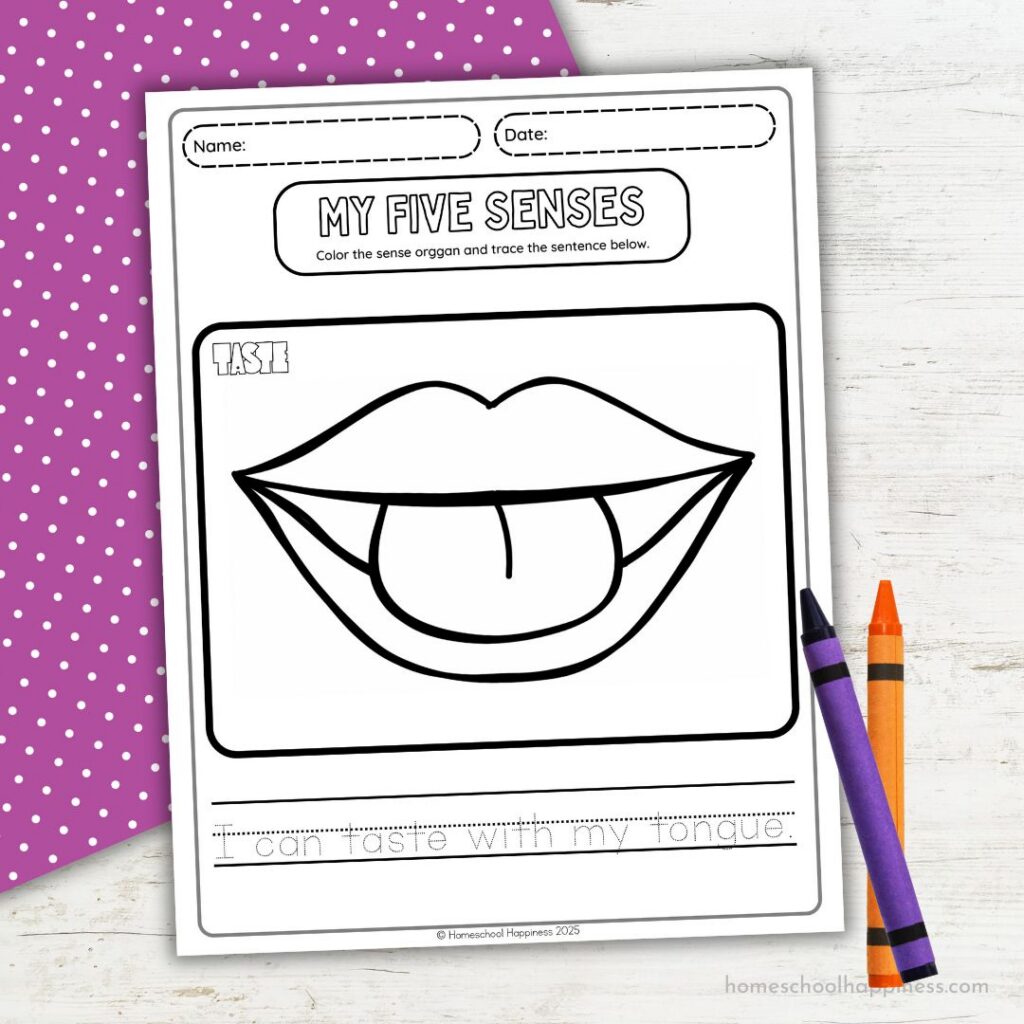
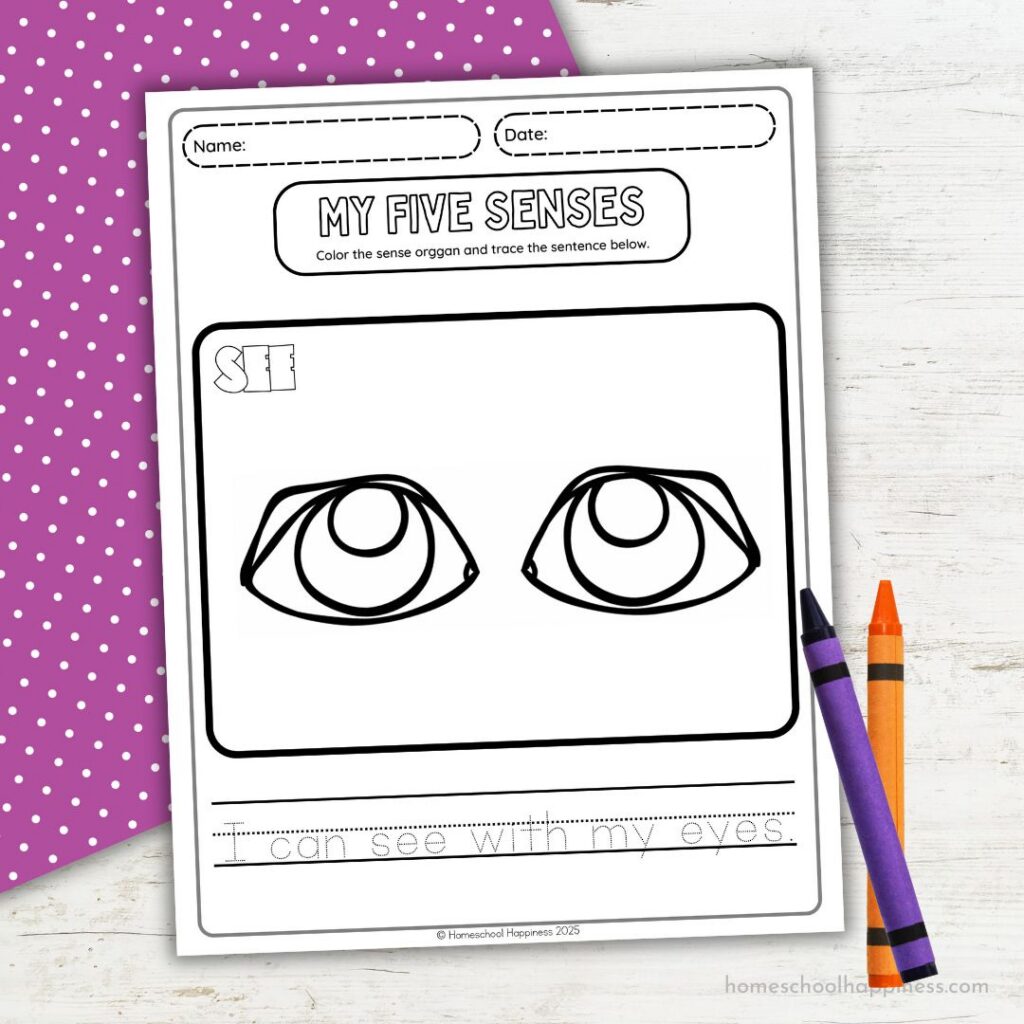
Each page focuses on one of the five senses — sight, smell, taste, touch, or hearing — and gives a simple tracing sentence like “I can see with my eyes.” It’s a great way to mix early science learning with fine motor practice in a way that feels natural and fun.
Parents and teachers can print these out, hand over some crayons, and let kids enjoy learning through coloring. There’s no fancy prep or extra work needed. These homeschool science worksheets make it easy to add hands-on fun to your preschool plans!

Five Senses Coloring Pages for Preschool
These five senses activity sheets for preschool are a sweet and simple way to help little learners explore their senses while practicing important early skills. With these printables, children will color fun pictures, trace simple sentences, and connect each body part to its matching sense. They’ll build fine motor skills, early reading confidence, and basic science understanding — all while having fun!
Here’s what’s included in the set:
- 5 printable pages, one for each sense: sight, smell, taste, touch, and hearing
- Simple, child-friendly drawings of each sense organ
- Easy trace-the-sentence lines like “I can hear with my ears”
- Space for kids to color and personalize each page
These printables make learning enjoyable by blending hands-on activities with gentle prewriting and science practice. They’re the perfect mix of educational and entertaining, helping preschoolers explore the world around them with excitement!

What can kids learn from this activity?
Kids can learn how their five senses help them explore and understand the world. They’ll practice connecting each sense to its matching body part, like knowing we see with our eyes or hear with our ears. As they color and trace, they’ll also build fine motor skills and early reading confidence. Most of all, they’ll learn that learning can be fun and playful!

How do I introduce the five senses to my preschooler?
Start by talking with your preschooler about the five senses — sight, hearing, smell, taste, and touch — using simple words and examples they understand. You can point to your eyes, ears, nose, tongue, and skin and explain what each part helps us do.
Try asking fun questions like, “What can you see outside the window?” or “What sounds can you hear right now?” Kids love noticing things around them, and these small conversations help them connect the idea of senses to real-life experiences.
Keep it playful and let them explore with their own observations!
How does coloring benefit preschoolers?
Coloring gives preschoolers a fun way to practice important skills like fine motor control, hand-eye coordination, and focus. When little ones hold crayons and stay inside the lines, they strengthen the small muscles in their hands — the same muscles they’ll use for writing later on.
Coloring also encourages creativity and helps kids express themselves, even before they can put all their thoughts into words. Best of all, it’s a relaxing, enjoyable activity that gives children a sense of pride in their work!


Five Senses Activities for Preschoolers
Once your preschooler has had fun with the five senses coloring pages, you can add even more hands-on activities to help them explore these concepts. These extra ideas are perfect for homeschool parents and teachers who want to make learning playful and engaging.
Simple activities using everyday items will help kids experience their senses in real life and deepen their understanding. Let’s look at some easy, fun ways to build on what they’ve learned!

Five Senses Picture Books
Exploring the five senses with young children is such a fun and meaningful way to help them connect with the world around them! Books about sight, smell, taste, touch, and hearing spark curiosity and give little learners the language to describe their experiences. Whether you’re a preschool teacher building a sensory unit or a parent wanting to spark observation skills, these picture books are sure to engage and delight.


In My Five Senses by Aliki, children are introduced to the five senses through simple text and engaging illustrations. The book explains how we use our senses to experience the world, from hearing birds chirp to feeling the wind on our skin. This classic is perfect for preschoolers, offering a clear and relatable introduction to sensory exploration.
I Hear a Pickle (and Smell, See, Touch, and Taste It, Too!) by Rachel Isadora is a delightful celebration of the senses through everyday experiences. Each sense is explored in detail, with playful illustrations showing kids hearing crunchy pickles, smelling flowers, and much more. The accessible language and relatable scenarios make this a favorite for young readers eager to connect with their sensory adventures.
The Listening Walk by Paul Showers invites children on a quiet, meditative journey where they focus on listening to the world around them. The story encourages mindfulness and observation, showing how much we can learn by being still and paying attention. Illustrated by Aliki, this gentle book is perfect for introducing the concept of hearing as part of our sensory experience.

Five Senses Printables for Preschool
If you’re looking for even more ways to explore the five senses, there are plenty of fun printables you can add to your lessons. These extra resources help reinforce what your preschooler is learning in playful, hands-on ways. Check out the links below for more activities your little one will enjoy!
- Christmas 5 Senses Scavenger Hunt
- Taste Worksheet for Kindergarten
- 5 Senses Matching Worksheet
- My Five Senses Christmas Printable Booklet
- Five Senses Sorting Printables


FAQ About Five Senses Coloring Pages for Preschool
You can start as soon as your child shows curiosity! Even toddlers love noticing sounds, smells, and textures. Keep it simple with lots of playful talk and let your preschooler explore through everyday activities.
Nope! You can use things you already have at home — like soft blankets, crunchy snacks, scented candles, or favorite songs. The printable coloring pages are a fun bonus, but the most important part is helping your child notice and talk about what they see, hear, smell, taste, and touch.
That’s totally normal! Try switching things up with a new activity, like a taste test or a sound guessing game. Follow your child’s lead and keep it light — they’ll come back to it when they’re ready.
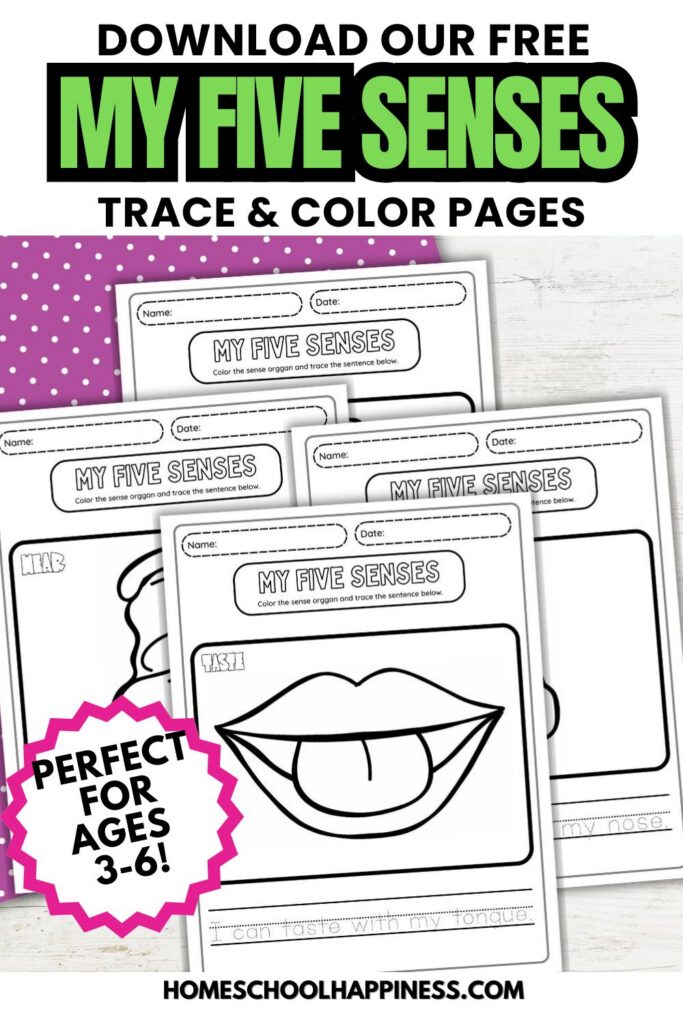
In conclusion, these preschool five senses worksheets provide a fun and straightforward way to help young learners explore the world around them. As they color and trace, they’re not just having fun — they’re building fine motor skills, early literacy, and a basic understanding of science. When you pair these printables with hands-on activities, you give your child even more opportunities to learn in a playful and meaningful way.
Homeschool parents and teachers will appreciate how easy it is to use these resources, and kids will enjoy discovering and creating with them. With just a little time and a few simple tools, you can make learning about the five senses an enjoyable and valuable part of your preschooler’s day!


Hi, I’m Tara—mom of three, former teacher, and now full-time homeschooler. After years in both preschool and public school classrooms, I brought the learning home and never looked back. At Homeschool Happiness, I share real-life tips, simple activities, and encouragement to help you create a homeschool life that feels good for your family—one filled with connection, laughter, and meaningful moments. We’re in this together!


