Hands-On Life Cycle of a Bee Activity
Looking for a hands-on life cycle of a bee activity that’s fun, simple, and perfect for young learners? These homeschool science worksheets are a great way to teach early elementary and kindergarten kids how a bee grows—from a tiny egg to a busy adult bee.
It’s easy to prep, super engaging and gives kids something to cut, fold, and glue as they learn each stage of the bee’s life cycle. Whether you’re a homeschool parent or a classroom teacher, this bee-themed activity helps reinforce science skills in a way that sticks.
Plus, it’s a great fit for spring themes, nature studies, or insect units. It’s such a fun way to mix learning with crafting. Kids get to be hands-on while building actual science knowledge.
Hands-On Life Cycle of a Bee Activity
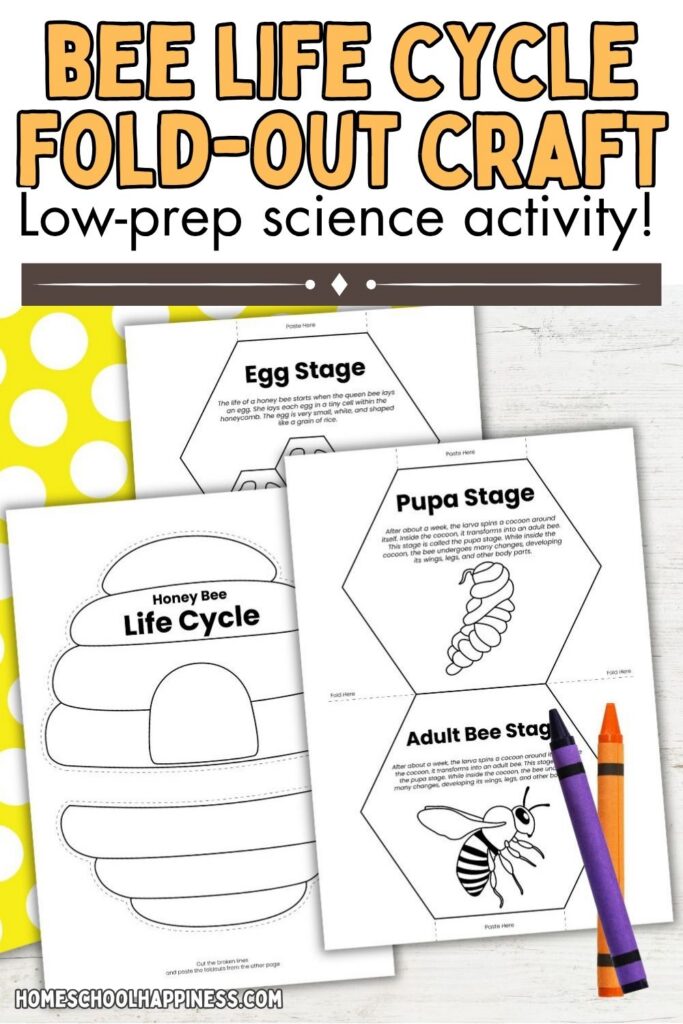
This bee life cycle craft is a fun and simple way to teach young children about the stages of a bee’s life. Kids will build early science understanding with this printable set while practicing essential skills like sequencing, fine motor work, and reading simple informational text. It’s a great fit for spring, insect units, or any time you want to add hands-on learning to your homeschool science worksheets.
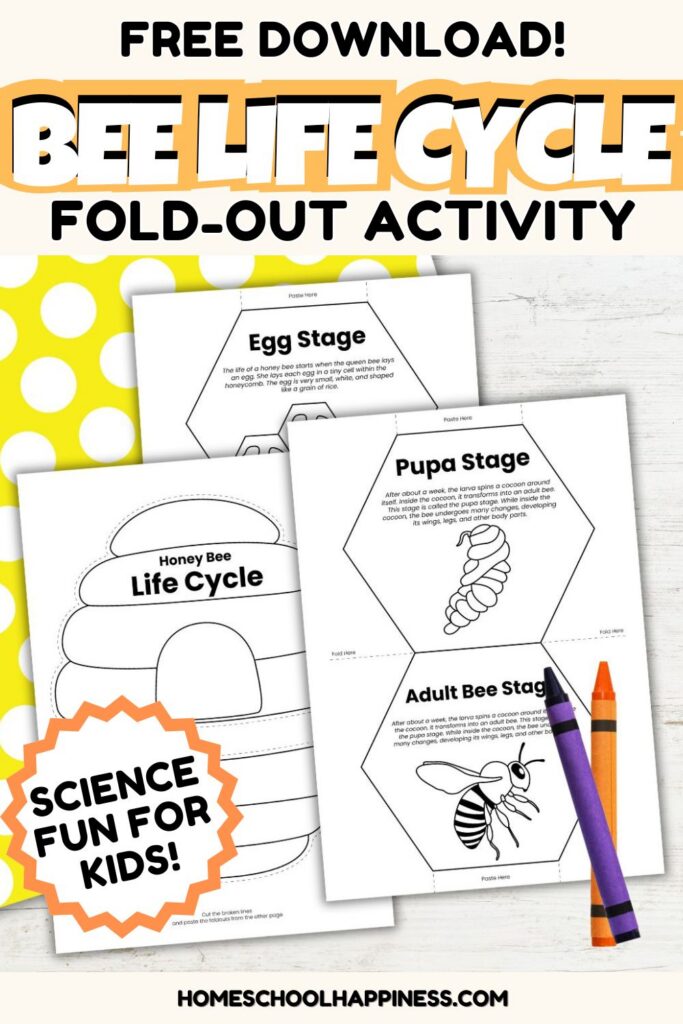
This printable set includes:
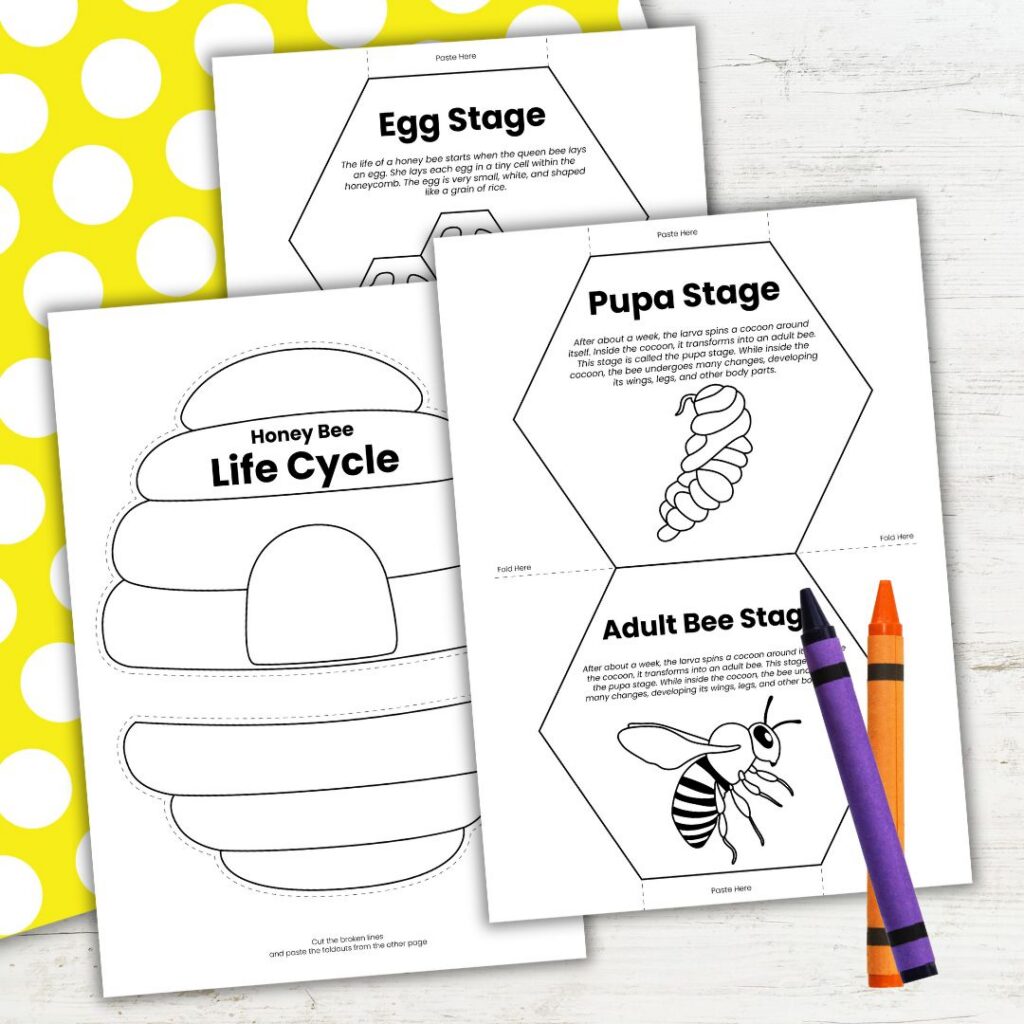
- A cut-and-paste foldout bee life cycle chart
- Four labeled stages: egg, larva, pupa, and adult bee
- Kid-friendly descriptions of each stage
- Fold lines and glue spots for easy assembly
These printables make learning feel like play while still delivering accurate content. Kids stay engaged because they’re creating something as they learn. This set is educational and entertaining—perfect for busy homeschool days or classroom centers.
Bee Life Cycle Models
What is the Bee Life Cycle, and Why Teach It?
The bee life cycle shows how a bee grows and changes, starting as an egg and becoming an adult bee. It includes four main stages: egg, larva, pupa, and adult. Teaching kids about this cycle helps them understand basic science concepts like life cycles, metamorphosis, and bees’ role in nature.
It’s also a great way to build observation skills and introduce vocabulary like “larva” and “pupa” in a meaningful context. Young children learn best through visual and hands-on activities, so lessons like this make the information stick.
Plus, learning about bees encourages curiosity about the natural world. It’s an easy and engaging topic to add to your homeschool science plans.

What Will Children Learn from This Activity?
Children will learn the four stages of a bee’s life—egg, larva, pupa, and adult—through simple text and pictures. They’ll also practice sequencing as they place each stage correctly. They also build fine motor skills by cutting, folding, and gluing.
This activity encourages careful observation and helps children connect their observations to their learning about insects.
Teaching Sequencing with Science Activities
These bee-themed worksheets are a great way to teach sequencing through science. Kids learn to put the stages of the bee’s life in order using pictures and short descriptions. As they cut and glue each part of the foldout, they think about what comes first, next, and last.
Hands-on ordering helps build a strong foundation for reading comprehension and understanding of science. It’s a simple but effective way to reinforce a key early learning skill.
Scroll down for the free printables!
Life Cycle Ideas for Kids
If your kids enjoyed the bee science printable, there are plenty of fun ways to keep the learning going. Below are some easy, low-prep ideas accompanying the bee life cycle theme. These activities are great for adding variety to your homeschool day while helping kids explore the topic in new and creative ways.
Life Cycle Books for Kids
Learning about life cycles is a fun and fascinating way for young children to explore the natural world. Whether it’s watching a caterpillar turn into a butterfly or a seed sprout into a towering sunflower, these books help little ones understand how living things grow and change.
The following titles introduce life cycles in simple, engaging ways—perfect for sparking curiosity and starting conversations about science and nature.



In The Very Hungry Caterpillar by Eric Carle, children follow the journey of a tiny caterpillar as it eats its way through various foods before transforming into a beautiful butterfly. With its vivid illustrations and interactive design, this classic story teaches the stages of metamorphosis in a way that captivates young readers. It’s a must-have for sparking conversations about growth and change.
From Seed to Plant by Gail Gibbons breaks down how seeds turn into plants with clear explanations and bright, detailed artwork. This book introduces young children to the plant life cycle while emphasizing the importance of plants in our lives. It’s an engaging way to nurture a budding interest in gardening or botany.
In An Egg Is Quiet by Dianna Aston and Sylvia Long, children explore the wonders of eggs in all shapes and sizes, learning how they protect and nurture life. The book goes beyond birds, including insects, reptiles, and amphibians, offering a broad perspective on life cycles. With stunning watercolor illustrations, this gentle story inspires awe and curiosity about the beginnings of life.
Life Cycle Crafts for Kids
Crafts are a great way to help kids remember what they’ve learned while allowing them to be creative. These bee and insect-themed crafts are simple, fun, and perfect for little hands. They’re a great addition to your life cycle lessons or spring science units.
- Paper Plate Life Cycle Crafts
- Life Cycle of a Flower Hat
- Chicken Life Cycle Craft
- Life Cycle of a Butterfly Craft
- Frog Life Cycle Candy Science Craft


Life Cycle Printables for Kids
These printables are a great place to start if you want more activities like the bee life cycle worksheet. They’re designed for young learners and focus on early science and sequencing skills. Each one makes learning easy and fun with clear visuals and simple instructions.
- Pond Life Preschool Printables
- Pumpkin Life Cycle Count and Graph
- Bat Life Cycle Printable
- Butterfly Life Cycle Activity
- Frog Life Cycle Activity
FAQ About Hands-On Life Cycle of a Bee Activity
This activity is great for preschool through early elementary—especially ages 4 to 7. The cut-and-paste format keeps little ones engaged, and the simple descriptions make the science easy to understand. If your child can use scissors and glue with some guidance, they’re ready to try it!
Not much at all! Print the pages, grab some scissors and glue, and you’re ready. If you’re working with younger kids, cutting the pieces ahead helps them focus on the fun part—gluing and folding.
Absolutely! It’s perfect for small groups, co-op classes, or classroom centers. Ensure each child has their copy and maybe set up a little station with glue sticks and scissors. It works great as an independent or teacher-guided activity.
Learning about bees through hands-on activities is a fun and meaningful way to teach young kids science. This printable pack helps children understand the life cycle of a bee while practicing sequencing, reading, and fine motor skills. With just a few simple materials, your homeschool day can include an engaging science lesson that sticks.
Whether you use it as part of a spring theme, an insect unit, or just for fun, this activity makes learning feel exciting and doable. It’s a great way to build fundamental knowledge in a way that kids enjoy.


Hi, I’m Tara—mom of three, former teacher, and now full-time homeschooler. After years in both preschool and public school classrooms, I brought the learning home and never looked back. At Homeschool Happiness, I share real-life tips, simple activities, and encouragement to help you create a homeschool life that feels good for your family—one filled with connection, laughter, and meaningful moments. We’re in this together!