Summer Word Problems for 1st Grade
Summer math worksheets for 1st grade are the perfect way to sneak in skill-building while still enjoying the season. When school’s out and summer fun begins, math is usually the last thing on a child’s mind—and understandably so.
But, a little consistent review can go a long way in preventing learning loss. These homeschool math worksheets feature short, engaging word problems with kid-friendly seasonal themes, such as popsicles, swimsuits, lemonade stands, and beach adventures.
Each problem is designed for quick daily practice—just 5 to 10 minutes a day—with no prep required. Whether you’re continuing your homeschool routine over the summer or simply looking to add light structure between pool days and playdates, this pack is designed to support your child’s progress without adding pressure.
With real-life math scenarios and playful illustrations, it keeps learning relevant, manageable, and even fun. You can start with a free Week 1 download and build from there.

What You’ll Find in This Post
This post breaks down how summer math worksheets for 1st grade can fit into your homeschool routine with ease. You’ll get a clear overview of what’s included, how to use the pack, and where to grab a free Week 1 sample.
- A quick look at the summer-themed word problems
- Tips for using the worksheets in your homeschool day
- A list of math skills your child will practice
- Sample problems from the pack
- Answers to common homeschool parent questions
- A free Week 1 download with a camping theme
Scroll down for the free printables!
Why Use Summer-Themed Math Word Problems?
Homeschooling families know that learning doesn’t have to stop when the school year ends—it just looks different. Word problems grounded in real-life summer situations help children connect what they’ve learned to their everyday experiences.
Here’s why they work:
- Relatable Scenarios: From lemonade stands to pool days, kids can visualize the story and apply their math thinking.
- Gentle Daily Practice: Just a few problems a day keeps skills fresh and avoids burnout.
- Built-In Life Skills: These worksheets support not just math, but also reading comprehension and critical thinking.
A little practice each day helps prevent learning loss and builds confidence as you head into the new school year. Why Summer Math Practice Matters explains why this daily habit is so important.

What’s Inside the Summer Math Worksheets Pack
You’ll receive a full 10-week printable pack designed for 1st graders, featuring simple, story-based word problems with fun summer themes your child can relate to.
- 10 weeks of worksheets, with 5 word problems per week—ideal for Monday through Friday practice.
- 50 total problems aligned to 1st-grade math objectives.
- Themes include:
- Popsicle Stand Math
- Beach Day Counting
- Lemonade Stand Budgeting
- Vacation Prep Word Problems
- Pool Party Addition & Subtraction
Each worksheet is designed to take just 5–10 minutes. It’s a simple way to maintain structure during the summer without sacrificing flexibility.
Try Week 1 for Free: Download the first week to sample the pack before committing. This freebie gives you five daily worksheets with a popsicle stand theme—perfect for testing the format with your child.
What Skills Are Covered?
Each worksheet focuses on key 1st-grade skills:
- Addition and subtraction within 20
- Place value and number comparisons
- Simple measurement and time
- Skip counting and recognizing patterns
- Money and logical reasoning
The goal isn’t just to practice, but to think. These problems ask kids to consider scenarios, use math strategies, and explain their reasoning when possible.
How to Use These Worksheets in Your Homeschool
Here’s how other homeschool parents are using them:
- Morning Warm-Up: Start the day with a low-pressure math activity.
- Summer Journal: Combine math worksheets with a writing or drawing component for a full notebook.
- On-the-Go Practice: Bring them on road trips or keep a few sheets in your bag for errands.
- Independent Work: Assign during quiet time, nap time for younger siblings, or as part of a rotating workbox.
These worksheets require no extra prep, no extra supplies, and no need to reteach new material. They’re designed to reinforce what your child already knows.

Sample Word Problems
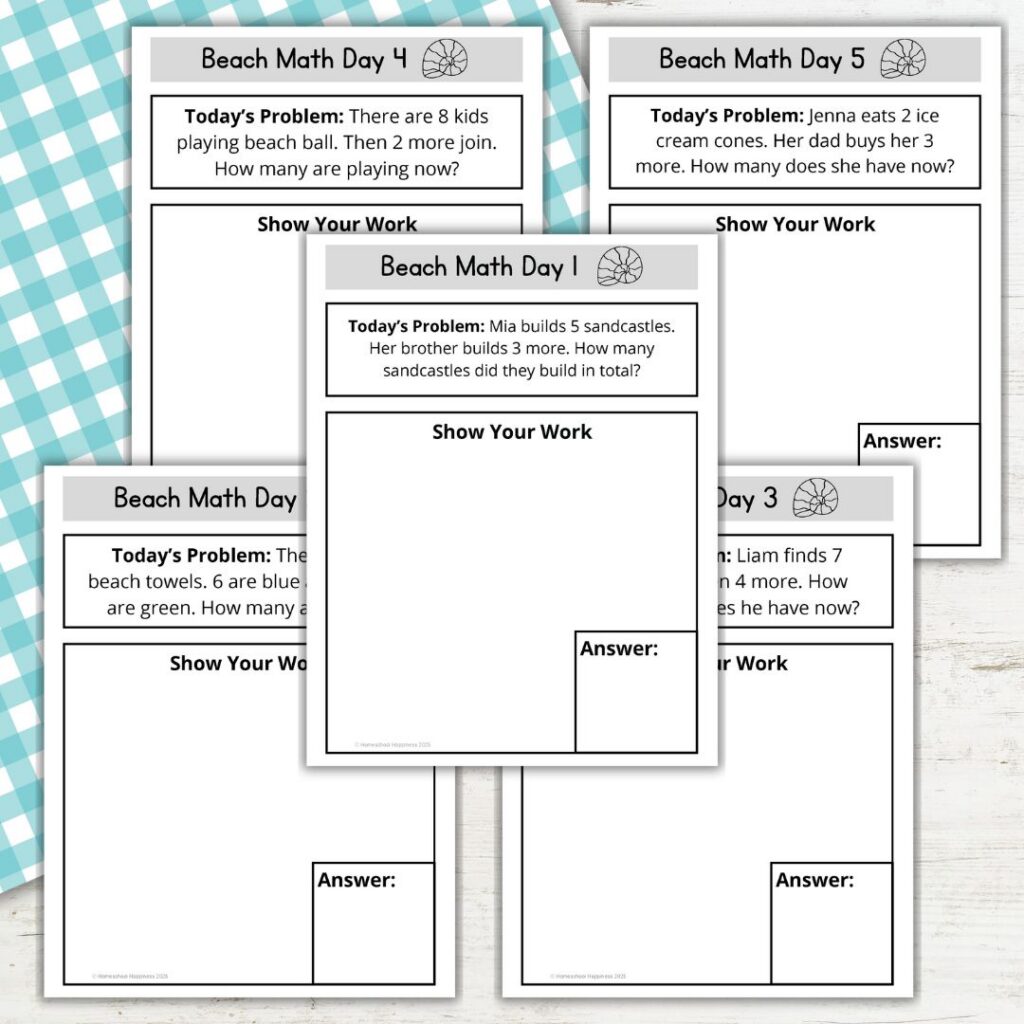
Wondering what the daily practice actually looks like? Here’s a peek at the types of word problems your child will encounter—each one tied to a familiar summer activity to make math feel fun, relevant, and easy to understand.
Example 1:
Sarah made 8 popsicles in the morning. She made 5 more in the afternoon. How many did she make in all?
Example 2:
Noah had $10. He spent $4 at the lemonade stand. How much money does he have left?
Example 3:
Emma packed 3 swimsuits and 2 pairs of sunglasses. How many items did she pack in her beach bag?
Each problem is developmentally appropriate, builds confidence, and encourages math talk at home.
What Homeschool Parents Love About It
These worksheets are quick to complete but full of meaningful practice. They’re a favorite for homeschool families who want to keep math going without creating extra stress.
“We added this to our morning basket, and it was just right—short, seasonal, and not overwhelming.”
“I love that the problems are word-based. It helps my daughter stay sharp with both math and reading.”
“I used these while we traveled and didn’t miss a beat. Highly recommend.”
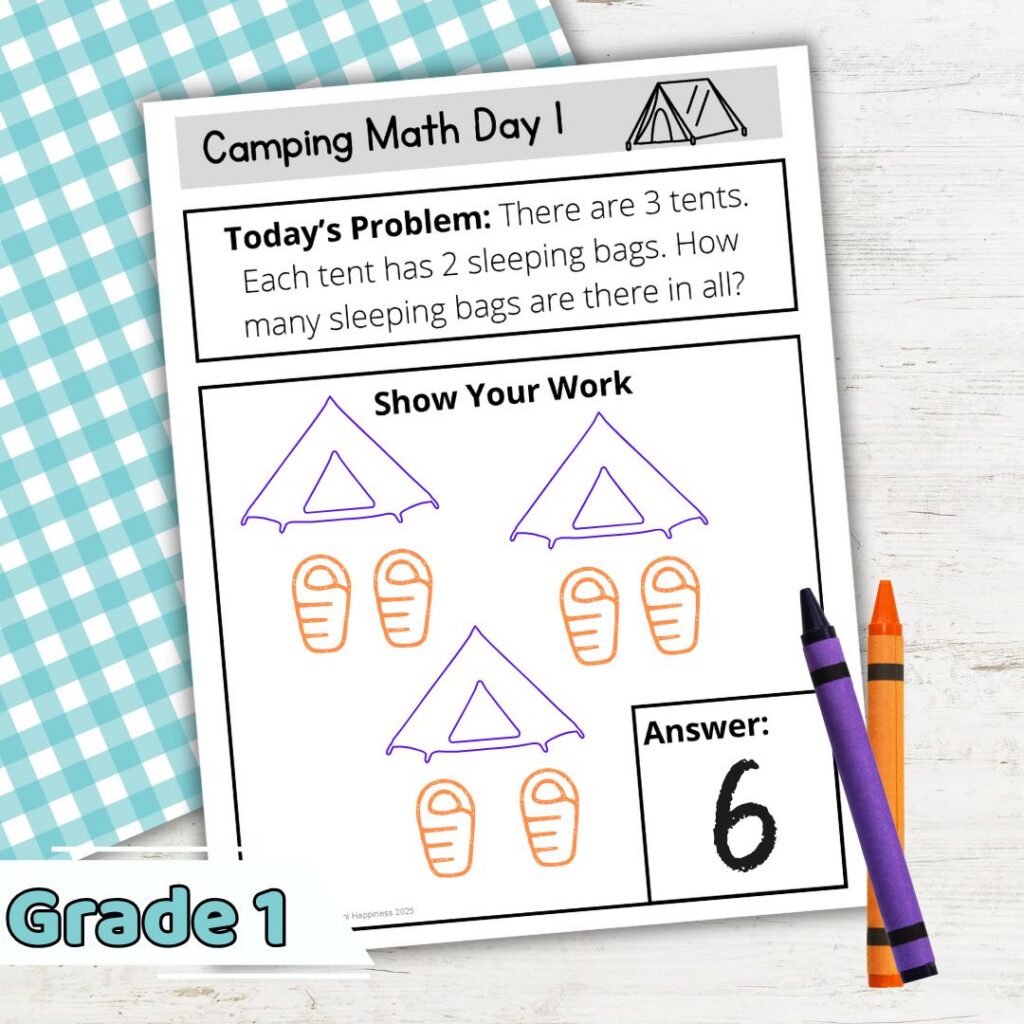
Try Week 1 Free: Camping-Themed Math Problems
Curious if these worksheets are the right fit for your homeschool routine? Download Week 1 for free and see how your child responds. This first set includes five simple, story-based math problems all centered around a fun camping theme.
Here’s what’s inside the free Week 1 sampler:
- Day 1: There are 3 tents. Each tent has 2 sleeping bags. How many sleeping bags are there in all?
- Day 2: Liam packed 6 marshmallows. He eats 2. How many marshmallows are left?
- Day 3: Sophie brought 4 flashlights. Her friend brought 5. How many flashlights do they have together?
- Day 4: There are 10 logs by the fire. 3 logs are used. How many are left?
- Day 5: There are 7 campers. Each camper eats 1 hot dog. How many hot dogs are eaten?
Each problem includes space for your child to “Show Your Work,” making it easy to spot where extra support might be needed—or where your child is thriving.
Download Week 1 Free!
Want All 50 Word Problems? Get the Full Pack Here!
FAQs About Summer Math Worksheets for 1st Grade
Still have questions? Here are some common ones we hear from homeschool parents.

Summer learning doesn’t have to mean long lessons or rigid schedules. With these summer math worksheets for 1st grade, you can keep your child’s skills sharp using just a few minutes a day—and all through fun, relatable word problems that fit naturally into your homeschool routine.
Whether you’re looking to prevent summer slide, add structure to your days, or keep math fresh in a playful way, this resource offers an easy, low-stress solution.
Ready to get started? Download the free Week 1 sample and see how seamlessly it fits into your summer homeschool plans.

Hi, I’m Tara—mom of three, former teacher, and now full-time homeschooler. After years in both preschool and public school classrooms, I brought the learning home and never looked back. At Homeschool Happiness, I share real-life tips, simple activities, and encouragement to help you create a homeschool life that feels good for your family—one filled with connection, laughter, and meaningful moments. We’re in this together!


