Spring Counting Worksheets
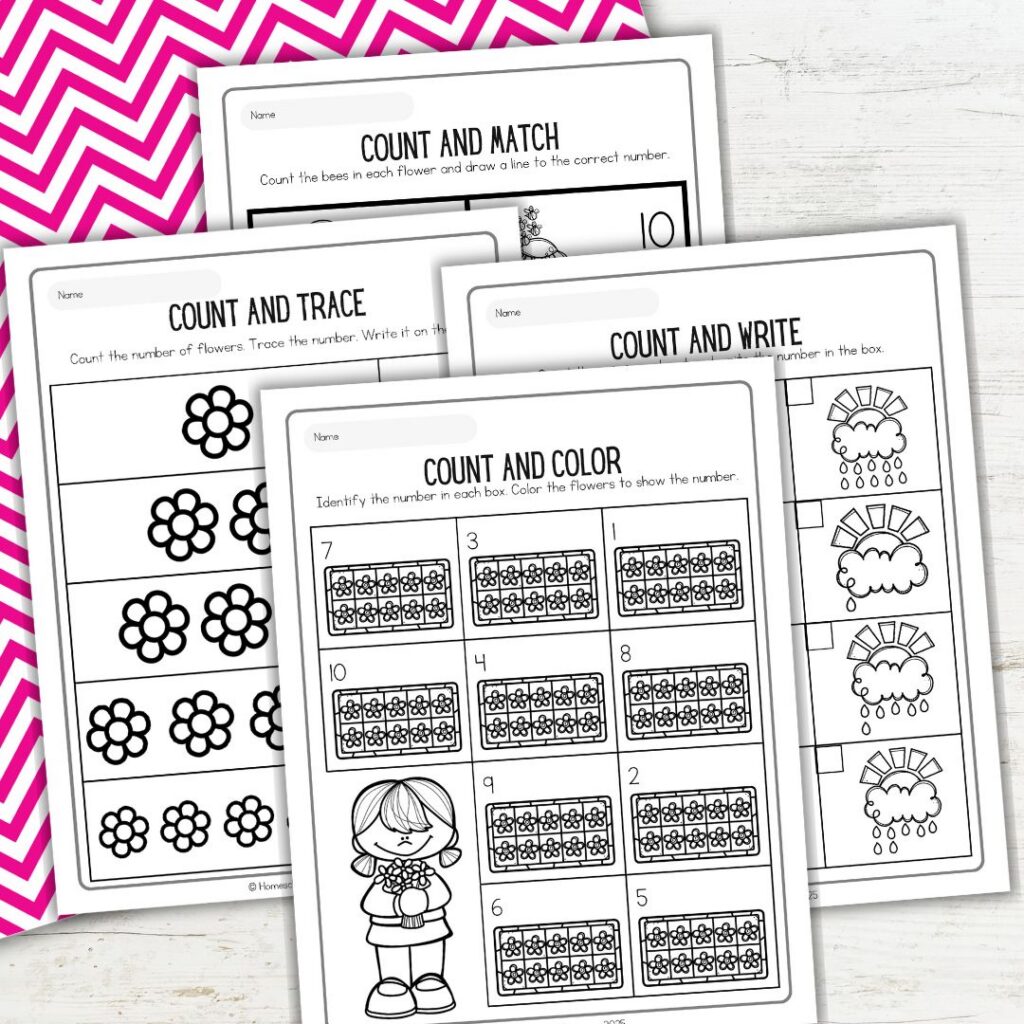
Looking for a fun way to practice counting? These spring counting worksheets are perfect for your homeschool math lessons! They’re easy to use, great for preschool and kindergarten kids, and full of cheerful springtime themes like flowers, raindrops, and buzzing bees.
Whether planning a themed week or just wanting a quick, no-prep activity, these homeschool math worksheets will give your kids hands-on practice with early math skills. They’re simple to print and use at home or in a classroom, and they help reinforce counting, number recognition, and fine motor skills—all with cute seasonal graphics that kids love.
You’ll find four different worksheet styles inside, so there’s something for everyone, whether your child likes to color, trace, or match. This set is an easy, engaging way to build math confidence while keeping things fun and light.
Perfect for spring days when you want learning to feel playful and relaxed.

Spring Counting Worksheets
These spring math printables are a fun and simple way to help young learners practice early math skills. This printable set is designed for preschool and kindergarten, focusing on number recognition, counting sets, number formation, and matching quantities to numerals. With cheerful spring-themed images like flowers, raindrops, and bees, these worksheets make math feel playful, not stressful!
Here’s what’s included in the set:
- Count and Color: Kids color the correct number of flowers to match the numeral in each box.
- Count and Write: Students count raindrops and write the total in the blank box.
- Count and Match: Children count bees on flowers and draw a line to match them to the correct number.
- Count and Trace: Little learners trace numbers and write them after counting a group of flowers.
These activities turn math practice into something kids look forward to. They’re both educational and fun—perfect for reinforcing key skills in a lighthearted, engaging way.

What can kids learn from this activity?
These worksheets teach kids essential early math skills like counting, number recognition, and one-to-one correspondence. They’ll also practice number writing, tracing, and matching quantities to numerals.
Activities like these help strengthen fine motor skills, especially when coloring or tracing. Most of all, children gain confidence as they work independently and start recognizing patterns in numbers.

Teaching Preschoolers to Count to 10
Learning to count to 10 is a significant milestone for preschoolers, and it lays the foundation for all future math skills. With this set of spring counting activities, kids practice saying numbers out loud, identifying numerals, and counting sets of objects like flowers, bees, and raindrops.
These hands-on activities support number sense by encouraging kids to match quantities with written numbers and reinforce what they already know through repetition and play. It’s a fun, gentle way to build early math confidence at home or in the classroom.

Number Recognition for Preschoolers
Number recognition is one of the first math skills young children need to master, and it takes lots of practice. These spring worksheets help preschoolers learn to spot and name numbers from 1 to 10 in fun, visual ways.
Whether tracing a number, coloring a matching group, or connecting quantities to numerals, each page allows them to build familiarity with how numbers look and what they mean. The bright, seasonal images keep it interesting and make learning feel more like play.



Preschool Math Ideas
Looking for more ways to build on the skills your kids are practicing with these worksheets? This section contains simple, hands-on ideas you can use at home or in your classroom to keep math fun and meaningful.
These activities reinforce counting, number recognition, and fine motor skills in playful, low-prep ways.
Counting Books for Kids
Introducing numbers can be a joyful and playful experience when shared through beautifully illustrated stories. These counting books are designed for children ages 2–7 and bring early math concepts to life in memorable, engaging ways.
Whether you’re teaching numbers 1 to 10 or exploring skip counting and patterns, these stories add a fun and literary twist to early numeracy learning.


Chicka Chicka 1 2 3 by Bill Martin Jr. and Michael Sampson is a rhythmic, vibrant adventure that invites kids to count along as numbers race up an apple tree. With a similar spirit to its ABC predecessor, this story builds excitement while reinforcing number order and recognition. Bright illustrations and a playful tone make it a go-to favorite.
Ten Black Dots by Donald Crews takes a creative approach to counting, as each page uses black dots to form familiar objects—from two eyes on a fox to ten balloons in the sky. This imaginative yet straightforward book teaches numbers and inspires artistic thinking. It’s perfect for pairing with dot-based art activities after storytime.
Count the Monkeys by Mac Barnett is a delightfully unpredictable counting book filled with interactive elements and laugh-out-loud surprises. Kids will love turning each page to see which unexpected animals show up, and the humorous interruptions keep them fully engaged. It’s ideal for read-alouds where participation is encouraged and silliness is welcome.
Preschool Math Worksheets
If your kids enjoyed these spring counting pages, they’ll love exploring more printable math activities! In this section, other themed worksheets support counting, number writing, and early math concepts.
They’re great to have on hand for quiet time, morning work, or extra practice during your homeschool day.
- Numbers Dot to Dot Worksheets
- Teen Numbers Worksheets
- Summer ABC Order Worksheets
- Spring Addition Worksheets for Kindergarten
- Free Spring Math Worksheets


FAQ About Spring Counting Worksheets
These worksheets are just right for preschoolers and kindergarteners—typically ages 3 to 6. If your child works on counting to 10, recognizing numbers, or starting to write them, this set will fit perfectly. You can constantly adapt them for different skill levels by offering more support or encouraging independent practice.
Nope! These are truly no-prep printables. Print the pages you want to use, grab some crayons or pencils, and you’re all set. They’re easy to pull out for a quiet activity or to include in your daily homeschool routine.
A few times a week is a great starting point. You can rotate different styles of activities—like coloring one day and tracing the next—to keep things fresh. The key is consistency and making it fun, so kids stay excited about learning numbers.

Spring is a great time to refresh your homeschool routine with light, engaging activities, and these spring number worksheets are a perfect fit. They help young learners build confidence in counting, number recognition, and number writing while having fun with seasonal themes, such as flowers and bees. Whether you use them during morning work, math time, or as a quiet activity, they make learning feel playful and rewarding.
Using printables like these provides your preschooler with meaningful practice in key math skills, all while reducing stress on your day. Simple, hands-on activities make a difference, and these worksheets are a great addition to your homeschool toolbox.


Hi, I’m Tara—mom of three, former teacher, and now full-time homeschooler. After years in both preschool and public school classrooms, I brought the learning home and never looked back. At Homeschool Happiness, I share real-life tips, simple activities, and encouragement to help you create a homeschool life that feels good for your family—one filled with connection, laughter, and meaningful moments. We’re in this together!


