Long I Vowel Worksheets
If you’re working on reading skills at home, these Long I Vowel worksheets are a perfect fit for your early learners. These free homeschool printables make it easy to practice vowel sounds in a way that’s simple and fun for young kids.
Whether your child is just beginning to sound out words or needs a little extra practice, these worksheets offer a great mix of activities. Kids can color, sort, write, and read long I words using pictures and clues that keep things interesting and age-appropriate.
You don’t need a lot of prep—just print and go! They’re great for quiet time, literacy centers, or review days. These worksheets are a fun, low-stress way to work on phonics skills with your kids. They’re helpful, easy to use, and great for supporting early reading.
Long I Vowel Worksheets
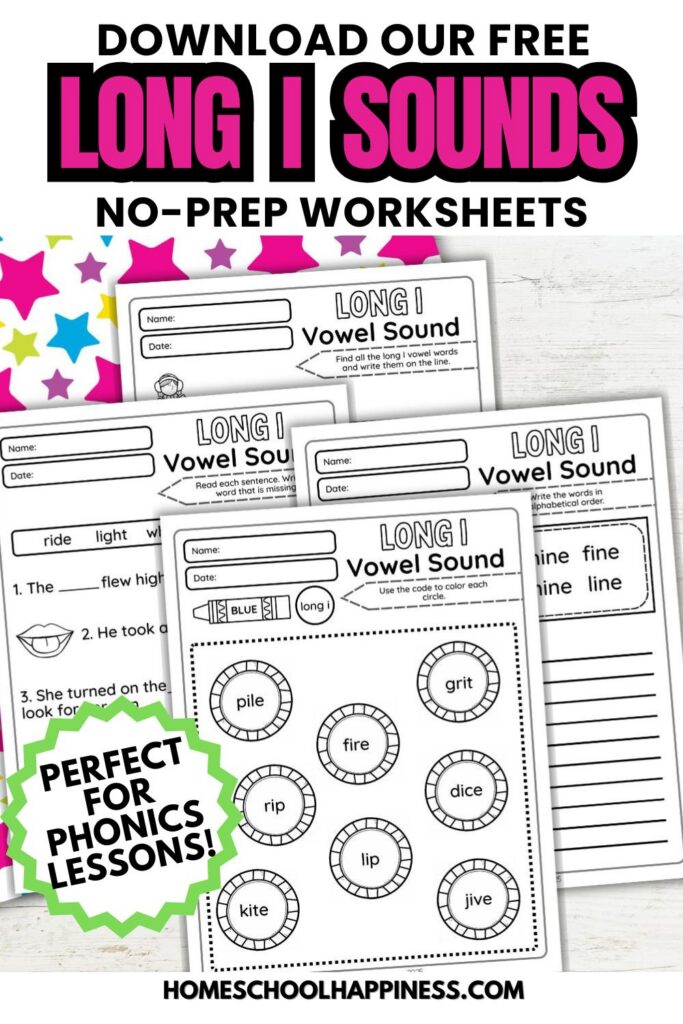
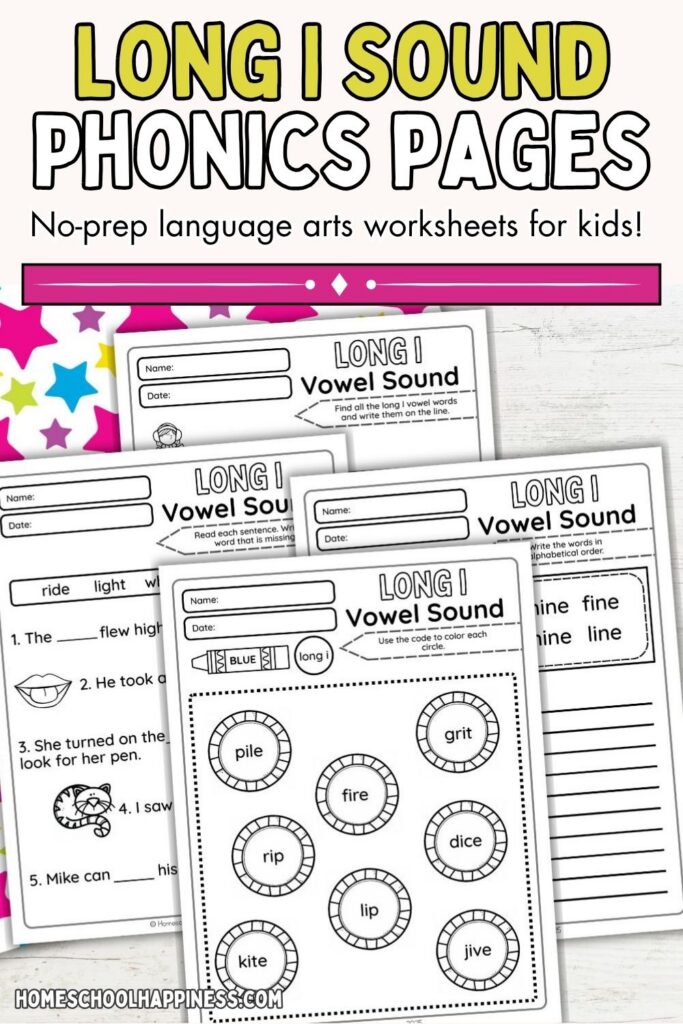
These Long I vowel printables give young readers a fun and simple way to build phonics skills. Perfect for kindergarten and early elementary students, this no-prep set helps children recognize, read, and write long I words using engaging activities.
As they work through each page, kids will strengthen their spelling, vocabulary, and early reading fluency—without even realizing they’re learning! While completing these printables, children will practice identifying long I vowel sounds, reading and recognizing vowel patterns, and expanding their vocabulary.
They’ll also get to work on alphabetizing words, improving their handwriting, and using context clues to complete simple sentences. It’s a great way to support early literacy in a fun and age-appropriate format.
What’s included:
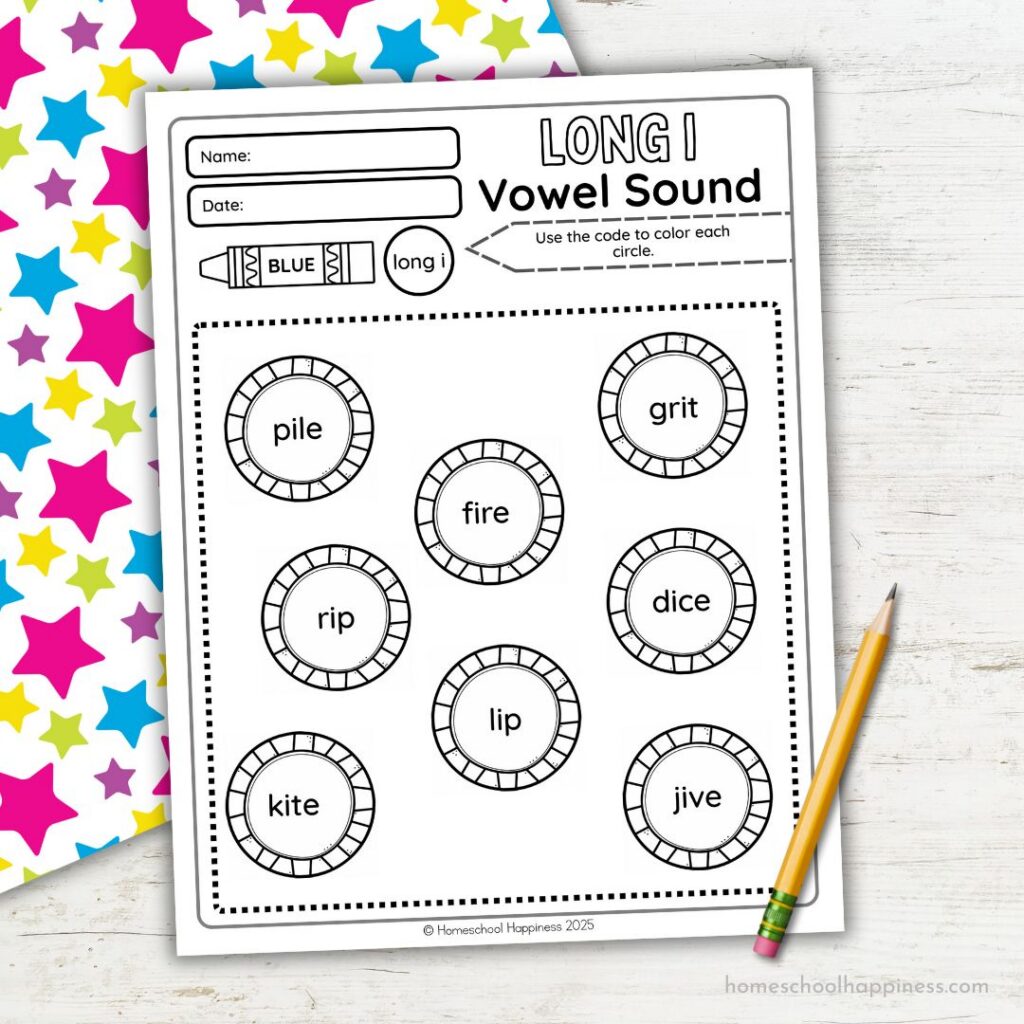
- Color-by-code worksheet with long I word recognition
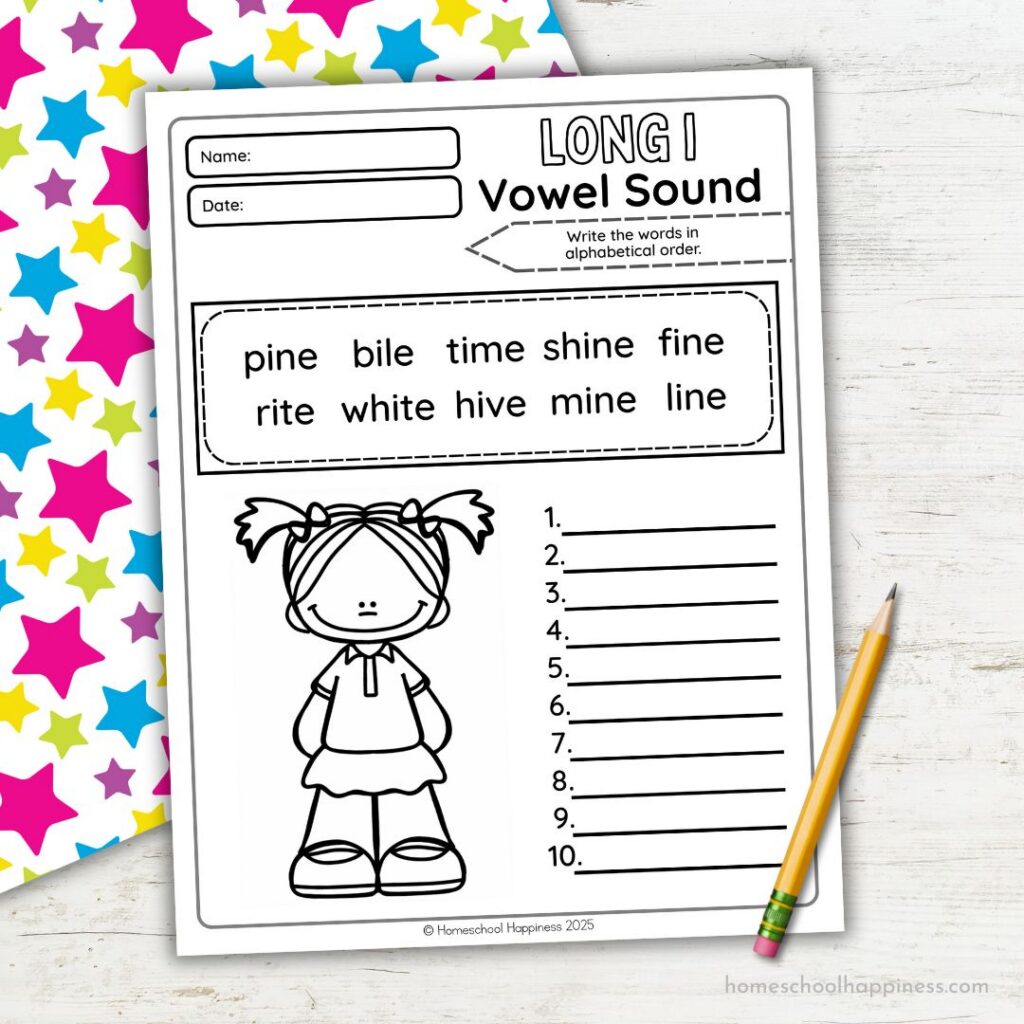
- Alphabetical order activity with 10 long I words
- Word hunt to find and record long I words
- Fill-in-the-blank sentences using long I words
These worksheets make phonics practice feel more like play than work. They’re both educational and enjoyable—just right for early readers!

Introducing the Long I Vowel Sound
The Long I vowel sound is one of the trickier sounds for young readers to master because it doesn’t follow just one spelling rule. Instead, it shows up in words spelled in different ways—like kite, five, light, and my.
Each of these words has the same vowel sound, even though the spelling patterns are different. That’s why it’s helpful to give kids lots of practice with different types of long I words. Below, we’ll explore some of the most common patterns and how to spot them.
Common Spellings of the Long I Sound
When teaching the Long I sound, it helps to start with the most common spelling patterns your child will see. One of the easiest to recognize is the “i_e” pattern, like in bike or kite, where the silent “e” at the end makes the vowel say its name. You’ll also come across “igh”, as in night or light, which is a common way to show the long I sound in the middle of words.
Some words simply use “i” on its own, like iris, especially in open syllables. And don’t forget about “y” at the end of a word, like in fly or cry, which also makes the long I sound. Pointing these out while reading together can really help kids start to notice and remember the different ways long I words are spelled.

Creative Activities to Teach Long I Sounds
Along with using the printable worksheets, it’s helpful to include a few hands-on and creative activities to reinforce the Long I sound. These ideas are easy to set up and can be a fun way to review or extend learning during the week.
Whether you’re teaching one child or a small group, these activities will help kids recognize long I words in different formats and keep phonics practice playful and engaging.


Long Vowel Sound Bingo
To make Long Vowel Sound Bingo, start by creating a simple bingo board with a 3×3 or 4×4 grid. In each square, write a different long vowel sound word, such as kite, rode, late, crew, or mule. Make a matching set of word cards to call out during the game.
As you read each word aloud, your child can listen for the long I sound and cover the matching word with a marker or small object. It’s a fun, low-prep game that builds listening skills, phonics awareness, and word recognition—all while your child thinks they’re just playing!
Rhyming Pair Match-Up
To make this activity, write pairs of rhyming long I words—like bike and like, light and kite, mine and line—on individual index cards or slips of paper. Mix them up and spread them out face up on a table or floor.
Have your child find and match the rhyming pairs by saying each word out loud and listening for the ending sounds. This simple game helps kids practice both rhyming and long I vowel recognition, and it’s easy to reuse or adjust as your child learns new words.

Long I Sound Scavenger Hunt
For this activity, write a list of long I words—like kite, dice, light, bike, and my—that your child will try to find around the house or classroom. You can hide picture cards, small objects, or word cards in different spots, then have your child search for them and say each word out loud.
For extra fun, let them check off each item as they find it. This scavenger hunt keeps kids moving while helping them tune into the long I sound in everyday words and objects.


FAQ About Long I Vowel Worksheets
I usually say it’s the version of the letter “i” that says its name, like the “i” in kite or light. You can give a few examples and stretch out the sound so they hear it clearly. It helps to show them how it looks in different words, too, since the spelling can change.
Most kids are ready to explore long vowels after they’ve had some practice with short vowels and basic CVC words. For many, that’s around late kindergarten or early first grade. But you can always introduce it earlier with simple games or read-alouds that include long vowel words.
That’s totally normal! One thing that helps is saying both versions out loud together—like bit vs. bite—so they can hear the difference. You can also use pictures or gestures (like stretching out your arms for long sounds) to make it more visual and fun. Repetition and gentle practice go a long way.
Teaching the long I sound doesn’t have to feel overwhelming. With the help of simple worksheets, playful games, and easy at-home activities, you can give your child the support they need to grow more confident with reading.
These printables are a great starting point, helping kids spot long I vowel patterns and use them in a variety of ways. And when you mix in hands-on ideas like bingo, scavenger hunts, and rhyming games, learning becomes something they actually look forward to.
These activities build real reading skills while keeping things light and engaging—just right for early learners.


Hi, I’m Tara—mom of three, former teacher, and now full-time homeschooler. After years in both preschool and public school classrooms, I brought the learning home and never looked back. At Homeschool Happiness, I share real-life tips, simple activities, and encouragement to help you create a homeschool life that feels good for your family—one filled with connection, laughter, and meaningful moments. We’re in this together!


