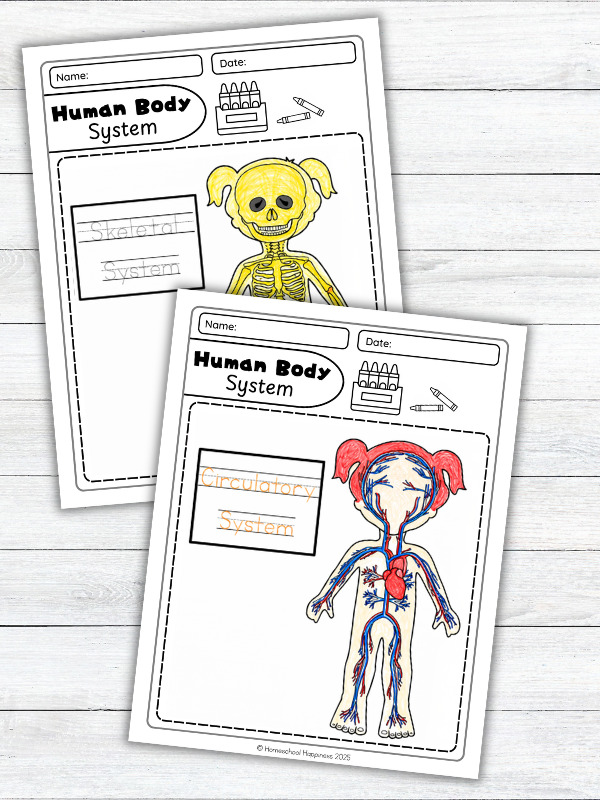
Circulatory System Coloring Sheet
Looking for a fun way to introduce the circulatory system? This circulatory system coloring sheet is a great way to mix science and creativity—perfect for your next lesson! Whether you’re teaching at home or in the classroom, this printable is a simple and effective way to help kids learn how blood moves through the body.
With bold visuals and a clear tracing sentence, it helps young learners understand science while practicing early writing skills. It’s low-prep, easy to use, and fits nicely into your collection of homeschool science worksheets.
This activity works well on its own or as part of a bigger human body theme, and it’s beneficial for visual learners who enjoy hands-on activities. So if you’re looking for something simple, educational, and kid-approved, this printable is a great place to start. It’s science made fun and super doable!

Circulatory System Coloring Sheet
These circulatory system diagram for kids printables are a fun and simple way to help young kids explore science! With just one page, children can start learning how the circulatory system works while practicing fine motor and early literacy skills.
It’s a perfect fit for preschool through early elementary students, especially visual learners who enjoy coloring as part of their lessons. These printables support science learning in a gentle, age-appropriate way that feels more like play than work.
What’s Included:
- 1 black-and-white coloring page featuring a simple diagram of the circulatory system
- A traceable sentence: “The circulatory system moves blood through the body.”
- Space for name and date on each page
This printable helps kids stay engaged while learning real science facts. It’s a great way to build science vocabulary, support handwriting practice, and make learning feel like fun!

How do I teach young kids about the circulatory system?
To teach young kids about the circulatory system, start with simple language and big ideas. Explain that the heart is like a pump that moves blood all around the body to keep us healthy and strong. Use visuals like diagrams, coloring pages, or simple models to show how blood travels.
Keep lessons short and hands-on—kids learn best when they can see and do. Activities like coloring, tracing, or pretending to be “blood cells” moving around the room make it easier to understand.

Science Coloring Pages for Kids
Science coloring pages are a great way to introduce big concepts in a fun and gentle way. With this printable heart coloring page, kids can explore how the heart and blood vessels work together to move blood through the body.
As they color, they’ll be building vocabulary, practicing fine motor skills, and getting familiar with basic anatomy. It’s a great mix of creativity and early science learning—all in one simple printable.

Human Body Worksheets for Young Children
Human body worksheets are a simple way to help young children learn what’s going on inside their bodies. These printables introduce basic systems—like the circulatory system—in a way that’s easy to understand and fun to explore.
Kids will start to recognize key terms like “heart,” “blood,” and “vessels,” while also working on skills like tracing and labeling. With clear visuals and just the right amount of information, these worksheets are perfect for preschool and early elementary learners.
Circulatory System Activities for Kids
If you’d like to go beyond the coloring sheet, there are plenty of fun and simple ways to help kids explore the circulatory system. These hands-on ideas are great for homeschool lessons or classroom use and work well alongside the worksheet.
They’ll help reinforce key concepts like how the heart works and how blood moves through the body—all in ways that are active, engaging, and easy to set up.

Circulatory System Books for Kids
The circulatory system might sound like a big concept for little learners, but with the right books, it’s easy to make it fun and fascinating! Whether you’re teaching preschoolers about how their hearts work or simply exploring body systems in a general unit, these story-style books bring the science to life in an age-appropriate way.
These engaging titles introduce young children to the heart, blood, and veins with playful characters, simple explanations, and lots of visual support.

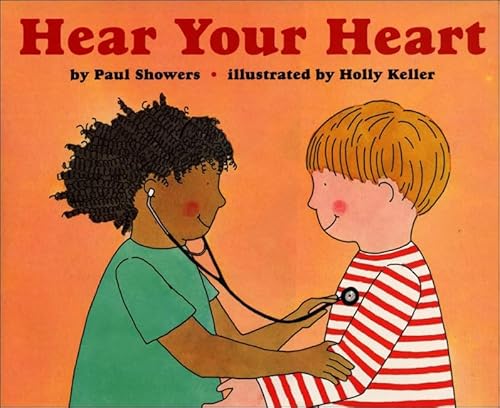


Hear Your Heart by Paul Showers is a gentle and accessible introduction to how the heart works, designed specifically with young children in mind. With colorful illustrations and fun facts, this book explains how to find your pulse and what your heart does all day. It’s part of the “Let’s-Read-and-Find-Out Science” series, making it perfect for curious preschoolers.
A Drop of Blood by Paul Showers is another kid-friendly nonfiction pick that explains what blood is, what it does, and why it’s so important. Using simple language and cheerful illustrations, the book makes sense of concepts like red blood cells, platelets, and plasma in a way that’s clear and not at all scary. It’s a great companion book for any circulatory system lesson or human body unit.
The Circulatory Story by Mary Corcoran offers a playful yet informative journey through the body as it follows the path of blood. With bright, engaging illustrations and easy-to-understand explanations, it teaches how the heart, lungs, and vessels work together. It’s a fun, factual read that makes this complex system feel approachable for early learners.
Circulatory System Crafts for Kids
Crafts are a fun way to help kids remember what they’ve learned about the body. These simple projects use everyday supplies to show how the heart and blood vessels work together. They’re perfect for adding a creative touch to your circulatory system lessons.


Circulatory System Printables for Kids
Printables make it easy to add structure and variety to your science lessons. These resources help young learners understand how the circulatory system works with clear visuals and simple explanations. You can use them for independent work, review, or as part of a larger human body unit.
- Circulatory System Worksheets for Kids
- Circulatory System Worksheets for Kids Story
- Circulatory System Coloring Pages
- Invisible Heart Activity (Valentine’s Day STEM for Kids)
- Free Printable Life-Size Organs for Studying Human Body Anatomy with Children
FAQ About Circulatory System Coloring Sheet
You can start introducing basic ideas as early as preschool or kindergarten. Just keep it simple—talk about the heart, blood, and how the body needs both to stay healthy. Use hands-on tools like coloring sheets, songs, and movement games to help it all click.
Try comparing it to something familiar, like a road or a water hose. You can say the heart is like a pump that pushes blood through little “roads” called blood vessels. A simple diagram or coloring page really helps kids picture it!
Not at all! You can teach it independently with just a few fun activities or printables. But if you want to go deeper later, it also fits nicely with lessons on the human body or health.

Learning about the circulatory system doesn’t have to be complicated, especially for young kids. With simple tools like coloring sheets, hands-on crafts, and easy-to-follow printables, you can introduce big science ideas in a way that makes sense to little learners. These activities support early writing, boost vocabulary, and help kids stay curious about how their amazing bodies work.
By using fun, visual resources, you’re not just teaching science—you’re helping your child build confidence and excitement around learning. And that’s what homeschooling is all about.


Hi, I’m Tara—mom of three, former teacher, and now full-time homeschooler. After years in both preschool and public school classrooms, I brought the learning home and never looked back. At Homeschool Happiness, I share real-life tips, simple activities, and encouragement to help you create a homeschool life that feels good for your family—one filled with connection, laughter, and meaningful moments. We’re in this together!