Free Printable Map Skills Worksheets
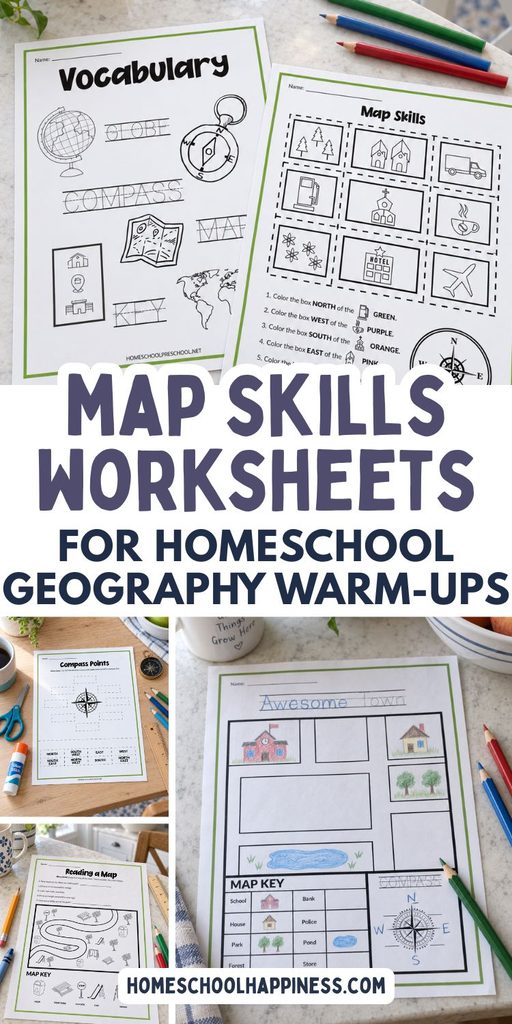
These free printable map skills worksheets help kindergarten through second-grade students practice cardinal directions, map symbols, map keys, and basic map reading.
The set includes cut-and-paste activities, matching exercises, vocabulary cards, and simple maps for use at home or in the classroom. Add them to your next geography lesson, or explore more of our homeschool geography worksheets.
Map Skills Worksheets at a Glance
Best for: Kindergarten through second grade
Skills practiced: Cardinal directions, map symbols, map keys, spatial awareness, and basic map reading
Activities included: Cutting and pasting, matching, coloring, vocabulary practice, and map-reading questions
Supplies needed: Crayons, scissors, glue, and a pencil
Use for: Geography lessons, morning work, learning centers, or independent practice
What’s Included in the Map Skills Worksheets
This printable pack includes seven activities for introducing and practicing beginning map skills:
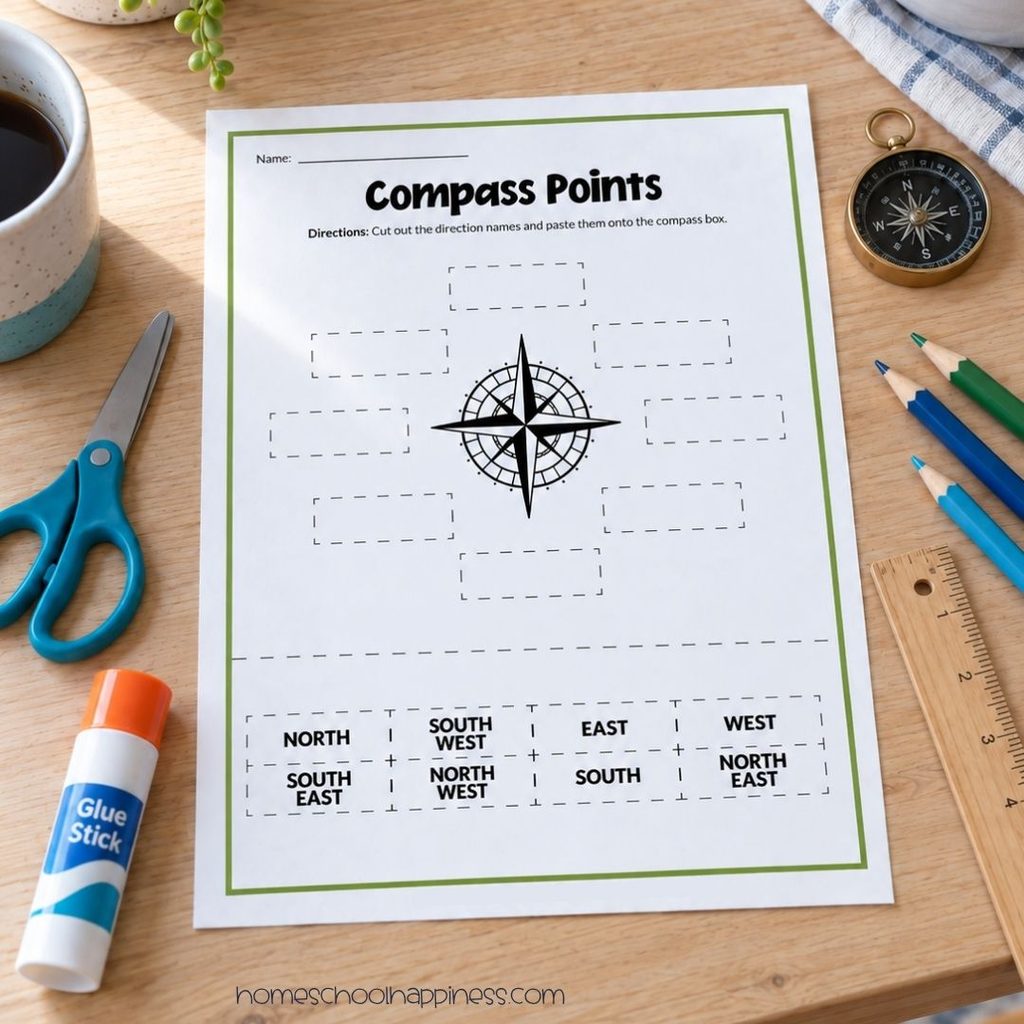
- Cut-and-paste compass activity for practicing north, south, east, and west
- Map symbol matching featuring familiar places such as schools, parks, and hospitals
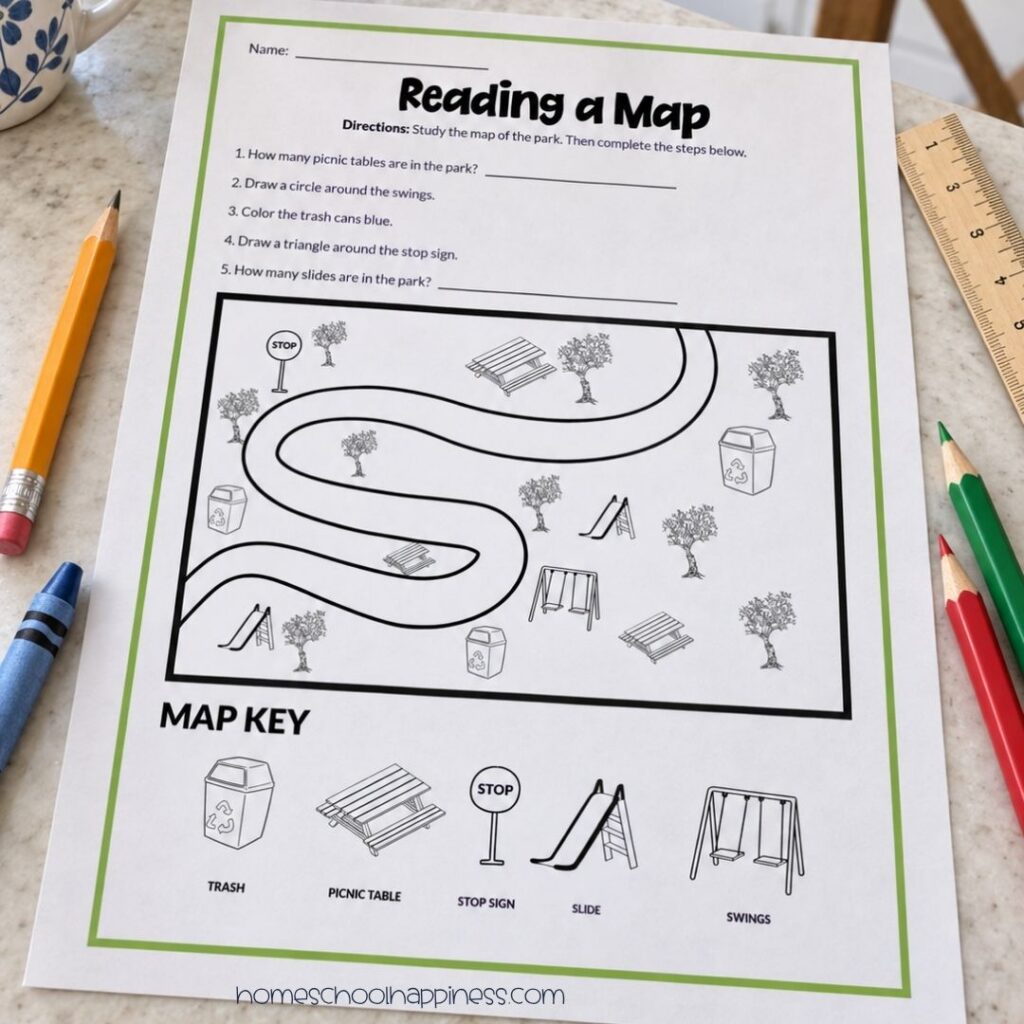
- Park map activity with questions that build observation and map-reading skills
- “Awesome Town” map featuring a map key and compass rose
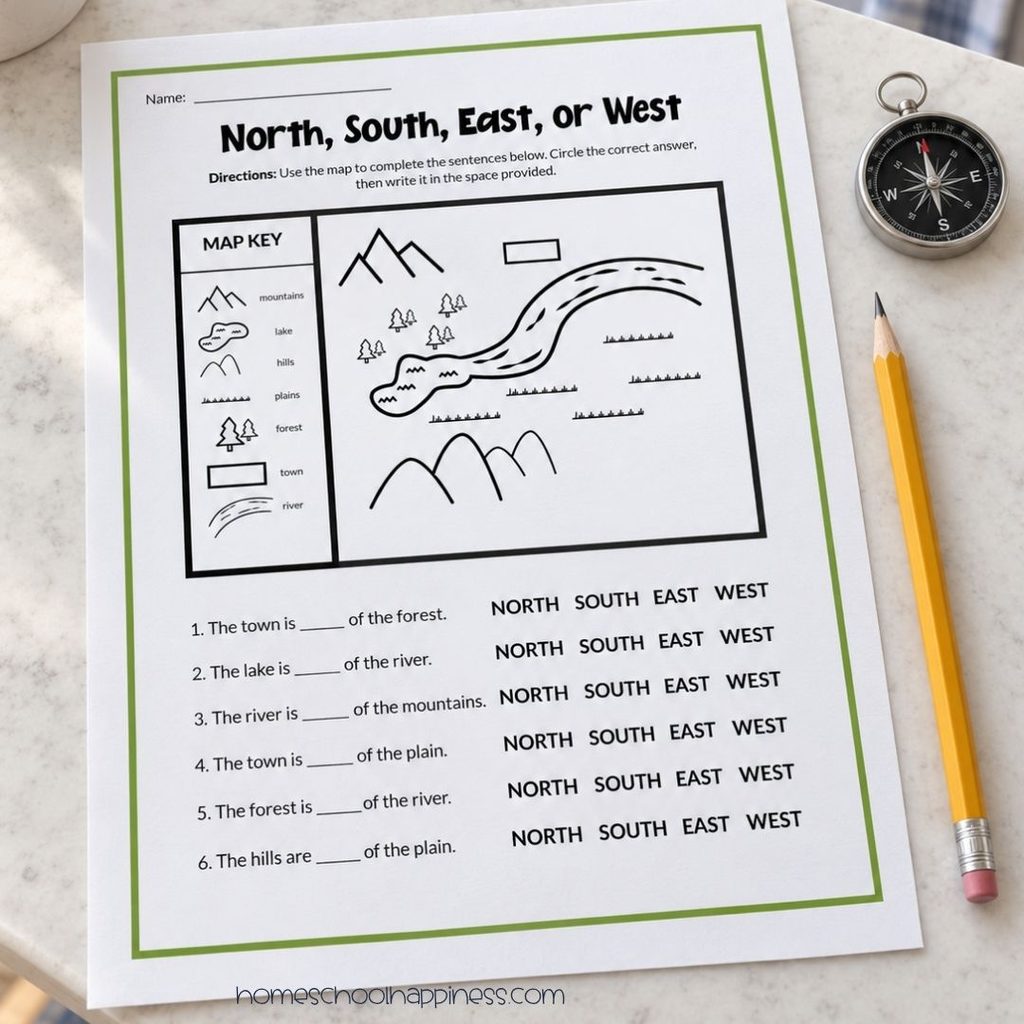
- Directional word practice for identifying locations on a map
- Map vocabulary cards featuring words such as globe, compass, and map key
- Color-the-box activity for practicing directions and spatial awareness
How to Use These Map Skills Worksheets
Use the worksheets in order to move from introducing map vocabulary to reading a map independently:
- Introduce the vocabulary cards. Review words such as map, globe, compass, and map key before beginning the activities.
- Build the compass rose. Complete the cut-and-paste activity, then practice pointing north, south, east, and west in the room.
- Explore map symbols. Match each symbol to a familiar place and discuss how symbols make maps easier to read.
- Read the park map together. Help your child use the map key and compass rose to answer the questions.
- Practice independently. Finish with the Awesome Town map, directional words, and color-the-box activity.
Complete the pages during one geography lesson or spread them across several days for shorter practice sessions.
What to Teach Next
Once your child understands basic map symbols, keys, and directions, build on those skills with these geography activities:
50 States Printable Worksheets: Practice identifying state names, shapes, and locations with tracing and coloring activities.
Free Continent Worksheets: Introduce the seven continents and help children understand how the world is organized.
5 Regions of the United States Printable Map: Explore the Northeast, Southeast, Midwest, Southwest, and West using a labeled U.S. map.
Continue Learning with the 50 States Research Pack
Ready to move beyond beginning map skills? The 50 States Research Pack gives children a structured way to research each state and record what they learn. Use it to extend your geography lessons as students explore the country one state at a time.


Books About Maps for Kids
Pair these picture books with the worksheets to introduce map symbols, directions, and a child’s place in the wider world.


Follow That Map! is best for learning about map symbols, keys, and directions through a playful story.
Me on the Map helps children understand how their home, town, country, and planet fit together.
There’s a Map on My Lap! introduces several types of maps through rhymes, colorful illustrations, and simple facts.
Map Crafts for Kids
Crafts are a fun way to bring map learning to life for young children. These creative projects help kids better understand maps, symbols, and directions while getting messy and using their hands. Try pairing your printable worksheets with one of these simple, themed crafts to keep the learning going.
- Make Believe Map Craft
- Pasta World Map Craft
- DIY Clay Maps
- Make a Treasure Map for Play or Decor
- Me on the Map Craft


Get the Free Map Skills Worksheets
Ready to begin? Click the image below to get your free printable map skills worksheets.

Learning to read a map begins with understanding simple tools such as symbols, keys, and compass directions. With hands-on practice, children can build the foundation they need to explore more advanced geography concepts with confidence.
Hi, I’m Tara—mom of three, former teacher, and now full-time homeschooler. After years in both preschool and public school classrooms, I brought the learning home and never looked back. At Homeschool Happiness, I share real-life tips, simple activities, and encouragement to help you create a homeschool life that feels good for your family—one filled with connection, laughter, and meaningful moments. We’re in this together!



One Comment